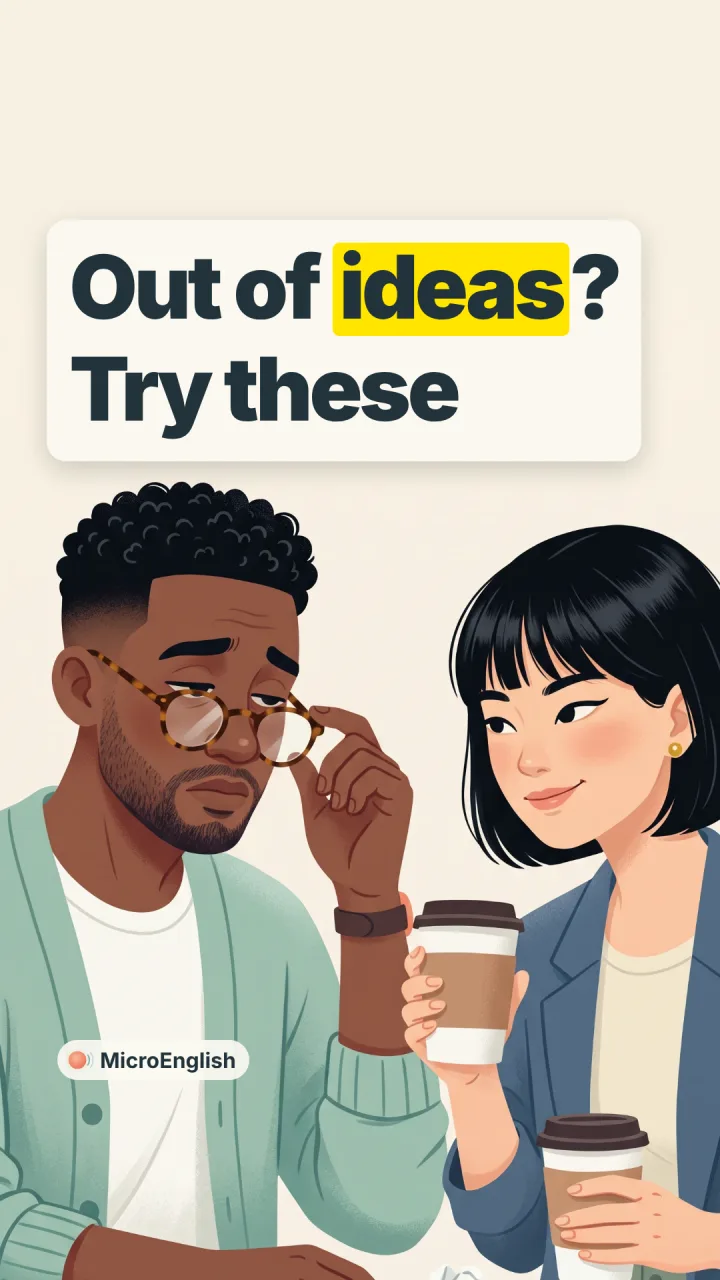
What happens in the video
Hana tells Theo, "I used to drink three coffees a day," and Theo thinks she has quit, even with that giant cup in her hand. Then Theo understands: she means "I'm used to drinking coffee," because the habit is still normal for her. Theo agrees and says his cup is his fourth.
1 You'll get used to it.
Tone Warm and reassuring
Say this to someone who is facing something new and finds it hard, like a new job, city, or routine. It means the strange feeling will go away with time. Don't use it when the person's problem is serious and won't change with time.
You'll get used to it.
For example:
A: The office is so loud. I can't focus.
B: You'll get used to it. After a week, you won't even hear it.
2 I'm used to it.
Tone Calm and relaxed
Use it when something might seem difficult to others but feels normal to you now. It tells the other person not to worry. Don't use it for a habit that has already stopped; that needs "I used to."
I'm used to it.
For example:
A: You walk to work in this cold every day?
B: I'm used to it. It's only twenty minutes.
3 I'm not used to this.
Tone Honest and a bit uneasy
Use it when a situation still feels new or a little uncomfortable. It is a polite, honest way to explain why you feel unsure. It works with kind attention, new places, and new tasks.
I'm not used to this
For example:
A: Sit down, I'll bring you dinner.
B: Thank you. I'm not used to this. Usually I do all the cooking.
4 I used to live there.
Tone Neutral and factual
Use "used to" + base verb for a past habit or state that is no longer true. It tells the listener that things are different now. Don't add "be" before it.
For example:
A: Do you know this neighborhood?
B: Yes, I used to live there. I moved away five years ago.
5 I'm getting used to it.
Tone Patient and hopeful
Use it when the change is still happening. Something feels easier than before, but not fully normal yet.
For example:
A: How's the new phone?
B: The buttons are in strange places, but I'm getting used to it.
6 It takes some getting used to.
Tone Friendly and realistic
Use it to warn someone that a thing feels odd at first. It's a gentle way to say "be patient." It works well for food, tools, schedules, and places.
For example:
A: This tea tastes a bit bitter.
B: It takes some getting used to. Most people like it by the third cup.
7 I'm used to working late.
Tone Matter-of-fact
Use "be used to" + verb-ing to say an activity is normal for you. The verb after "to" takes -ing here, because "to" is a preposition in this phrase.
For example:
A: Aren't you tired? It's almost ten.
B: Not really. I'm used to working late.
8 Did you use to play sports?
Tone Curious and casual
Use this question to ask about someone's past habits. In questions and negatives with "did," write "use to" without the d.
For example:
A: Did you use to play sports at school?
B: Yes, I used to play football every weekend.
9 I'll never get used to this.
Tone Tired and a bit frustrated
Use it when something still feels wrong after a long time. It's often said half as a joke. Avoid it in formal situations, where it can sound like complaining.
For example:
A: It's dark at four o'clock again.
B: I'll never get used to this.
10 I never used to like coffee.
Tone Light and reflective
Use it to say your feelings or habits changed. "Never used to" means that in the past you didn't, but now you do.
For example:
A: You're on your second coffee already?
B: I know. I never used to like coffee. Now I can't start the day without it.
Common mistakes
-
Not quite
I'm used to drink coffee.Better I'm used to drinking coffee.
After "be used to" or "get used to," use a noun or a verb with -ing. The base verb only follows "used to" when it means a past habit.
-
Not quite
I used to drink three coffees a day. (meaning you still do)Better I'm used to drinking three coffees a day.
"I used to" says the habit stopped. If it is still part of your life and feels normal, use "I'm used to." This is Hana's mistake in the Short.
-
Not quite
I use to live in Paris.Better I used to live in Paris.
In positive sentences, write "used to" with a d. Write "use to" only after "did" or "didn't," as in "Did you use to live there?"
Quick quiz
Choose your answer for each question, then open the answer to check it.
-
Your friend says, "I used to smoke." What does this mean?
- They smoke now and it feels normal.
- They smoked in the past but don't now.
- They are starting to smoke.
Show the answer (Question 1)
Answer: They smoked in the past but don't now. "Used to" + base verb describes a past habit that has stopped.
-
Choose the correct sentence.
- I'm used to wake up early.
- I'm used to waking up early.
- I used to waking up early.
Show the answer (Question 2)
Answer: I'm used to waking up early. "Be used to" is followed by a noun or a verb with -ing.
-
A new coworker says the open office feels strange. Which line sounds warm and reassuring?
- I'm not used to this.
- You'll get used to it.
- I used to work here.
Show the answer (Question 3)
Answer: You'll get used to it. "You'll get used to it" tells someone the new thing will soon feel normal.
-
Someone offers you a lot of help and attention, and it feels new and a bit uncomfortable. What can you say?
- I'm not used to this.
- I'm used to it.
- I used to this.
Show the answer (Question 4)
Answer: I'm not used to this. "Not used to" means the situation still feels new to you.
-
You moved to a cold city last month. Some days are easier now, but it still feels hard. Which line fits best?
- I'm used to it.
- I'm getting used to it.
- I used to it.
Show the answer (Question 5)
Answer: I'm getting used to it. "Getting used to" shows the change is still in progress.
Questions learners ask
What is the difference between "used to" and "be used to"?
"Used to" + base verb is about the past: "I used to swim" means you swam before but not now. "Be used to" + noun or verb-ing is about the present: "I'm used to swimming" means swimming feels normal to you. The first is about time, the second is about what feels familiar.
Why do we say "used to drinking" and not "used to drink"?
In "be used to" and "get used to," the word "to" is a preposition, like "to" in "I look forward to it." A preposition takes a noun or an -ing verb after it. So you say "I'm used to drinking coffee" or "I'm used to coffee."
What does "You'll get used to it" mean?
It means something new will start to feel normal after some time. People say it to comfort someone who is finding a change hard. "Get used to" describes the process, while "be used to" describes the result.
Is it "use to" or "used to"?
Write "used to" in positive sentences: "I used to play the piano." After "did" or "didn't," write "use to": "Did you use to play?" and "I didn't use to play." Both forms sound almost the same when spoken.
Film lines are short quotes used for language teaching. The dialogue belongs to its rightsholders. Hana and Theo are animated characters made with Google Flow.