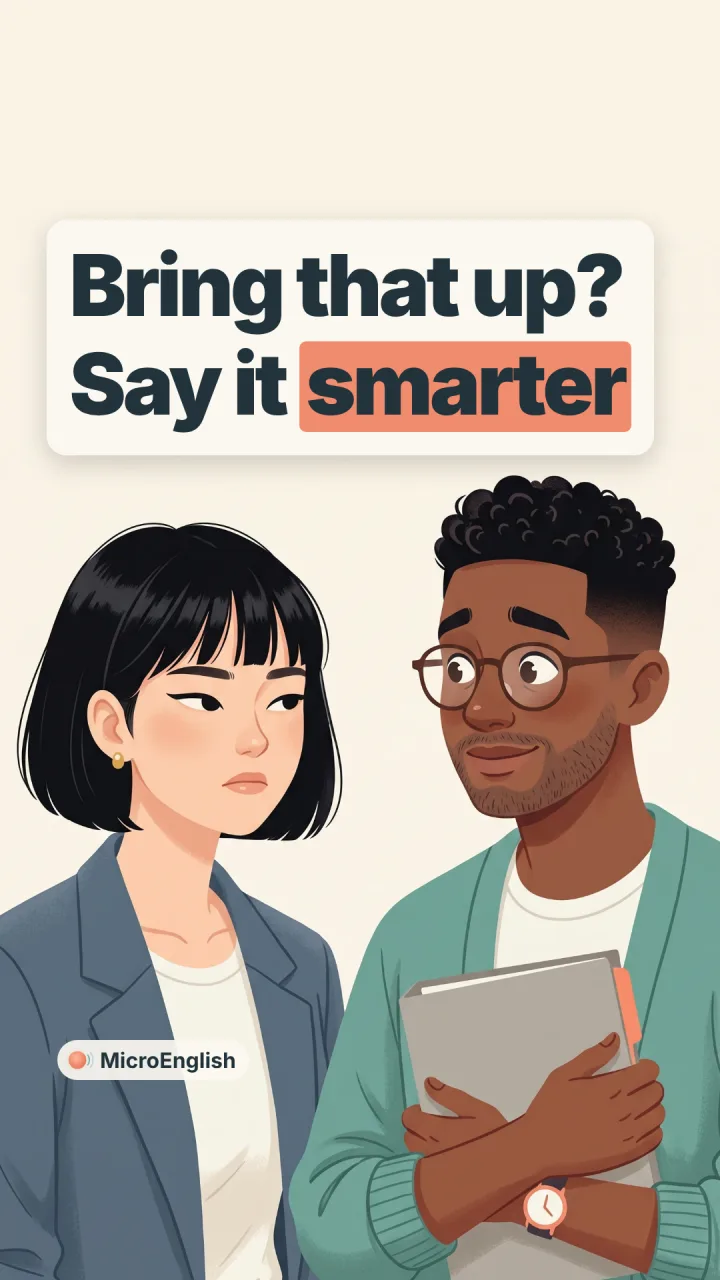
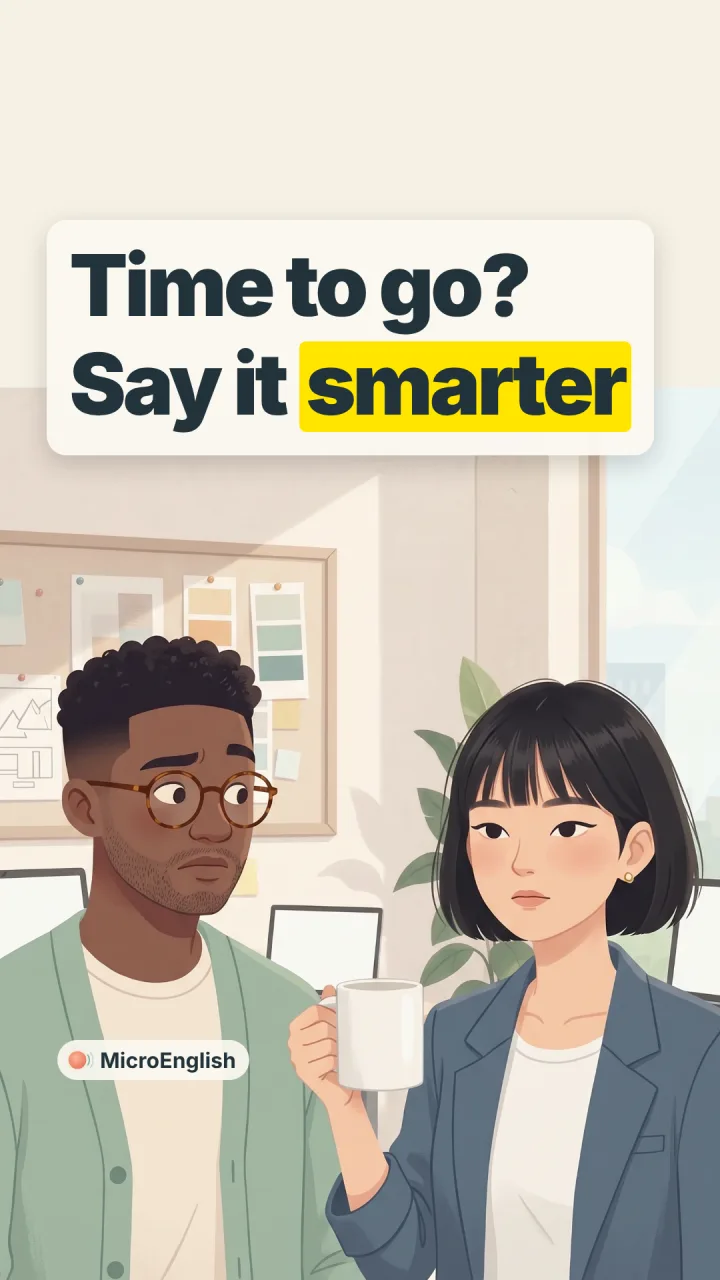
What happens in the video
Theo says he will call a client "right after my nap," and Hana teases him: "So a brave call after a nap?" Theo gives in and says, "I'll bite the bullet and call him now." Then Hana tells him the client has already been on hold for ten minutes.
1 It's time to rip the Band Aid off.
Tone Casual and quick
Use it when a painful task will hurt less if you do it fast, like giving bad news or ending something. It sounds informal, so avoid it in very formal writing.
No, Jack. It's time to rip the Band Aid off.
For example:
A: I still haven't told my team about the delay.
B: It's time to rip the Band Aid off. Tell them this morning.
A: You're right. Waiting only makes it worse.
2 It's time to bite the bullet.
Tone Brave and firm
Use it when you or someone else has been avoiding a hard task and now must do it. It works at work and at home, but it doesn't fit a task that is only boring and not difficult.
It's time to bite the bullet.
For example:
A: My car needs a big repair, and it's expensive.
B: It's time to bite the bullet. It won't get cheaper.
A: Fine. I'll take it to the garage tomorrow.
3 Face the music.
Tone Serious, owning the blame
Use it when someone made a mistake and now has to accept what happens next, such as criticism or punishment. Don't use it for a hard task that isn't connected to a mistake.
Face the music, mister Whitaker.
For example:
A: I missed the deadline and my manager knows.
B: Then go and face the music. Explain what happened.
4 Let's just get it over with.
Tone Tired but ready
Use it when you want an unpleasant task to be finished soon. It can sound a little negative, so don't say it about something a friend is excited about.
For example:
A: The dentist can see you at nine.
B: Okay. Let's just get it over with.
5 I've been putting this off for too long.
Tone Honest, a bit guilty
Use it to admit that you delayed a task and now want to start. It is natural in speech and in emails to friends or coworkers.
For example:
A: Are you finally doing your taxes?
B: Yes. I've been putting this off for too long.
A: Good luck. Call me if you need help.
6 Here goes nothing.
Tone Nervous, light
Say it right before you try something hard or risky. It's casual and a little humorous, so it doesn't fit serious situations like apologizing for a big mistake.
For example:
A: Are you going to send the job application?
B: Yes. Here goes nothing.
7 I'll own up to it.
Tone Responsible, sincere
Use it when you decide to admit your own mistake. It is about yourself, while "face the music" is often said to someone else.
For example:
A: Who broke the printer?
B: That was me. I'll own up to it and tell the office manager.
8 No more excuses.
Tone Firm, determined
Use it to push yourself or a friend to stop delaying. Said to a coworker or boss, it can sound bossy, so use it mainly about yourself.
For example:
A: Did you start running again?
B: Tomorrow at seven. No more excuses.
A: I'll come with you.
Common mistakes
-
Not quite
I bit the bullet and ate a delicious dinner.Better I bit the bullet and finally called the bank.
Bite the bullet is only for hard or unpleasant things. A nice dinner isn't something you need courage for.
-
Not quite
It's time to face the music and start my new job.Better It's time to bite the bullet and start my new job.
Face the music means accepting the results of a mistake. A new job is hard but isn't a punishment, so bite the bullet fits better.
-
Not quite
It's time to rip off the Band Aid slowly.Better It's time to rip the Band Aid off.
The whole idea is speed. Adding slowly breaks the meaning, because the image is a fast pull that hurts for only a second.
Quick quiz
Choose your answer for each question, then open the answer to check it.
-
Your friend has avoided calling an angry customer all day. What can you say?
- It's time to bite the bullet.
- Here goes nothing.
- It's a piece of cake.
Show the answer (Question 1)
Answer: It's time to bite the bullet. Bite the bullet tells someone to do a hard thing they have been avoiding.
-
Someone broke a rule at work and must now meet the boss. Which line fits best?
- Let's just get it over with.
- Face the music.
- Rip the Band Aid off.
Show the answer (Question 2)
Answer: Face the music. Face the music means accepting the results of your own mistake.
-
What does "rip the Band Aid off" mean?
- Do the painful part fast
- Fix a small injury
- Wait until the pain stops
Show the answer (Question 3)
Answer: Do the painful part fast The line compares a hard task to pulling off a bandage quickly so the pain is short.
-
Which line is nervous and a little funny, said just before you try something?
- I'll own up to it.
- No more excuses.
- Here goes nothing.
Show the answer (Question 4)
Answer: Here goes nothing. Here goes nothing is a light, casual line said right before a risky try.
-
In the Short, why does Theo say "I'll bite the bullet and call him now"?
- He wants to take a nap first
- He stops delaying a call he didn't want to make
- He is happy to talk to the client
Show the answer (Question 5)
Answer: He stops delaying a call he didn't want to make Theo was putting the call off, and bite the bullet shows he decides to do it now.
Questions learners ask
What does "bite the bullet" mean in simple English?
It means you decide to do something hard or unpleasant that you were avoiding. You often hear it as "It's time to bite the bullet" or "I'll bite the bullet and..." followed by the task. It's common in everyday speech and fine at work.
What is the difference between "bite the bullet" and "face the music"?
Bite the bullet is about any hard task you have been delaying. Face the music is about accepting criticism or punishment after a mistake. If nobody did anything wrong, choose bite the bullet.
Is "rip the Band Aid off" formal or informal?
It's informal. Use it with friends, family, and coworkers you know well. In a formal email, you could write "It's best to share the news now" instead.
How do I say I will stop procrastinating in English?
You can say "I've been putting this off for too long" or "No more excuses." Both show that you're ready to start. Add the task and a time to sound clear, for example "No more excuses. I'm starting the report today."
Film lines are short quotes used for language teaching. The dialogue belongs to its rightsholders. Theo and Hana are animated characters made with Google Flow.