
听清词与词的分界
第一遍先听,不急着输入。第二遍留意一个词在哪里结束,下一个词从哪里开始。再听整个词组,检查自己分得对不对。
显示第235–252节,共872节课
-

British vs American Spelling: Choose One Style
Spelling variants are alternate written forms of the same word that carry identical meanings and pronunciations. Words such as colour and color or centre and center represent the same underlying vocabulary. Neither system is superior; each belongs to an established standard used in different parts of the English-speaking world.
-

Tag Questions: Confirm Everyday Information
Tag questions serve two main conversational purposes depending on how certain the speaker feels. When you believe something is true but want to double-check, a tag question provides quick confirmation. When you know a fact and expect agreement, a tag question invites the listener into the dialogue, softening statements that might otherwise sound too direct.
-

Who or Which: Choose the Right Pronoun
Who functions as an interrogative pronoun and a relative pronoun for people. It points directly to human actors in questions and provides identifying details about people in clauses. Which serves as an interrogative and relative pronoun for physical objects, animals, and concepts. It also marks a selection from an identifiable group of possibilities.
-

Marital vs Martial: Choose Right Word
Marital describes things relating to marriage or the legal union between spouses. Martial describes things relating to war, armed forces, fighting arts, or military authority. One word focuses on family commitments, while the other focuses on military matters.
-

Possessive and Reflexive Pronouns: Practical Usage Guide
Possessive pronouns stand alone in place of an owned noun phrase to show belonging: mine, yours, his, hers, ours, and theirs. Reflexive pronouns end in -self or -selves and indicate that the subject of the clause is also the recipient of the action: myself, yourself, himself, herself, itself, ourselves, yourselves, and themselves.
-

Desert or dessert: choose the right word
The noun dessert names a sweet course, such as cake, pie, or fruit salad, that concludes a meal. The noun desert refers to a dry geographic region with sparse vegetation and little annual precipitation. The verb desert means to abandon a post, duty, cause, or companion without permission or support. While the noun desert puts stress on its first syllable, both the food noun dessert and the verb desert put primary stress on the second syllable.
-
会员
全部课程免费学7天
- 872节课程,包含听写和听力测试
- 三种口音:英式、美式和澳式
- 可保存学习进度
无需绑卡。之后如想继续使用,每月$7.50起。
开始免费试用 -

because although so however: connect your ideas
Because introduces the reason or cause of an action. So introduces the result or consequence that follows an action. Although introduces an unexpected contrast or concession. But joins two opposing ideas within a single sentence. However is a transition adverb that indicates contrast across two complete clauses and requires stronger punctuation than a coordinating conjunction.
-

Subject and Object Pronouns: Choose the Correct Form
Subject pronouns represent the person or thing performing the action of a verb. Object pronouns represent the person or thing affected by the action, or the person connected to a preposition. Even though both forms can point to the exact same individual, the grammatical role determines the spelling and sound you need.
-

Learn English Through Kannada: A Daily Study Plan
Learning English through Kannada means treating your native language as a helpful reference bridge rather than a word-by-word translation engine. English and Kannada use different sentence architectures: Kannada places the verb at the end of the sentence, while English places the verb immediately after the subject in standard statements. When you learn complete English expressions for specific moments, you train your ear to accept English word order naturally without translating every single item in your head first.
-

Prepositions after Adjectives: Choose the Right Pair
An adjective describes a person, quality, or state, while the preposition connects that description to an object, task, or cause. In the sentence 'Elena is nervous about the presentation', 'nervous' describes her feeling and 'about' connects that feeling directly to the presentation.
-

Learn English Through Tamil: Daily Speaking Routine
Learning English through Tamil means using your mother tongue as a quick reference check, not as a word-by-word blueprint. English and Tamil structure thoughts differently: English follows subject-verb-object order and depends heavily on auxiliary verbs and prepositions. Understanding this difference helps you absorb English sentences as unified patterns rather than trying to match every Tamil word directly.
-
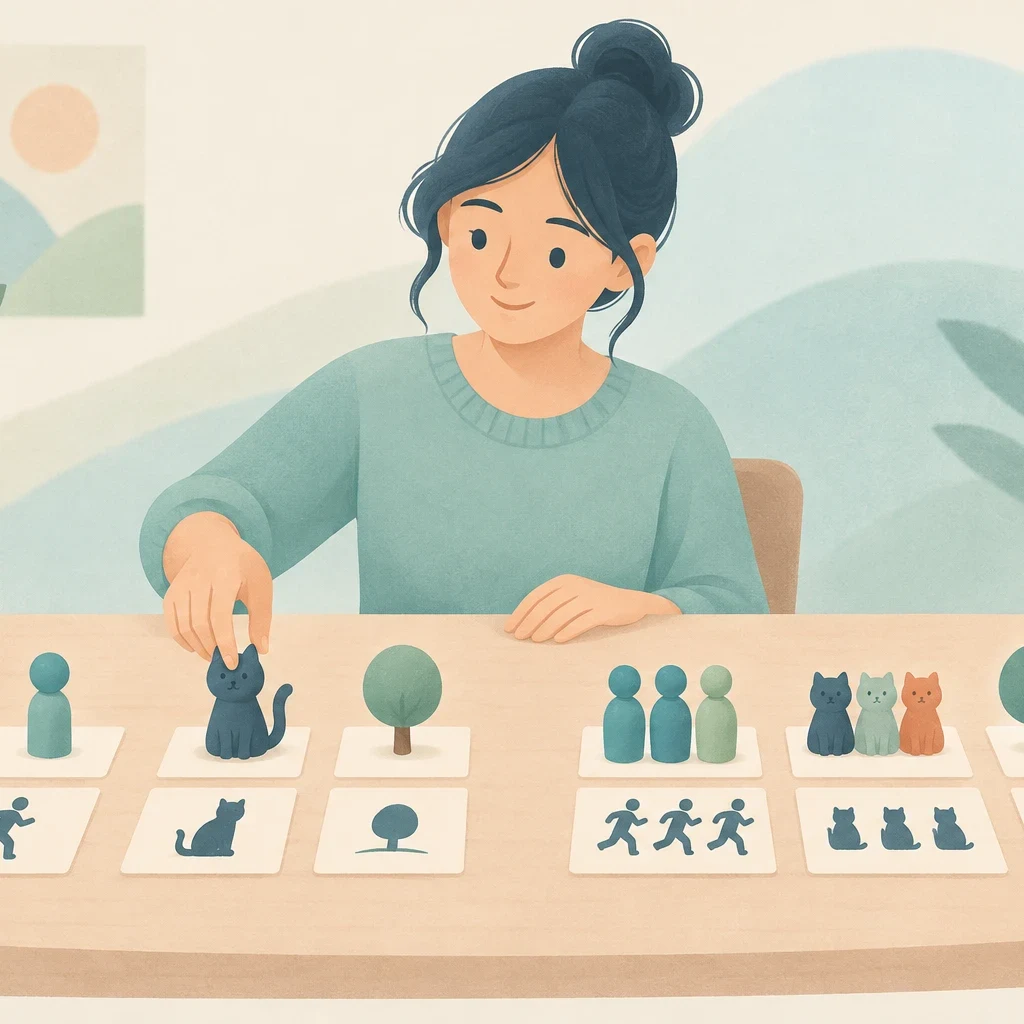
Simple Present Verbs: Match Subjects and Verbs
The simple present describes regular habits, permanent facts, and ongoing workplace procedures. It shows that an action happens on a schedule or remains true over time, rather than occurring only right now.
-

Learn English through Marathi: Daily Study Routine
Learning English through your home language means using Marathi as an analytical tool rather than a constant translation bridge. You use Marathi to grasp an abstract distinction, then immediately practice the English sentence structure until you can produce it without mental translation.
-

Learn English Through Hindi: Daily Routine Guide
An English-first routine means you spend most of your practice time listening to, reading, and saying complete English sentences. Hindi remains available when a definition is unclear, but you do not translate word by word. Learning full phrases builds natural word order and helps you speak without long hesitation.
-

learn english through bangla: practical daily steps
Using Bangla to support your English does not mean translating every sentence word for word. English and Bangla structure sentences differently, so a literal translation often creates unnatural phrasing or incorrect prepositions. Using your native language as a quick meaning check allows you to verify the concept once and then concentrate entirely on natural English expressions.
-

Present Continuous Questions: Ask and Negate
The present continuous communicates that an activity is underway at the moment of speaking or temporary during the current period. Questions seek confirmation or details about these ongoing events, while negative forms clarify what is not taking place.
-

Possessive Nouns: Choosing the Right Form
A possessive noun names an owner or a related person, group, or thing. In English, this relationship can indicate direct ownership like a person's bag, a working connection like a company's policy, a family link like an uncle's house, or a time frame like Monday's schedule.
-

Apostrophes: Possession and Short Forms
An apostrophe functions as an indicator of ownership or contraction. In possessive forms, it links an owner to an item or idea, answering the question of ownership clearly. In contractions, it marks the exact spot where one or more letters disappeared during natural speech. Because plural nouns only indicate quantity, they do not require an apostrophe to make sense.
还没想好是否试用?每天收一节免费课
连续7天,每天发一段短听写到邮箱。在哪里都能练,不用注册账户。
找不到想学的表达或场景?
定制课程是会员功能。
查看会员方案