找下一节课
搜索一个短语,或描述想表达什么,从当前可用课程中选择。
显示第181–198节,共359节课
清除筛选-

In Case Of or In the Case Of: Choosing the Right Phrase
'In case of' means 'if this event happens'. You use it to introduce a possible problem or unexpected event so you can provide a safety plan or precaution. 'In the case of' means 'regarding' or 'as for'. You use it when you want to focus your listener or reader on a particular item, person, or category under discussion.
-

English homework help: Plan, write, and ask
A homework instruction sets three clear boundaries: the action you must take, the topic you must address, and the final format you must produce. An answer is the response you create to satisfy those boundaries. A help question is a separate message that identifies a specific point of uncertainty when an instruction or language choice is unclear.
-

Less or Lesser: Choose the Right Word
Less indicates a smaller amount, a lower degree, or reduced frequency. It modifies uncountable nouns, adjectives, and adverbs, or it directly follows verbs. Lesser functions as an adjective meaning lower in importance, rank, quality, or extent. It primarily sits before a noun. While meaning guides the decision, the surrounding grammatical pattern confirms which word fits standard English.
-

TOEFL Study Response: Explain What You Hear
A focused response directly answers the assigned question using facts from the material you read or heard. The main claim states the solution or finding, while supporting statements give reasons, results, or concrete examples. Connecting words clarify how ideas relate, but each sentence must express a sensible thought on its own.
-

Plural of moose: one animal or several
Moose refers to a very large member of the deer family native to northern forests. In standard English, the noun moose has the exact same spelling and pronunciation for a single animal and for multiple animals. The word belongs to a group of animal nouns, like sheep and deer, that do not add an -s in the plural. The form meese is not an accepted standard word, even though English learners sometimes invent it by analogy with goose and geese.
-

Much, Many, or Several: Choose the Right Word
Many indicates a large number of individual countable items. Much indicates a large amount of an uncountable mass, abstract concept, or continuous resource. Several indicates an unspecified small number of countable items, usually more than two but not an especially large group.
-
会员
全部课程免费学7天
- 597节课程,包含听写和听力测试
- 三种口音:英式、美式和澳式
- 每天有新课,并保存学习进度
无需绑卡。之后如想继续使用,每月$7.50起。
开始免费试用 -

Will or be going to: choose your future form
Both forms point to time after the present moment, but each one shows how you present the action. A decision happens while you speak. An intention is a choice you made before the conversation started. An offer shows immediate willingness to help, and a promise creates a clear commitment. Predictions describe what you expect to happen, either from your general knowledge or from visible signs in front of you.
-

Present perfect: use have and has
The present perfect connects an earlier action directly to the current conversation. When you say that someone has packed the rain gear, the packing occurred in the past, but your focus is on the fact that the bag is ready now. You also use this structure to discuss lifetime experiences up to this moment and ongoing states that started in the past.
-

Synonyms in English: Choose the Right Word
A synonym is a word or phrase that has the same or nearly the same meaning as another word in the same language. While two words may share a central idea, their usage depends on context, grammar, and tone.
-
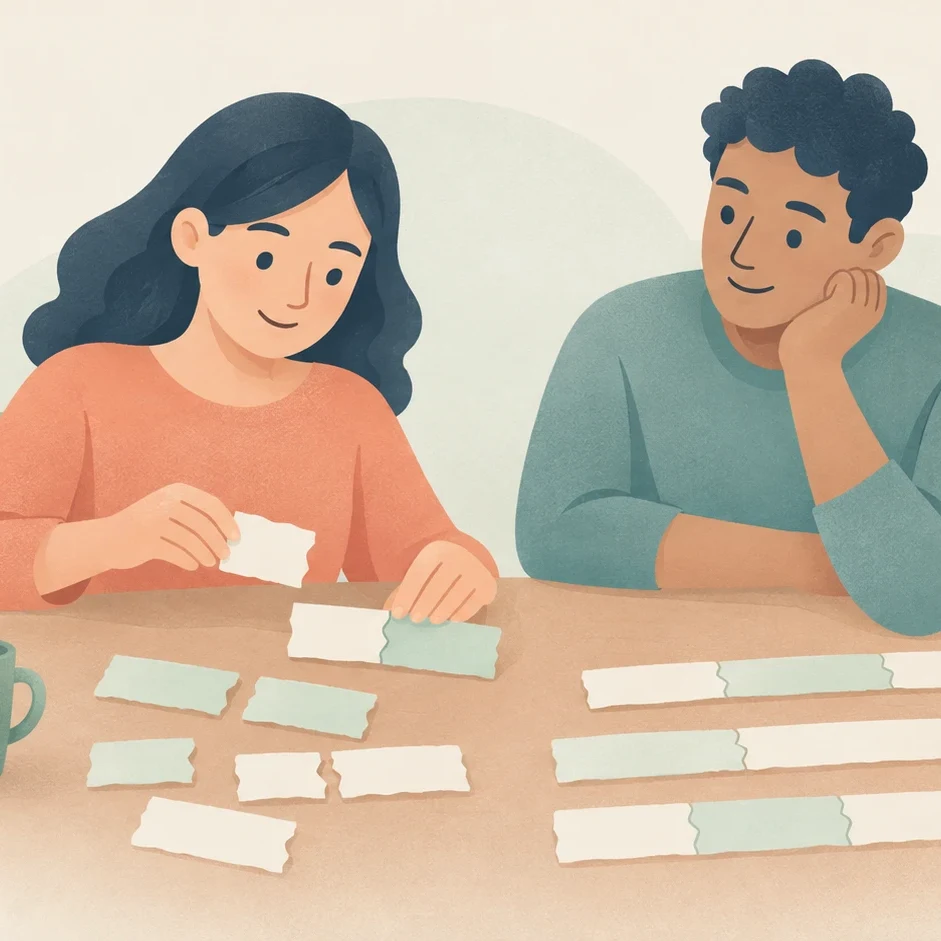
Sentence fragments: repair and practice guide
A complete sentence delivers an independent statement. In standard English writing, every sentence requires a subject and a working verb that together express a complete thought. A sentence fragment is a word group that begins with a capital letter and ends with a period, but fails to provide the grammatical elements required to stand by itself.
-

Infinitives: When to Use To
An infinitive names an action directly without changing its shape for time or person. It connects two ideas by showing what action completes a main verb, what action explains a feeling, or why an action happened.
-

Adjectives of Number: Forms and Examples
Number words perform distinct communicative functions in English sentences. Cardinal numbers such as one, two, or forty specify an exact count of items. Ordinal numbers such as first, second, or twentieth identify an item's exact position within an ordered sequence. Indefinite words such as many, several, and some indicate approximate quantities without naming a precise figure. Distributive words such as each, every, either, and neither describe how members of a group are considered individually or in pairs. Traditional grammar terms all these words adjectives of number, while modern linguistics often describes them as numerals, determiners, or quantifiers.
-

Future perfect or continuous: Choose the right form
Both the future perfect simple and the future perfect progressive look ahead to a future reference point and evaluate earlier activity. The future perfect simple places a completed action, milestone, or quantity before that checkpoint. The future perfect progressive looks back from that same checkpoint to show how long an activity has been underway. One tense focuses on the finished product; the other focuses on the elapsed time of the process.
-

Equipment or Equipments: Which Is Correct?
Equipment means the tools, machines, or other things needed for an activity or job. English treats equipment as an uncountable noun, like furniture or luggage. You can use it for a room full of tools, but you cannot put a number directly before it or add a plural -s. To count the objects, use pieces of equipment or name the tools.
-

Adjective Order: Rules and Examples
Adjective order is the customary sequence English speakers use to organize multiple details before a noun. Placing broad personal opinions first and moving inward toward physical facts, origin, and material allows listeners to process descriptive layers smoothly without pausing.
-

Hit the jackpot: Meaning and use
In literal terms, hitting the jackpot means winning the grand prize in a lottery or game of chance. Figuratively, people use the phrase to describe any exceptional outcome, bargain, or opportunity that turns out far better than expected. The expression highlights a result that brings genuine delight and feels like a stroke of rare luck.
-

Gerunds: When to Use -ing
A gerund names an activity rather than describing an action that is currently unfolding. Because it functions as a noun, a gerund can serve as the subject of a clause, follow the linking verb be, or appear directly after prepositions and certain main verbs. The form always ends in -ing, but its grammatical position determines whether it is a gerund.
-

Myself and John: How to Choose
A subject names who or what the clause is about or who carries out the action. An object receives an action or completes a preposition like to, for, with, or between. The reflexive pronoun myself turns the action back onto the speaker as the subject of the same clause. Knowing these three sentence roles makes your choice simple and reliable.
还没想好是否试用?每天收一节免费课
连续7天,每天发一段短听写到邮箱。在哪里都能练,不用注册账户。
找不到想学的表达或场景?
定制课程是会员功能。
查看会员方案