Micro-listening
Much, Many, or Several: Choose the Right Word
How do you choose 'much', 'many', or 'several'?
Choose 'many' for a large number of plural countable nouns, 'several' for an unspecified small group of countable nouns, and 'much' for uncountable nouns. For example, 'Several volunteers arrived early.' Use 'much' mainly in questions and negative statements; positive statements usually prefer 'a lot of', while 'too much' and 'so much' remain natural.
Key points
- Use 'many' with large numbers of plural countable nouns.
- Use 'several' for an unspecified small group over two.
- Use 'much' with uncountable nouns such as time or space.
- Positive statements usually prefer 'a lot of' to plain 'much'.
This lesson has 5 stages. You can stop at any time and continue later.

At a glance
| Form | Use it for | Example |
|---|---|---|
| much + uncountable noun | Used in questions and negative statements about an amount | How much paint remains? |
| many + plural countable noun | A large number of separate items or people | Many guests joined the workshop. |
| several + plural countable noun | An unspecified small group of more than two | Several boxes arrived this morning. |
| a lot of + noun | A natural positive alternative for large quantities | We have a lot of water. |
Stage 1 of 5
Understand
What it means, when to use it, and mistakes to avoid.
The full explanation
Many indicates a large number of individual countable items. Much indicates a large amount of an uncountable mass, abstract concept, or continuous resource. Several indicates an unspecified small number of countable items, usually more than two but not an especially large group.
We have several screwdrivers on the workbench for small repairs.
Why it works: Screwdrivers is a plural countable noun, and several indicates a modest group of more than two.
3 more examples
-
There is not much space left near the entrance of the workshop.
Space is treated as an uncountable amount, so not much describes the limited area.
-
How many volunteers are planning to attend the Saturday morning session?
Volunteers is a plural countable noun, so how many forms the neutral quantity question.
-
Our team collected a lot of wood for repairing broken chairs.
Wood is an uncountable material, and conversational positive statements favor a lot of over plain much.
Read the full guide
Check Supplies for a Neighborhood Repair Session
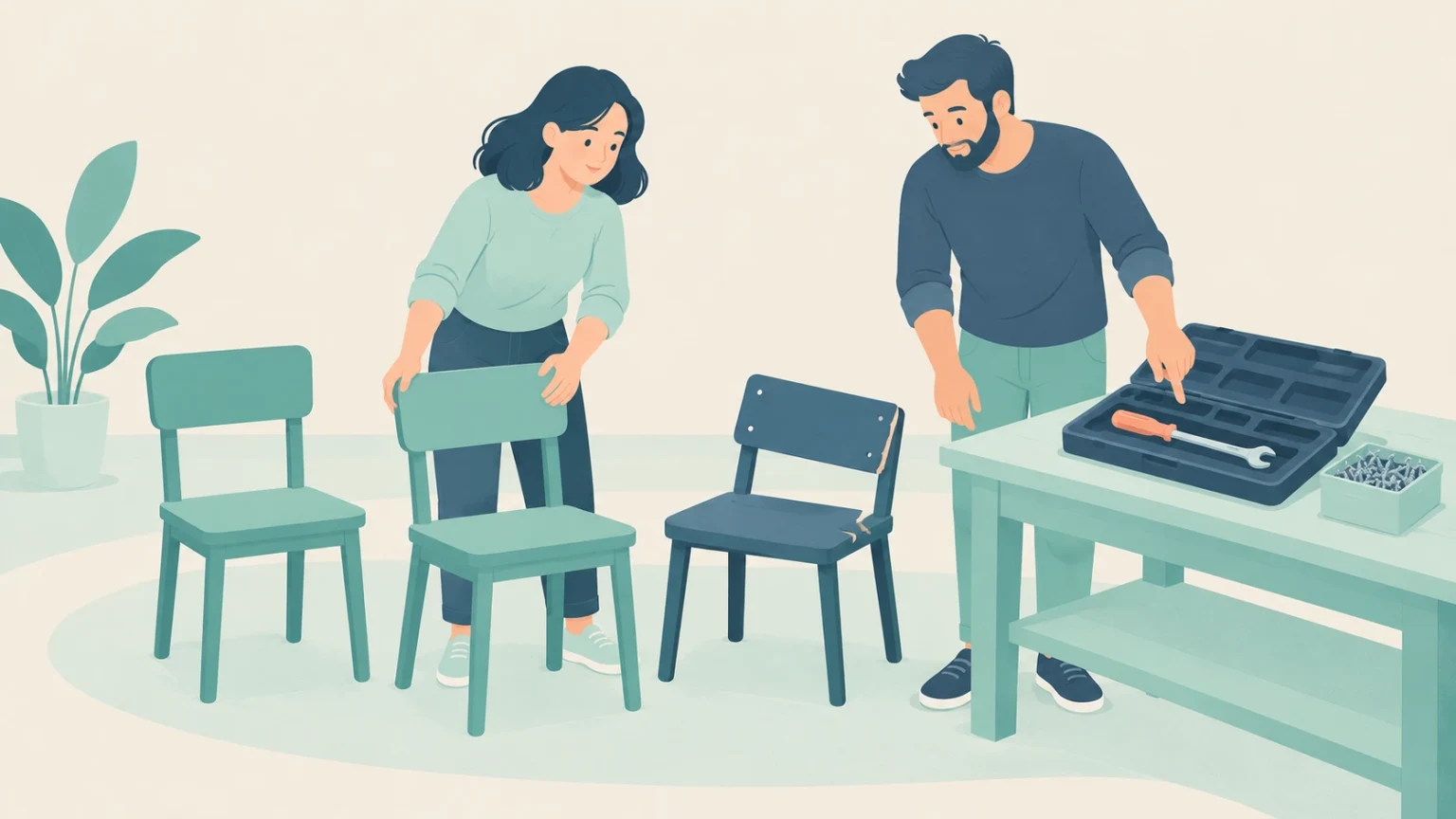
Two organizers, Sam and Nora, prepare the local hall for a weekend repair workshop. Sam counts the furniture while Nora reviews the toolboxes and workbench space. They must quickly decide whether they need more supplies or more room to work safely. In this situation, some items are counted individually, while other requirements are evaluated as total amounts.
-
Sam: 'We have thirty chairs in the hall, but several tables are still missing.'
Why it works: Tables are countable objects, and several signals a small group of missing items.
-
Nora: 'We do not have much space left, so do not bring more big furniture.'
Why it works: Space is an uncountable amount, so not much describes the limited area.
-
Sam: 'How many volunteers need power cords at their repair stations?'
Why it works: Volunteers is a plural countable noun asking for a specific number.
Your turn
Why does Nora say 'not much space' instead of 'not many space'?
Answer: Space is an uncountable noun that describes a total area rather than individual items.
Show the answer
Answer: Space is an uncountable noun that describes a total area rather than individual items.
Space is treated as an uncountable noun in this context, so it requires much rather than many.
Count Chairs, but Measure Space
Before choosing a quantifier, look closely at the noun that follows it. English separates nouns into things you can count and things you measure as amounts. Chairs, tools, and tables are countable items that you can number individually as one, two, or three. In contrast, space, time, and equipment represent whole amounts. You cannot place a raw number directly in front of an uncountable noun without adding a specific counting unit.
-
We placed five chairs along the west wall for visitors.
Why it works: Chairs are separate countable units that combine directly with numbers.
-
Our team has enough space for two repair benches.
Why it works: Space is an uncountable quantity that cannot take a direct plural number.
You can practise this again in Will or Going to: Choose the Right Future and Till or Until: Choose the Right Word.
Your turn
Which noun from the repair workshop is treated as uncountable?
Answer: Equipment
Show the answer
Answer: Equipment
Equipment is an uncountable noun in English, whereas wrench and table are countable objects.
Choose Much for Amounts and Many for Numbers
Use many when you describe a large number of individual countable items. Because it refers to separate items, many always goes before a plural noun such as chairs or tools. Use much when you talk about a large quantity of an uncountable noun like time or equipment. While both words indicate large quantities, pairing the wrong word with your noun confuses individual units with total amounts.
-
Many volunteers registered to help with electronics repair.
Why it works: Volunteers is a plural countable noun describing a large number of people.
-
We did not spend much time cleaning the floor before setup.
Why it works: Time is an uncountable noun referring to a continuous duration.
Your turn
Which quantifier correctly completes: 'We do not have ___ time before the doors open'?
Answer: much
Show the answer
Answer: much
Time is an uncountable noun, so much is the correct quantifier to express an amount.
Choose Several for an Unspecified Small Group
Choose several when you want to describe an unspecified number of countable items that is more than two, but not especially large. Unlike many, which suggests an extensive crowd or stack, several signals a modest group. Do not assign several a rigid number like exactly three to five. What counts as many or several depends on the situation, but several always requires a plural countable noun and never applies to uncountable amounts.
-
Several volunteers arrived thirty minutes before the workshop started.
Why it works: Several volunteers indicates a small group of helpers, definitely more than two.
-
Many volunteers arrived thirty minutes before the workshop started.
Why it works: Many volunteers suggests a large crowd of helpers ready to begin work.
Your turn
Can a sentence correctly use either 'many chairs' or 'several chairs'?
Answer: Yes, but they communicate different quantities of chairs.
Show the answer
Answer: Yes, but they communicate different quantities of chairs.
Both phrases are grammatically correct with plural countable nouns, but many suggests a large number while several suggests a smaller group.
Ask How Much or How Many and Understand Negative Answers
To ask about an unknown quantity without assuming it is large, use how many with plural countable nouns and how much with uncountable nouns. In short spoken answers, 'not many' and 'not much' mean the quantity is small, and they can even include zero depending on the situation. Several can occasionally appear in questions when you expect a small group, but it never follows the question word how.
-
'How many hammers do we have?' 'Not many, so share them carefully.'
Why it works: How many asks about countable tools, and not many indicates a limited supply.
-
'How much glue remains in the bottle?' 'Not much.'
Why it works: How much asks about an uncountable liquid, and not much indicates a tiny amount.
-
Did several neighbors bring broken lamps for repair?
Why it works: Several works naturally in a question asking whether a small group took an action.
Your turn
Which question naturally asks about the available work area?
Answer: How much space is left in the room?
Show the answer
Answer: How much space is left in the room?
Space is uncountable, so the neutral quantity question uses how much.
Use A Lot of in Conversation and Keep Too Much or Too Many
In ordinary conversational English, speakers rarely use plain much in positive statements. Saying 'we have much space' sounds unnatural and overly formal. Instead, choose 'a lot of', which works smoothly with both countable and uncountable nouns. However, when you add modifiers like too or so to show an excessive or dramatic quantity, 'too much' and 'so much' become completely natural. In contrast, never place too or so before several.
-
We have a lot of space for tables in the center of the hall.
Why it works: A lot of sounds natural in everyday positive sentences with uncountable nouns.
-
We brought too many chairs, so we must return ten of them to storage.
Why it works: Too many indicates a countable quantity that is greater than needed or wanted.
-
There is so much noise that helpers cannot hear the safety instructions.
Why it works: So much adds strong emphasis to an uncountable noun in positive statements.
Your turn
Which positive statement sounds most natural in everyday spoken English?
Answer: We have a lot of paint for fixing wooden cabinets.
Show the answer
Answer: We have a lot of paint for fixing wooden cabinets.
Conversational English favors a lot of over plain much in positive statements, and several cannot describe uncountable paint.
Compare the Words and Check Countable Units
When you need to describe an uncountable resource with exact numbers, add a countable unit noun before it. For example, time is uncountable, but hours and minutes are countable. Space is uncountable, but rooms and booths are countable. Equipment is uncountable, but pieces of equipment and individual tools are countable. The table below summarizes how each quantifier functions across different sentence types and noun agreements.
| Quantifier | Noun Type | Meaning | Sentence Patterns |
|---|---|---|---|
| much | uncountable nouns (singular verb) | large amount | questions (how much), negatives (not much), modified positives (too much, so much) |
| many | countable plural nouns (plural verb) | large number | questions (how many), negatives (not many), positive statements, modified forms (too many, so many) |
| several | countable plural nouns (plural verb) | unspecified small group (more than two) | affirmative statements, occasional yes-or-no questions; never with how, too, or so |
-
We spent much time on the project, which equals many hours of repair work.
Why it works: Time is uncountable and takes much, while hours is countable and takes many.
-
Several pieces of equipment arrived in the morning delivery.
Why it works: Equipment is uncountable, but pieces is countable plural and pairs with several.
Your turn
How can you express an uncountable noun like equipment with a small countable number?
Answer: Add a countable unit such as 'several pieces of equipment'.
Show the answer
Answer: Add a countable unit such as 'several pieces of equipment'.
Equipment cannot take a plural ending; you must add a countable unit like pieces to specify a small number.
Fix Noun Mismatches Without Changing the Message
Three frequent mistakes occur when speakers mix up noun types. Saying 'several equipment' is incorrect because equipment is uncountable; say 'several tools' or 'several pieces of equipment'. Saying 'much chairs' is incorrect because chairs can be counted; say 'many chairs'. Saying 'many space' is incorrect because space is an amount; say 'much space' or 'a lot of space'. Always check whether the noun can take a plural ending before picking your word.
-
Incorrect: We need much chairs for the workshop.
Why it works: Chairs is a countable plural noun and cannot pair with much.
-
Correct: We need many chairs for the workshop.
Why it works: Many pairs correctly with the countable plural noun chairs.
-
Correct: We do not have much space for extra workbenches.
Why it works: Space is an uncountable noun and pairs correctly with much.
Your turn
Which sentence correctly repairs the error in 'We brought several equipment'?
Answer: We brought several pieces of equipment for the volunteers.
Show the answer
Answer: We brought several pieces of equipment for the volunteers.
Adding the plural unit pieces makes the phrase countable and grammatically matches several.
Hear Quantities in Spoken Sentences
When listening to fluent English, pay attention to word stress and rhythm. The word several carries strong stress on its first syllable and often compresses into two spoken syllables: SEV-rul. Many also carries stress on its first syllable: ME-ny. Much is a single syllable ending in a distinct 'ch' sound that is clearest before a vowel or brief pause. Listen for the overall sentence meaning before writing exact spellings.
-
Several helpers arrived early to organize the supply tables.
Why it works: Several is stressed on the first syllable and connects smoothly to helpers.
-
We did not find much extra wire in the repair cabinet.
Why it works: The final sound of much is pronounced clearly before the vowel in extra.
Your turn
Which syllable receives primary stress in the word 'several'?
Answer: The first syllable: SEV-eral
Show the answer
Answer: The first syllable: SEV-eral
Several is stressed on its first syllable, often sounding like two quick syllables in connected speech.
Recall the Supplies and Write a New Update
Review the room setup from the repair workshop dialogue to test your recall. Did the organizers have too many chairs, or did they lack space? Practice making practical decisions by writing your own supply update for a community project. Choose between much, many, and several based on whether you describe tools, helpers, or available room. Check your noun endings carefully before sending your message.
-
We have several screwdrivers, but we need many more volunteers to finish today.
Why it works: Combines several for a small group of tools and many for a large number of helpers.
-
There is not much time left, so please finish your current repair task.
Why it works: Uses not much with the uncountable noun time to set an urgent tone.
Your turn
If your workshop has twenty empty seats and only two small tables, what is your supply situation?
Answer: You have many chairs and not much table space.
Show the answer
Answer: You have many chairs and not much table space.
Chairs are countable plural items taking many, while table space is an uncountable amount taking not much.
Common mistakes
What learners often say, what to say instead, and why.
-
Not this:
We need much tables for the meeting.Say: We need many tables for the meeting.
'Tables' is plural and countable, so it takes 'many', not 'much'.
-
Not this:
The office has several equipment for the project.Say: The office has several pieces of equipment for the project.
'Equipment' is uncountable; use the countable unit 'pieces' with 'several'.
-
Not this:
We have several coffee for everyone.Say: We have a lot of coffee for everyone.
'Coffee' is uncountable, so 'several' cannot modify it; positive statements usually prefer 'a lot of'.
Use it naturally
How people really use “many”
Neutral Fine almost anywhere, at work or with friends.
Words it often goes with
- many peopleHow many people came to the concert?
- many questionsI did not ask many questions during the tour.
- too manyThere are too many cars on this street.
- so manyI took so many pictures that my phone ran out of space.
What people also say
- “We have a lot of cheese.” instead of “We have much cheese.” A lot of sounds natural in everyday positive statements.
Questions about "Much, Many, or Several: Choose the Right Word"
How do I choose between much and many?
Look at the noun following the quantifier. If the noun is countable and plural, such as chairs, tools, or volunteers, use many. If the noun is uncountable and represents a continuous mass, liquid, or concept, such as space, time, or equipment, use much.
We brought many tools to the repair workshop.
We do not have much space on this table.
How many things does several mean?
Several describes an unspecified small quantity that is more than two, but not especially large. English does not define several as an exact number like three to five. What counts as several depends on context, but it always indicates a modest countable group.
Several volunteers arrived early to arrange the tables.
The coordinator carried several spare wrenches in his bag.
Can many and several both fit the same sentence?
Yes, both can grammatically modify the same plural countable noun, but they communicate different quantities. Many indicates a large number, whereas several indicates a smaller, modest group. Without context or a meaning clue, either choice is grammatically valid.
Many neighbors attended the repair presentation in the main hall.
Several neighbors attended the repair presentation in the main hall.
Why do we say a lot of space instead of much space?
In conversational English, plain much sounds stiff and overly formal in positive statements. Everyday speakers prefer a lot of for positive sentences with uncountable nouns. Much remains natural in negative statements, questions, and after modifiers like too or so.
We have a lot of space in the community hall today.
There is too much noise near the repair workbench.
Can I use several in a question?
Yes, several can appear in yes-or-no questions when you expect or ask about a small group of items or people. However, several cannot follow the question word how to ask for an open quantity. To ask for an open quantity, use how many.
Did several volunteers call to offer extra tools?
How many volunteers are planning to attend tomorrow?
Does not many mean there are none?
No, not many means that the number of items is small or limited. It usually implies that a few items exist, although in some conversational contexts it can include zero. To state clearly that zero items exist, use no or none.
We have not many chairs left, so please grab a seat quickly.
There are no chairs left in the storage hallway.
Before you go
Remember this
Check the noun first before selecting a quantifier. Plural countable nouns take many for large numbers or several for smaller groups. Uncountable nouns take much in questions and negative statements, while everyday positive statements naturally prefer a lot of.
Stage 2 of 5
Listen
Hear it in real sentences, from short to long, and write what you hear.
0 of 4 done
Listening 1 of 4
Listening 2 of 4
Try a longer clip. Listen once, then replay the part you missed.
Listening 3 of 4
This clip is longer. Follow the instruction above the answer field.
Listening 4 of 4
Listen, then type the missing words. The rest of the text is already there.
0:00
Practice complete
You listened closely.
Your result is saved in this browser.
Keep your progress. Your practice is saved on this device only. Create a free account to keep it everywhere.
Create a free accountThat was today's free lesson. Tomorrow you get another one. Want more today? See membership.
Create a free SubLearn account to keep this progress across devices.
Save my progressStage 3 of 5
Speak
Say it with the speaker, then use it in your own answer.
Shadow
Say it along with the speaker
Play the line slowly, then speak at the same time as the speaker. Copy the rhythm, not just the words.
Your turn
Say it your way
Imagine you visited a busy museum with a friend yesterday. Speak for 30 to 60 seconds from memory. Describe the visitors, the rooms you explored, and how much time you had. Explain what you would like to see next time.
Use: many several not much
Take ten seconds to think, then answer out loud without looking at the lesson. Speak for the time shown in the task above. Nothing is sent unless you ask for feedback.
0:00
Hear how someone else might say it
Yesterday I went to the city museum with my friend Sam. There were so many visitors near the entrance that we had to wait outside. We explored several rooms with old cars, bicycles, and trains. My favorite room had a train that we could walk inside. There was not much time to read all the information because the museum closed at five. Next time, I want to arrive earlier and visit the rooms about space. Sam wants to see those too, so we will probably go together again.
Try once more and answer this: Which room did you enjoy the most?
Stage 4 of 5
Write
Use what you've learned to write about your day or week, then write a message.
Write
Put it in your own words
- I used “many”.
- It is about my life, not the lesson’s example.
- I read it once aloud to check it sounds right.
Write your own response
Choose a situation and write 30–50 words of your own. In this activity, you decide what to say rather than copy the words in a recording.
Check your own writing
Read one possible response
Use these checks to revise your message. Grammar and meaning are not automatically graded. Each task keeps its own draft in this browser tab.

You finished the free part of this lesson
- Understand
- Listen
- Speak
- Write
- CheckPart of membership
Worth another look
With a free account, the lessons you finish come back for review to help you remember them.Create a free account
Stage 5 of 5 · Part of membership
Check
New clips without hints.
Listening tests are included with membership. Try the free dictation first, then decide whether to continue.
Listening 1 of 2 Part of membership
Listening 2 of 2 Part of membership
Follow MicroEnglish
Find lesson updates, short videos and quick quizzes. Pick the app you already use.
Questions & comments
Ask about this lesson, share an example, or help another learner.
Example
Memory tip
Goes with
Related forms
Not to be confused with
In this lesson
This word isn't in our dictionary. Check the spelling, or try another form of the word.
We couldn't load this word. Try again.
