The Sea of Olives Across Jaén
The province of Jaén in southern Spain contains over sixty million cultivated olive trees. This vast agrarian forest covers rolling hills across the Andalusian countryside. Local residents call this endless green horizon the Sea of Olives. More than eighty percent of regional farmland is planted with olive groves.
The hardy Picual olive variety makes up ninety percent of all trees in Jaén. These robust trees grow well on sunny limestone slopes and produce high oil yields. Spain submitted this agricultural landscape to the UNESCO World Heritage tentative list. Jaén supplies one fifth of all olive oil produced in the world.
Harvest Rhythms and Mountain Groves
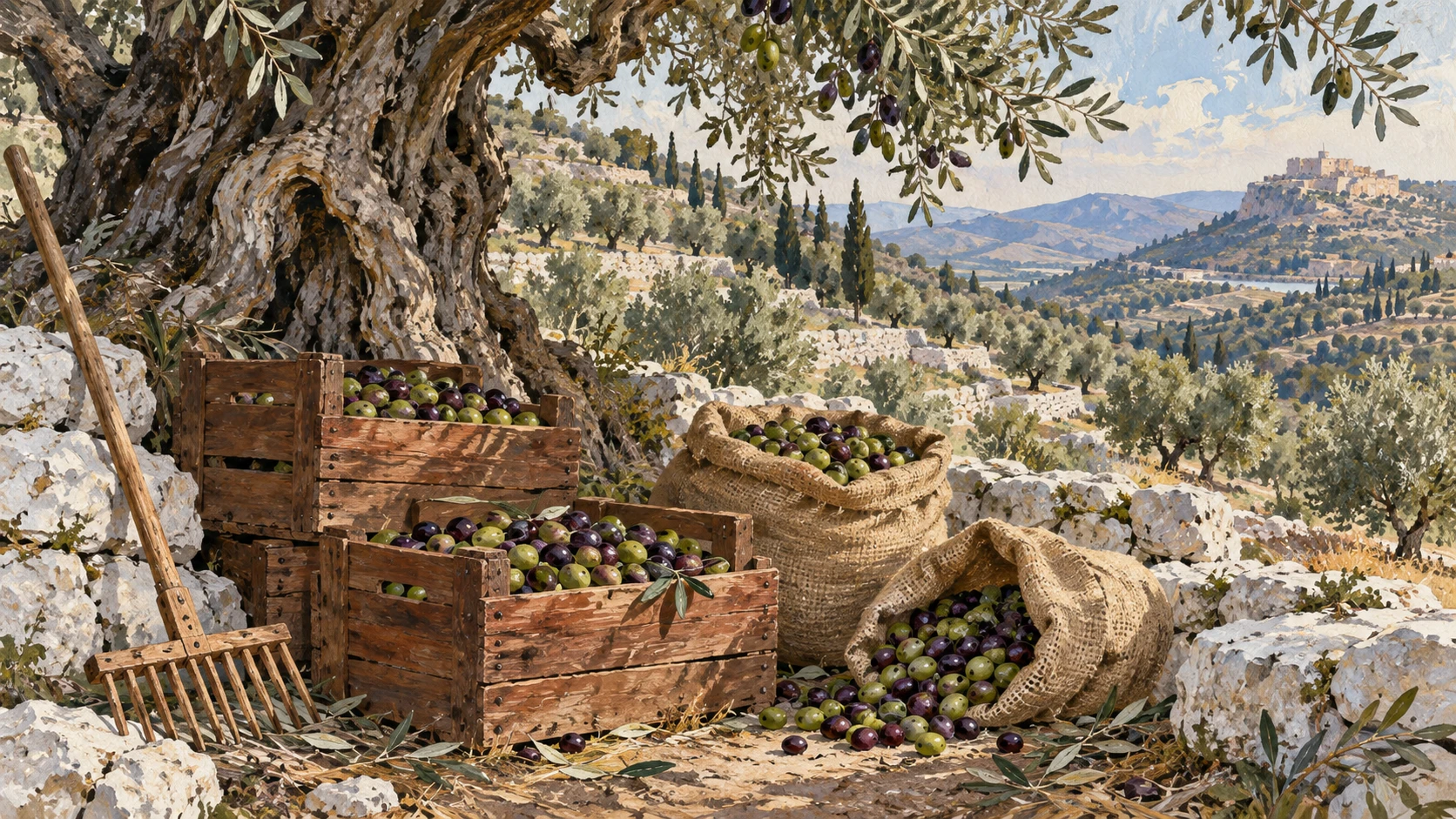
The annual olive harvest begins in October with an early harvest of green fruit. Farmers gather these unripe olives to produce fresh oil with rich herbaceous aromas. As winter arrives, motorized branch shakers and vibrating tractors collect the main crop. Ground nets catch the falling fruit quickly without bruising the skin.
On steep mountain terraces, farm workers still use flexible wooden poles to harvest branches. Picked olives travel to local milling centers within twenty-four hours of collection. Fast transport prevents fruit spoilage and protects natural oil freshness. Agricultural cooperatives coordinate daily truck schedules for thousands of smallholder families.
Cooperative Mills and Cold Extraction
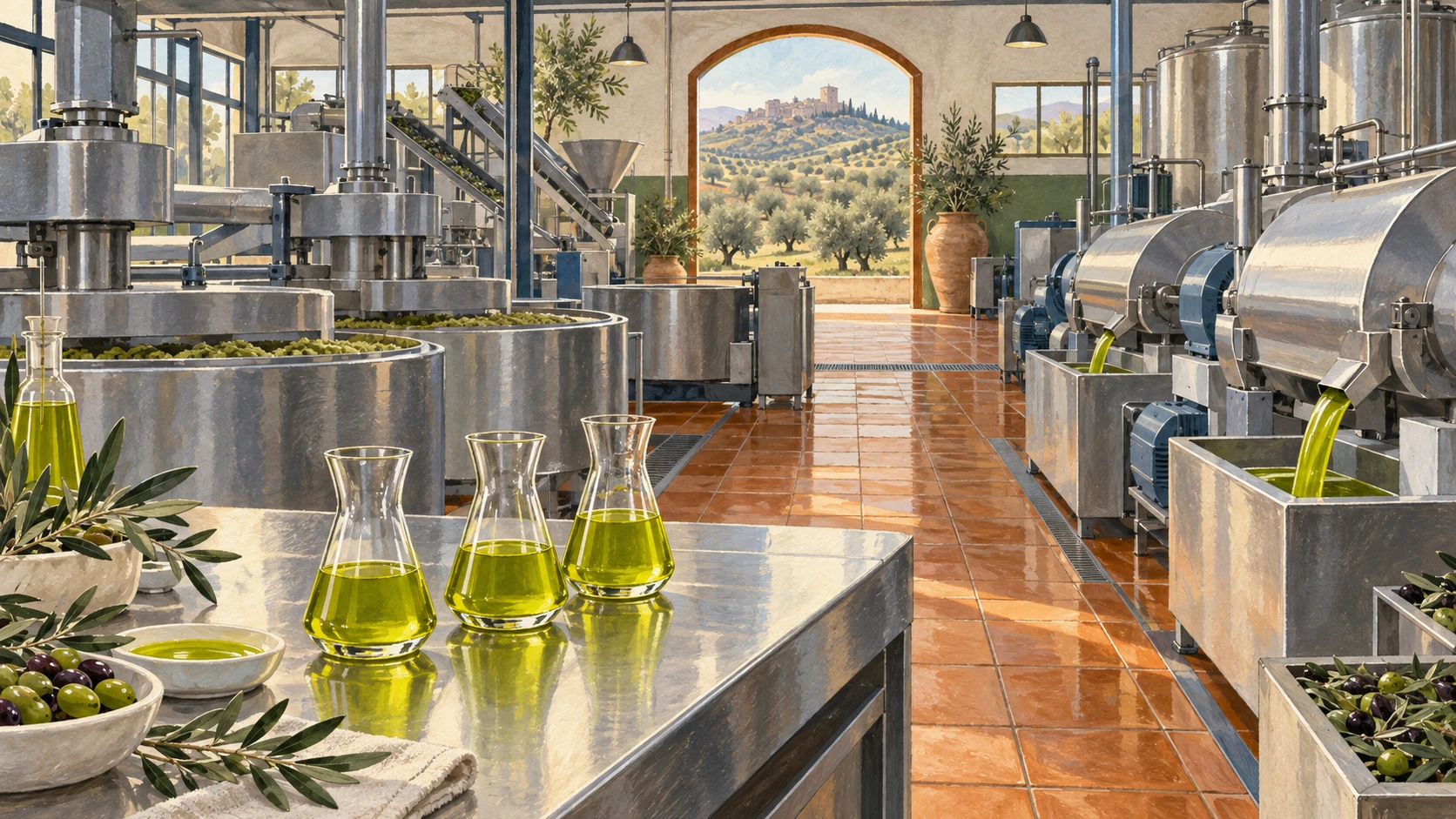
Modern olive mills known as almazaras operate continuous mechanical extraction lines. Automated decanters spin the crushed olive paste to separate pure golden oil. Certified cold extraction keeps paste temperatures below twenty-seven degrees Celsius during processing. Picual oil contains high levels of oleic acid and natural antioxidants.
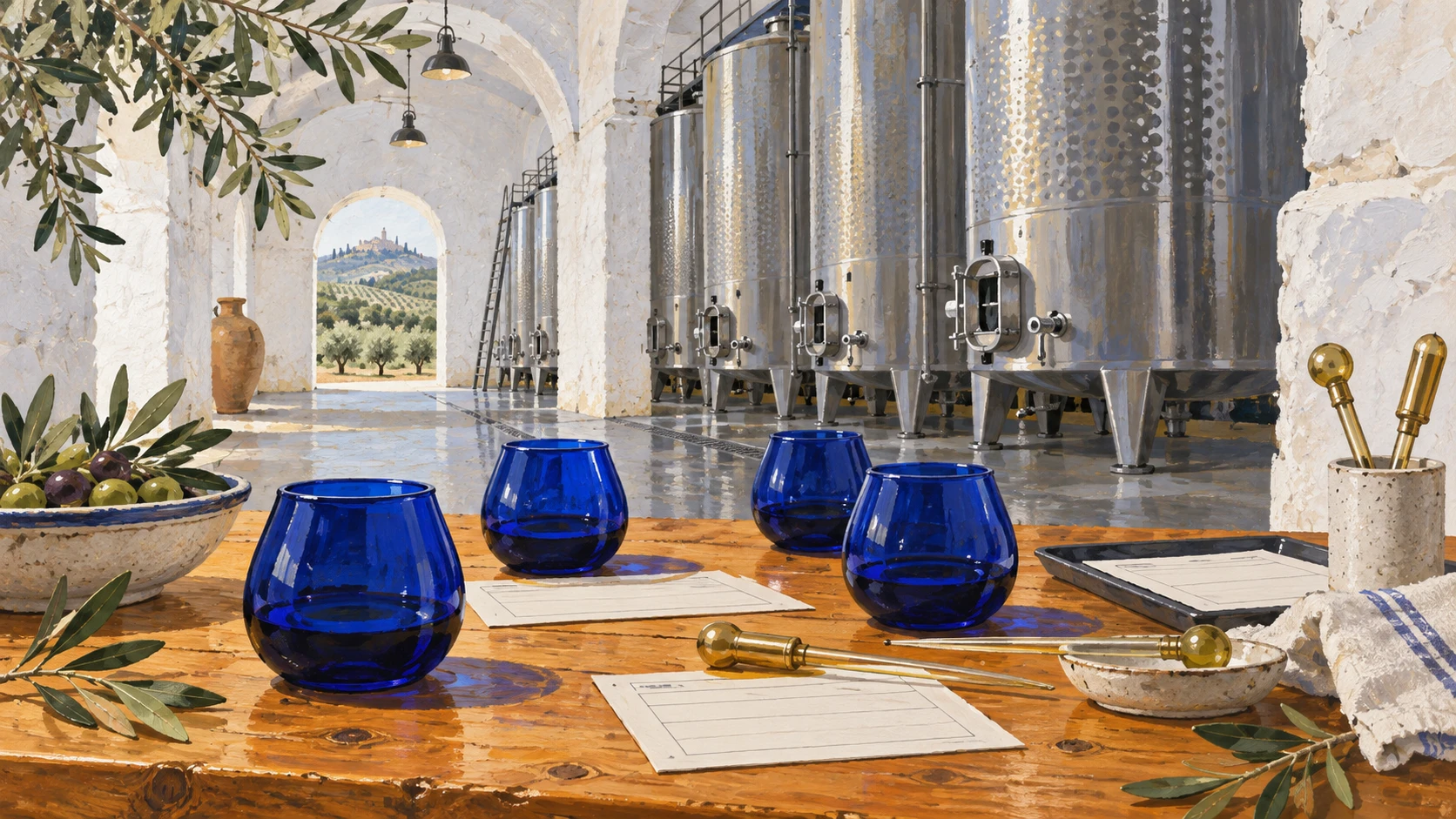
Three mountain districts in Jaén maintain official Protected Designation of Origin certifications. Expert tasting panels evaluate aroma, bitterness, and fruitiness before approving official quality labels. Leftover olive pomace and crushed pits provide renewable biomass fuel for heating. Cooperative mills recycle all organic residues to protect the environment.
Water Management and Farming Traditions
Summer heatwaves and Mediterranean droughts create serious water shortages for olive farmers. Growers install efficient drip irrigation lines fed by mountain reservoirs to conserve water. Planting native grass cover crops between tree rows prevents winter soil erosion. These green plant covers also enrich natural organic matter in the soil.
Generational renewal ensures that young farmers continue historic family agricultural traditions. Modern European farm grants help families purchase fuel-efficient machinery and clean equipment. Guided farm visits allow tourists to taste regional oils and walk through historic groves. Rigorous agricultural reports confirm that cooperative farming sustains rural communities in Andalusia.