Skip to content
MicroEnglish
Search Help Contact us Sign in

🇴🇲 Oman Places

Bahla Fort and its desert oasis

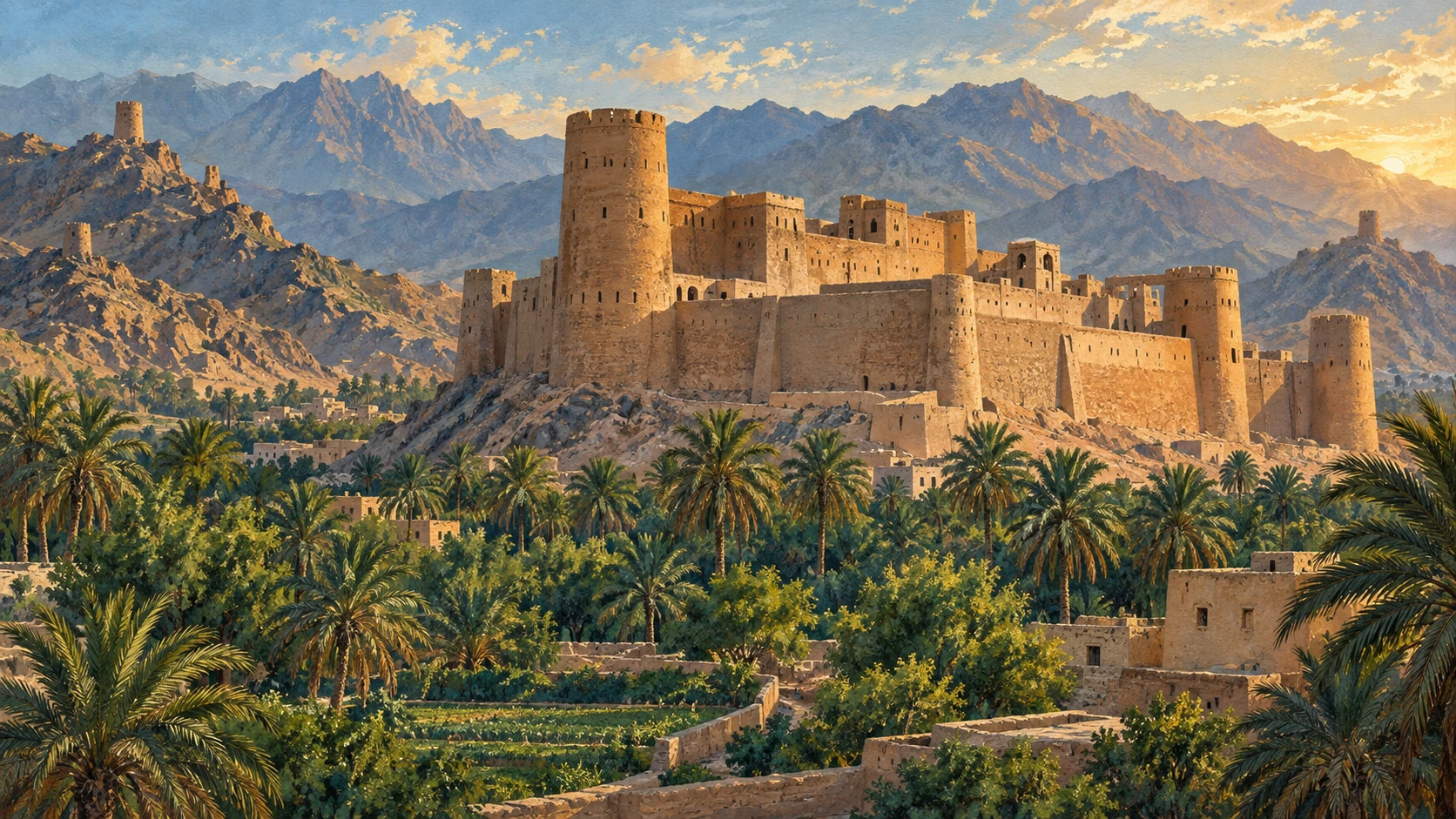
In Oman's Ad Dakhiliyah Governorate, a historic fort stands on a hill near homes, farmland, and a traditional water system.

Illustration of an earthen fort above palm trees and an oasis.
An imagined view of a fort and its surrounding oasis.

Tap an underlined word for help. Then check what you understood.

A desert capital on a hill

Bahla Fort stands on a hill among palm trees in Oman's Ad Dakhiliyah Governorate. A fort is a strong building designed to keep people safe and to control the land around it. This fort looks over an oasis, a green place in the desert where fresh water allows people to live and grow food. The Banu Nebhan made Bahla their capital between the twelfth and late fifteenth centuries.

The fort has courtyards and three main parts: Al-Qasbah, Bait Al-Jabal, and Al-Bait Al-Hadith. Builders constructed its walls and towers using mud bricks, which are blocks made from earth. These rest on stone foundations, meaning stone bases set into the ground to give the structure stability.
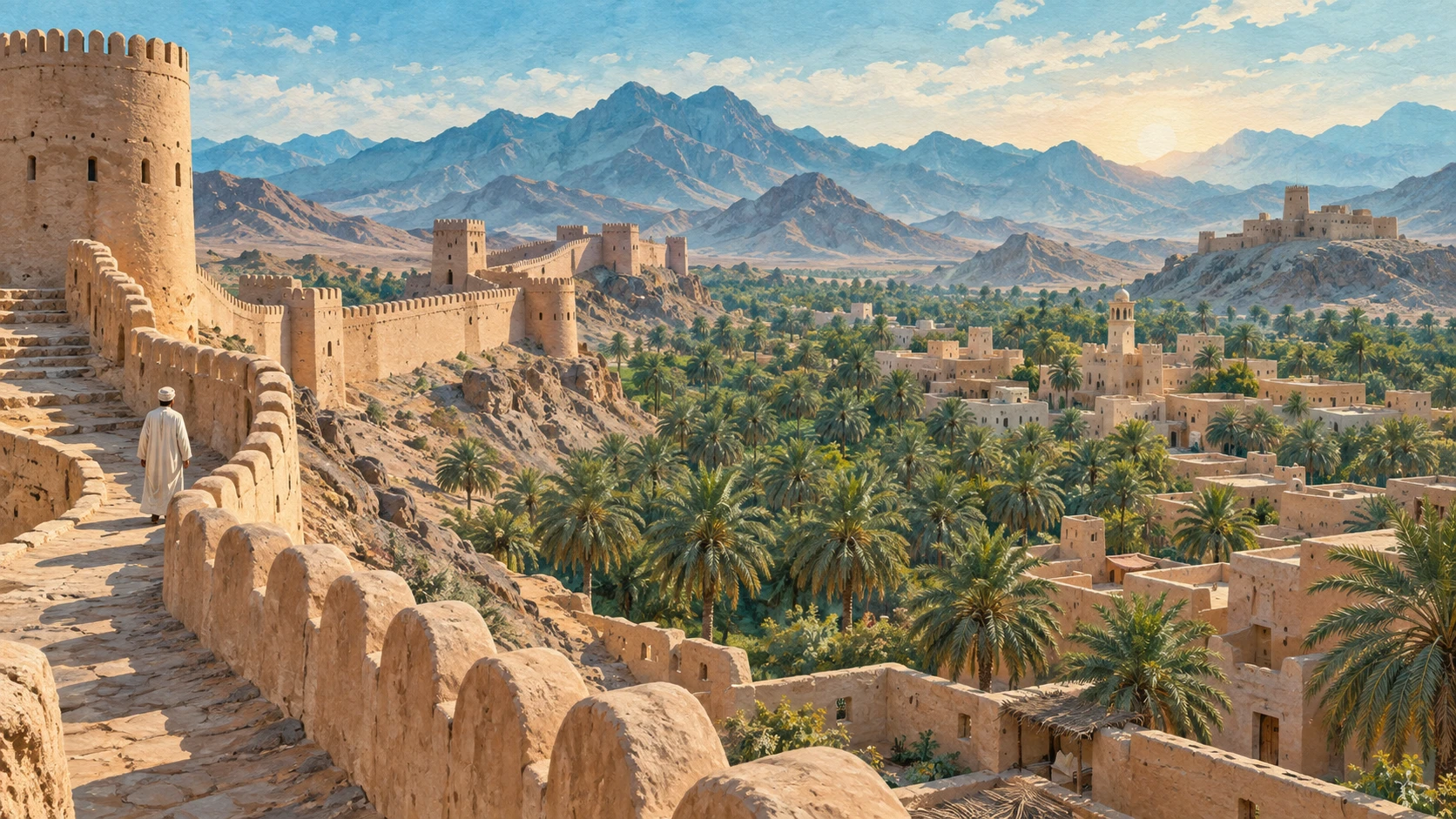
Illustration of an earthen wall and towers beside palm trees.
An imagined view of the wall and towers around an oasis.

Walls, trade, and water

The fort was only one part of the area's defences. An outer wall enclosed the local homes and farmland. This wall included gateways, watchtowers, and a walkway for guards. The walled oasis also includes mosques, a market, and places where people make pottery. The old market had narrow lanes and single-storey shops, with the fort looking directly down on them from the hill above.

People could not live in this desert area without a reliable water supply. They dug wells and built underground channels to carry spring water to homes and farms across the oasis. According to a UNESCO statement from 2010, some of these water channels and historic travel routes continue outside the area included in the World Heritage site.
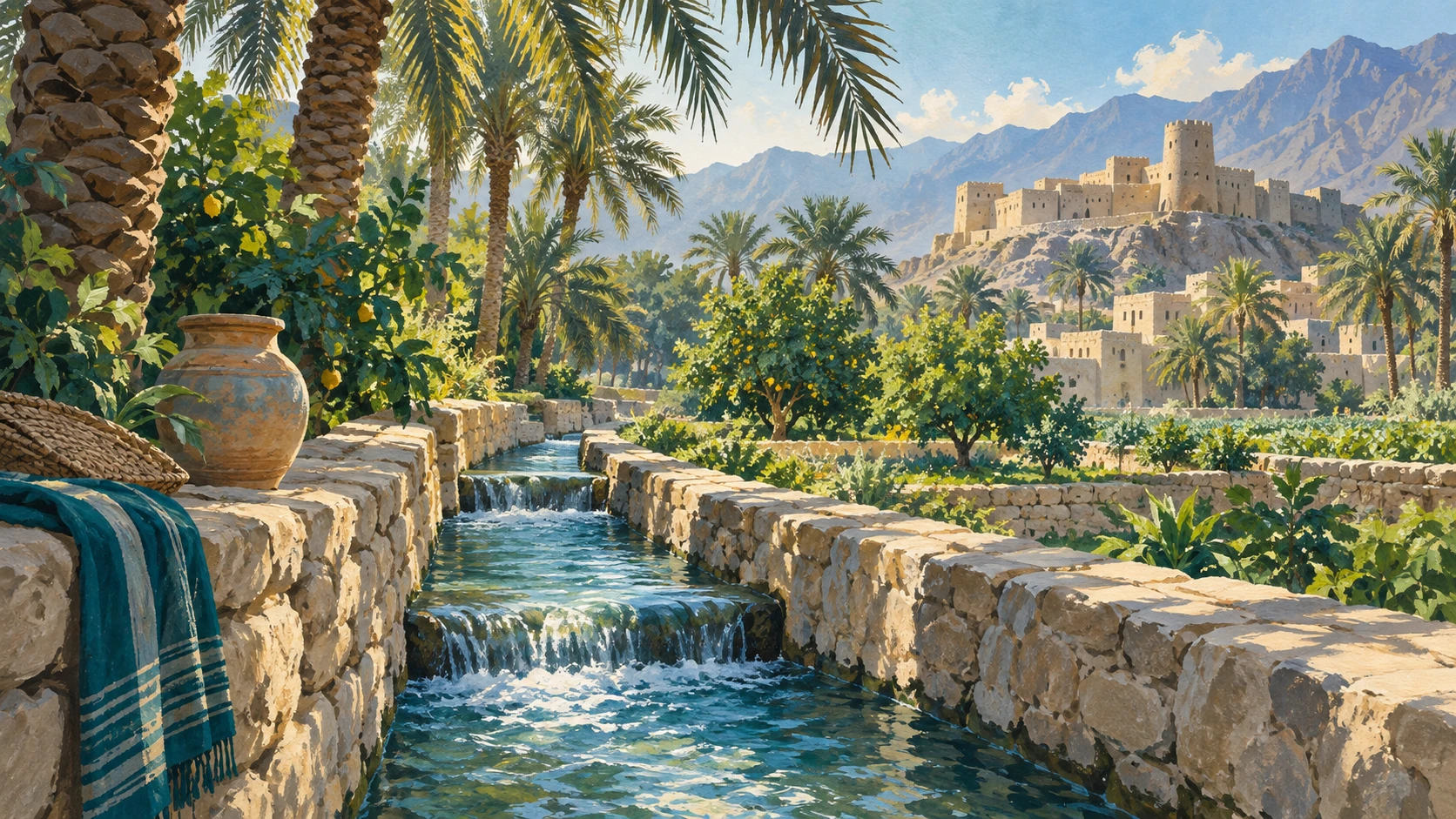
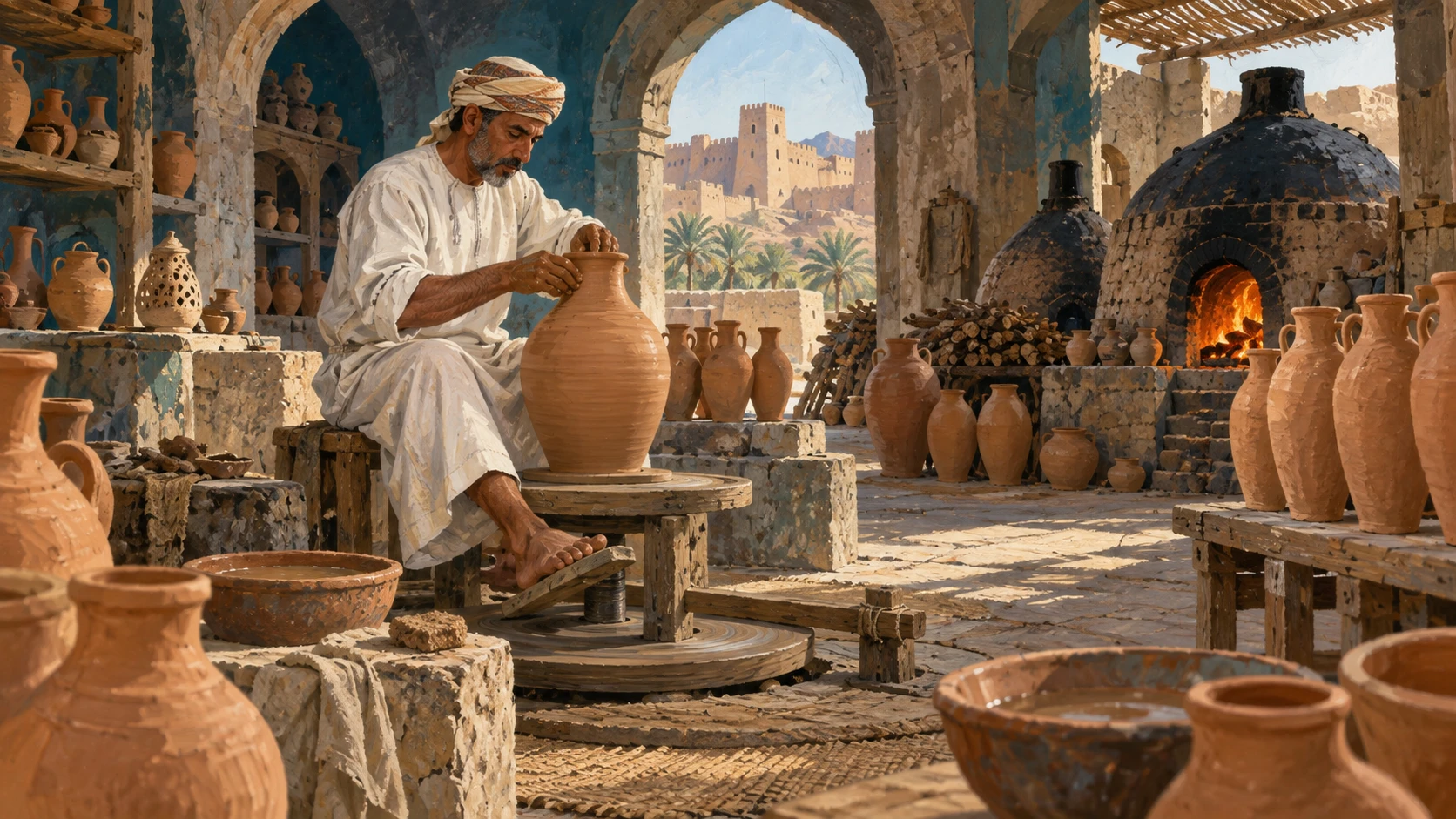
Illustration of a water channel running between palm trees.
An imagined water channel in a palm grove.
Illustration of a potter shaping a clay jar in a workshop.
An imagined pottery workshop.

Repairing and protecting history

Bahla was Oman's first World Heritage site, added to the list in 1987. The following year, in 1988, it entered the Danger List. A 2004 UNESCO report identified threatening development plans as a main reason.

Starting in 1995, workers made repairs using earth-based materials. They strengthened the fort's walls and towers and improved the drainage, meaning the way water flows away from the structure so it does not cause damage. This repair work was carefully documented. UNESCO removed Bahla from the Danger List in 2004, citing improved management and Oman's decision to stop unsuitable modern construction near the site.

Leaving the Danger List did not mean the site was completely safe. In 2010, UNESCO reported that parts of the site were breaking down and that water was not draining away well. It also reported the use of unsuitable materials to rebuild parts of the site.

Ready to check your reading?

Try the quick quiz

Words worth knowing

These words come from the version you are reading.

Back to the article

Sign in to reveal the meaning

fort

This structure on the hill at Bahla looks down over the oasis and the narrow lanes of the old market below.

oasis

At Bahla, wells and channels brought spring water here so that people could farm and live in the desert.

capital

The Banu Nebhan held power from Bahla for several centuries, giving the place a particular political importance.

mud bricks

At Bahla, builders used these blocks to construct the fort's walls and towers, placing them above the stone bases in the ground.

foundations

At Bahla, these are made of stone, while the walls and towers above them are built from a different material.

outer wall

The fort was not the only defence: this barrier protected the wider settlement.

underground channels

Spring water reached the homes and farms of Bahla through these passages, some of which continue beyond the heritage boundary.

drainage

Workers improved this during repairs. A later UNESCO report said that water was not flowing away well.

documented

The workers did more than repair walls and towers: a record of their work was kept.

Danger List

Bahla joined this UNESCO register in 1988 because of threatening development plans, and left it in 2004.

World Heritage site

Bahla was the first place in Oman to receive this UNESCO recognition, in 1987.

Quick quiz

Answer from the article, then check your choices.

Back to the article

Try one question. Sign in for the full five-question quiz. Sign in

1. The fort’s stone foundations support walls and towers built from what material?

Word help

Think about the context

Read another article

Ask meMira · AI tutor

Mira · AI tutor

Opening your tutor…