
Investment depends on the system around it
Oman's plans for manufacturing, tourism, and digital business involve more than choosing where to invest. Each sector depends on services, workers, and rules that sit outside an individual company. That makes coordination a central economic problem for Oman Vision 2040. A project can be built on schedule while the connections that make it useful develop more slowly.
The vision is the national reference for economic and social planning during 2021 to 2040. It organizes twelve priorities under four pillars, covering society, economic development, institutional performance, and the environment. Its economic direction includes private sector leadership and stronger connections with international markets. The breadth of the plan has a practical consequence: responsibility for a successful investment is distributed. Firms manage production and sales, while public bodies influence transport, regulation, and public services. This reading of the plan explains why a construction milestone offers only part of the evidence about economic change.
Turning a national direction into a timetable
The Eleventh Five-Year Development Plan covers 2026 to 2030 and is the second implementation roadmap for Vision 2040. In its January 2026 announcement, the government set an overall real growth target of about 4 percent. Manufacturing, the digital economy, and tourism receive particular attention. Their announced growth targets are 5.9 percent, 10.8 percent, and 5.7 percent respectively. These are government targets for the plan, rather than figures showing completed growth.
The timetable divides the work into programs for 2026 to 2027 and 2028 to 2029, followed by evaluation and preparation in 2030. Shorter periods allow decisions to be reviewed before the end of the national vision. They also create a need for consistent measures. Comparing actual activity with a target requires the same period, economic definition, and treatment of prices. A large percentage from a small sector cannot be treated as an equal contribution to growth across the whole economy.
A port is one part of a trading network
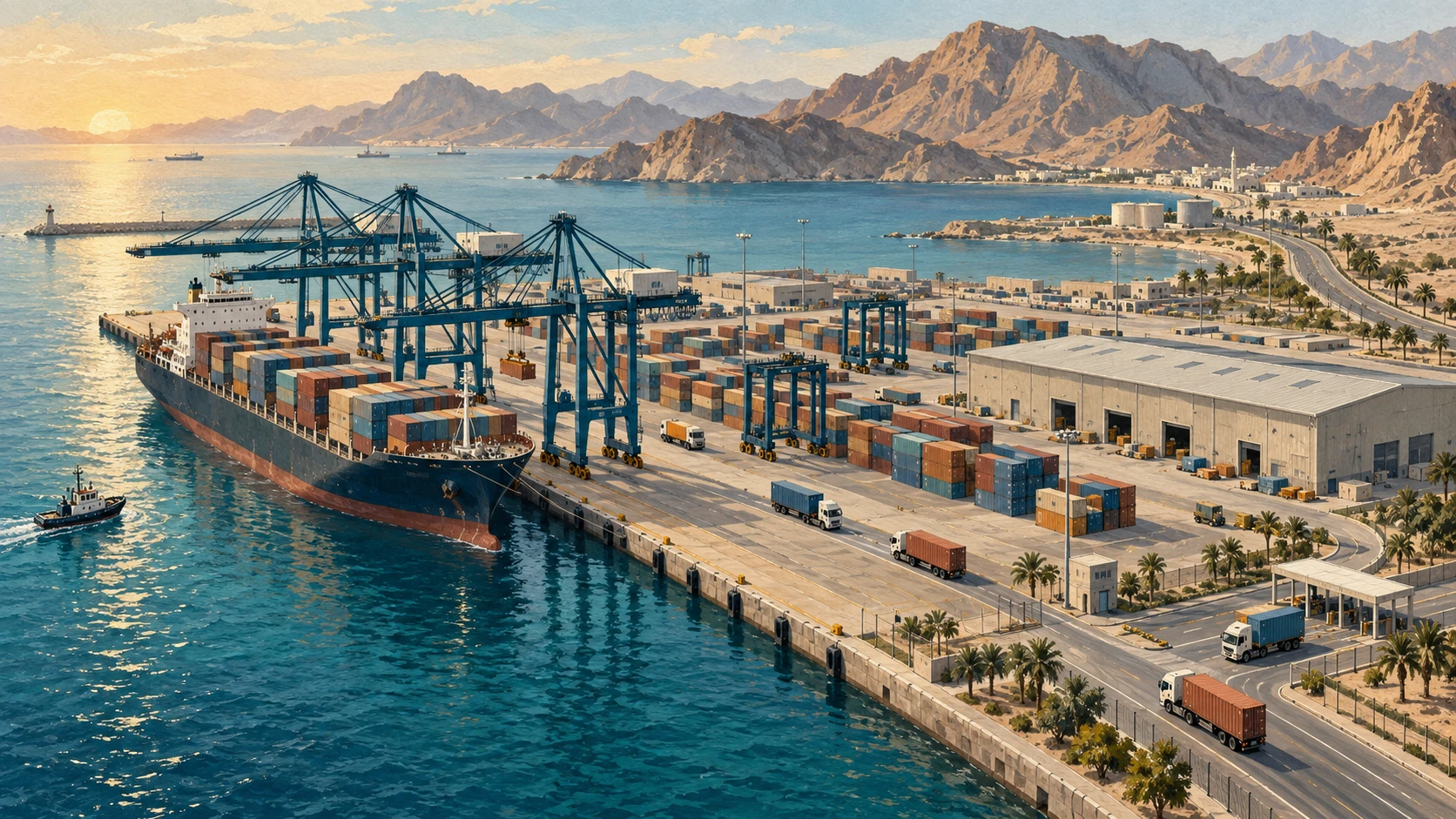
Transport and logistics are supporting sectors in the new plan. Their economic purpose is to connect production with customers. Ports provide access to shipping, but goods also need storage, onward transport, and businesses able to handle them. The World Bank's October 2025 account of its Oman program describes support connected with infrastructure at Duqm's port and industrial zone. That documents institutional engagement, without measuring the complete economic benefit of the network.
The same account discusses investment climate reforms and support for smaller enterprises. These concerns connect a large facility with the firms that may use it. A supplier needs a customer, clear requirements, and a workable way to finance production. If these conditions are absent, nearby infrastructure may offer less value than expected. This is an economic inference about connected investments, rather than a finding that a named Omani project has failed. The relevant outcome is reliable activity between firms, not the size of a facility alone.
The connection between productivity and employment
Vision 2040 calls for a productive workforce and employment incentives based on performance. Productivity concerns the output produced with a given amount of labor or other resources. Raising it can help firms manage costs, but it does not automatically increase the number of jobs. Output can expand through better equipment or organization as well as through additional hiring.
The IMF's January 2026 assessment recommended narrowing the gap between public and private sector wages, increasing women's workforce participation, and improving vocational outcomes. These are recommendations about constraints on economic activity. They point to a distinction between creating positions and making them accessible to suitable workers. Pay, skills, and the conditions of work all affect that connection. Judging the labor market only by a count of announced vacancies would miss whether the positions were filled and sustained. The vision's employment aims therefore require evidence about people and firms alongside evidence about physical investment.
Growth and fiscal exposure can coexist
The IMF reported real GDP growth of 1.6 percent for 2024 and nonhydrocarbon growth of 3.3 percent. For 2025, its report projected total real growth of 2.8 percent and growth outside oil and gas of 3.5 percent. The 2025 values belong to the report's forecast framework; they should not be described as final observed outcomes. The different dates and categories matter when assessing progress.
Oil still creates risks for government income and the country's transactions with the rest of the world. The IMF warned that weaker oil prices and global uncertainty could put pressure on fiscal and external balances. Public investment can support new activity while remaining exposed to the income that finances it. A larger non-oil sector is evidence of expansion, but establishing greater financial independence requires a closer look at revenues and spending. The report's September 2025 central government debt figure, 36.1 percent of GDP, is also a dated measure with a defined government boundary.
The measures that connect plans with daily life
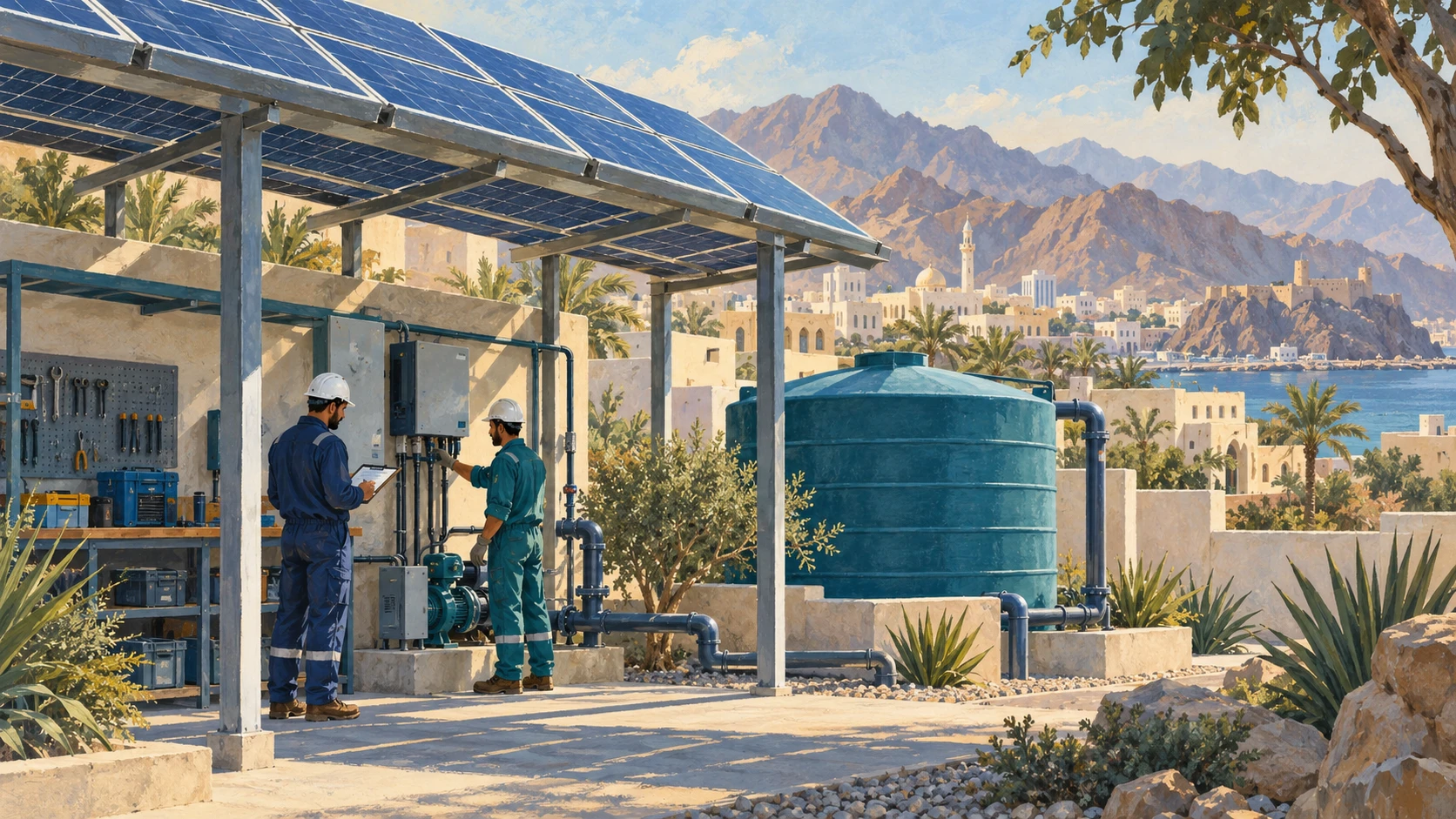
The vision's regional priorities include development across governorates, accessible transport, and sustainable use of land. These aims bring coordination down to the level of places where people live and work. The World Bank's cooperation on renewable energy and water efficiency adds another practical dimension: growing activity creates demands on resources.
A reasonable evaluation would follow several connected results over time. It would examine operating businesses, durable employment, and the cost of the services that support them. It would also distinguish government announcements from independent assessments. These are proposed criteria for judging the vision, not claims that every criterion has already been met. Oman's implementation reports provide an official account of activity. Their value increases when reported progress can be connected to outcomes that firms and households experience. The plan's success depends on many organizations completing work that other organizations can use.