
Trouvez votre prochaine leçon
Recherchez une expression ou décrivez ce que vous voulez dire, puis choisissez parmi les leçons disponibles.
Leçons 487 à 504 sur 853
-

Obsolete meaning: no longer in use
Obsolete means no longer used or needed. A newer tool or method may have replaced something, or the need for it may have disappeared. Something can still work and be obsolete. Old describes age; it does not by itself tell you whether an item remains useful.
-

Relative pronouns: choose the right word
Relative pronouns introduce relative clauses that clarify or expand on a preceding noun. Words like who, which, that, whose, and whom tell your listener whether you are describing an individual, a thing, an owner, or someone receiving an action.
-

Public speaking nerves: Four recovery steps
Public speaking anxiety means feeling anxious about addressing a group. This lesson focuses on language choices: opening your talk, marking a new point, and correcting a mistake. These communication strategies are not a diagnosis or treatment for anxiety.
-

Spoken English exercises: everyday conversation practice
A conversation exercise focuses on a single turn within an everyday exchange rather than an entire memorized script. Each speaking turn accomplishes a specific job: opening with a question about an observable situation, answering while supplying one helpful detail, following up on your partner's words, holding the floor while you think, clarifying missed words, or closing with polite warmth. Mastering these individual communicative moves allows you to participate flexibly in real-world dialogue.
-

English class skills: What you learn
A language skill is something you can do with English to communicate. Reading and listening help you receive and understand messages from other people. Speaking and writing help you produce your own thoughts, answers, and requests. Grammar, vocabulary, and pronunciation support these four skills so your messages remain clear.
-

Reasons to Learn English: Practical Personal Goals
A reason to learn English explains why the language matters in your daily life, such as talking to neighbors, understanding work manuals, or following international cooking instructions. A goal states an observable action you intend to complete within a clear timeframe.
-
Abonnement
Accédez à toutes les leçons gratuitement pendant 7 jours
- 853 leçons avec dictées et tests d’écoute
- Trois accents : britannique, américain et australien
- Parcourez la bibliothèque et retrouvez votre progression
Aucune carte requise. Ensuite, à partir de $7.50 par mois si vous souhaitez continuer.
Commencer l’essai gratuit -

Grammatical Case in English: Types and Everyday Use
Grammatical case shows how a word functions within a clause. In everyday spoken English, nouns keep the same shape whether they perform an action or receive one. Pronouns change shape to show that difference clearly. When Elena hands Maya a basket, Elena is the subject and Maya is the recipient. Replacing their names with pronouns requires she for Elena and her for Maya, showing who acts and who receives.
-

Interrogative adjectives: ask clear questions
An interrogative adjective stands directly before a noun to ask for specific information about that person, place, or thing. Descriptive words tell you about size, color, or condition. By contrast, what, which, and whose do not describe appearance. They specify the scope of your inquiry. These words are also called interrogative determiners because they signal that a question follows and point the listener toward the exact noun being questioned.
-

Reconciliation: Meanings and Practical Examples
Reconciliation is a noun with three common uses. First, it describes repairing a damaged relationship between people so they can cooperate peacefully again. Second, it describes checking two financial records, such as an internal register and a bank statement, to find and explain any differences. Third, it describes showing how two statements, reports, or ideas that seem to disagree can both make sense together.
-

English Nouns: Rules for Everyday Use
A noun is a word that identifies a person, place, animal, thing, or idea. Nouns can name the person who acts, the object that someone carries, or a location. They can be singular for one item, plural for several items, or uncountable for substances and concepts that do not take numbers directly.
-

Educational Goals Essay: Planning Your Main Steps
An educational-goals essay is a structured statement of your learning plan. It connects your current situation to a specific program, certificate, or skill. By explaining how classroom training will resolve practical problems you face at work or in your community, the essay demonstrates that you have purposeful, realistic reasons for enrolling.
-

Till or Until: Choose the Right Word
Till and until mean 'up to a particular time or event'. An activity or situation continues up to that point, but this does not mean every action happens without a break. In negative sentences, not until shows that something does not happen before the stated point.
-

Proper Adjectives: Rules and Examples
A noun names a person, place, or thing. A proper noun names a specific person, place, or entity, such as Japan or Queen Victoria. When you adapt that specific name to describe another noun, you create a proper adjective. For example, Japan becomes Japanese in the phrase Japanese tea. The adjective indicates the origin, cultural style, or historical context of the item, yet the noun itself remains the central object.
-

abstract nouns: everyday rules and examples
An abstract noun names a feeling, quality, idea, state, or event rather than a physical object you can see or touch. Common examples include happiness, honesty, advice, and childhood. Instead of relying solely on whether something can be touched, look at how the word functions in its sentence to distinguish concrete items from abstract concepts.
-

Write a Formal Letter: Clear Rules and Examples
In everyday English, formal means appropriate for an official or professional situation. A formal letter uses clear layout, polite phrasing, and complete sentences. It does not require unusual vocabulary or complicated grammar. It simply helps an unfamiliar reader understand your situation and take action without confusion.
-

Yours faithfully or Yours sincerely: How to Choose
Yours sincerely and Yours faithfully are fixed formal closing phrases placed before the writer's name in official letters. They do not express personal affection, religious faith, or strong emotions. Instead, they act as conventional markers of courtesy and completion. In traditional British correspondence, their use depends entirely on the opening greeting: a named recipient takes Yours sincerely, while an unnamed recipient takes Yours faithfully.
-
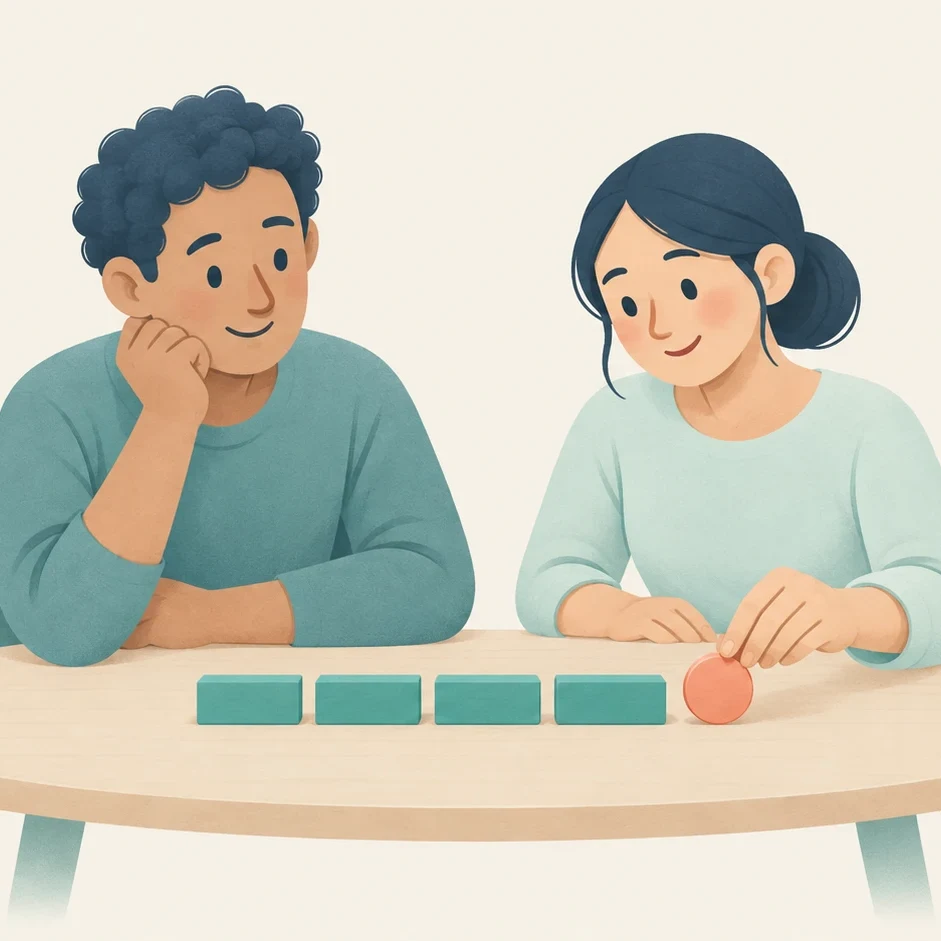
Full stops: when to use them
A full stop marks the completion of an informative statement or an ordinary instruction. It tells the reader that one complete thought has finished so they can understand each action before moving to the next sentence.
-

Your or Yours: How to Choose
Your is a possessive determiner. It introduces a noun phrase and shows who connects to the thing being named. Yours is a possessive pronoun. It takes the place of both your and the noun together. Possession in English extends beyond physical ownership to include relationships, scheduled turns, and personal responsibilities. For related pronoun work, review /micro-listenings/11-2/ and /micro-listenings/4-2/.
Vous hésitez à commencer l’essai ? Recevez une leçon gratuite chaque jour
Une courte dictée par e-mail chaque jour pendant 7 jours. Entraînez-vous où vous êtes, sans compte.
Vous ne trouvez pas l’expression ou la situation à travailler ?
Les demandes de leçon sont comprises dans l’abonnement.
Voir les abonnements