
다음 수업 찾기
배우고 싶은 표현을 검색하거나 어떤 말을 하고 싶은지 적어 보세요. 현재 제공되는 수업 중에서 골라 연습할 수 있어요.
487–504 / 826개 수업
-

austere meaning: strict, plain, and serious
Austere describes anything that is noticeably plain, severe, or without comfort. When applied to an individual, it suggests a serious tone and strict standards. When applied to a physical space, it signals bare surfaces and an absence of ornament. When applied to living conditions or a schedule, it means very few comforts or luxuries exist.
-
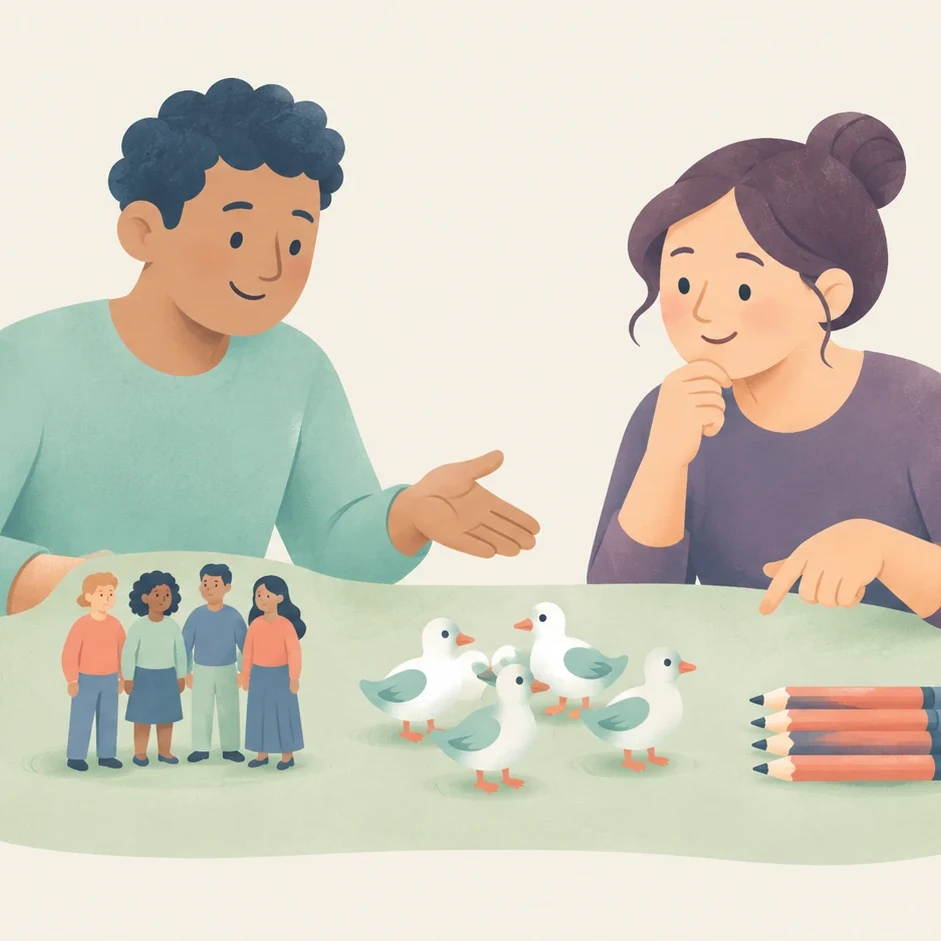
Collective nouns: choose the right group
A collective noun is a single word that refers to a group of people, animals, or things as a single unit. Even though the collection contains multiple individual members, the collective word itself acts as the main noun in the phrase.
-

Few vs Some: Choosing Quantity Words
Few and some indicate quantity before nouns, but they express different perspectives. Few pairs only with plural countable nouns to emphasize scarcity or a smaller number than anticipated. Some pairs with plural countable nouns or uncountable nouns to denote an unspecified quantity without judging whether that amount is large or small. Adding the indefinite article to form a few changes the perspective by emphasizing that a small quantity exists and is ready for use.
-

Possessive Determiners: Choose the Right Form
A possessive determiner shows who something belongs to or is connected with. My refers to the speaker, your to the listener, and our to the speaker and others. His and her refer to individuals; its refers to a thing, animal, or organization. Their can refer to several people or to one person, including someone whose gender is unknown.
-
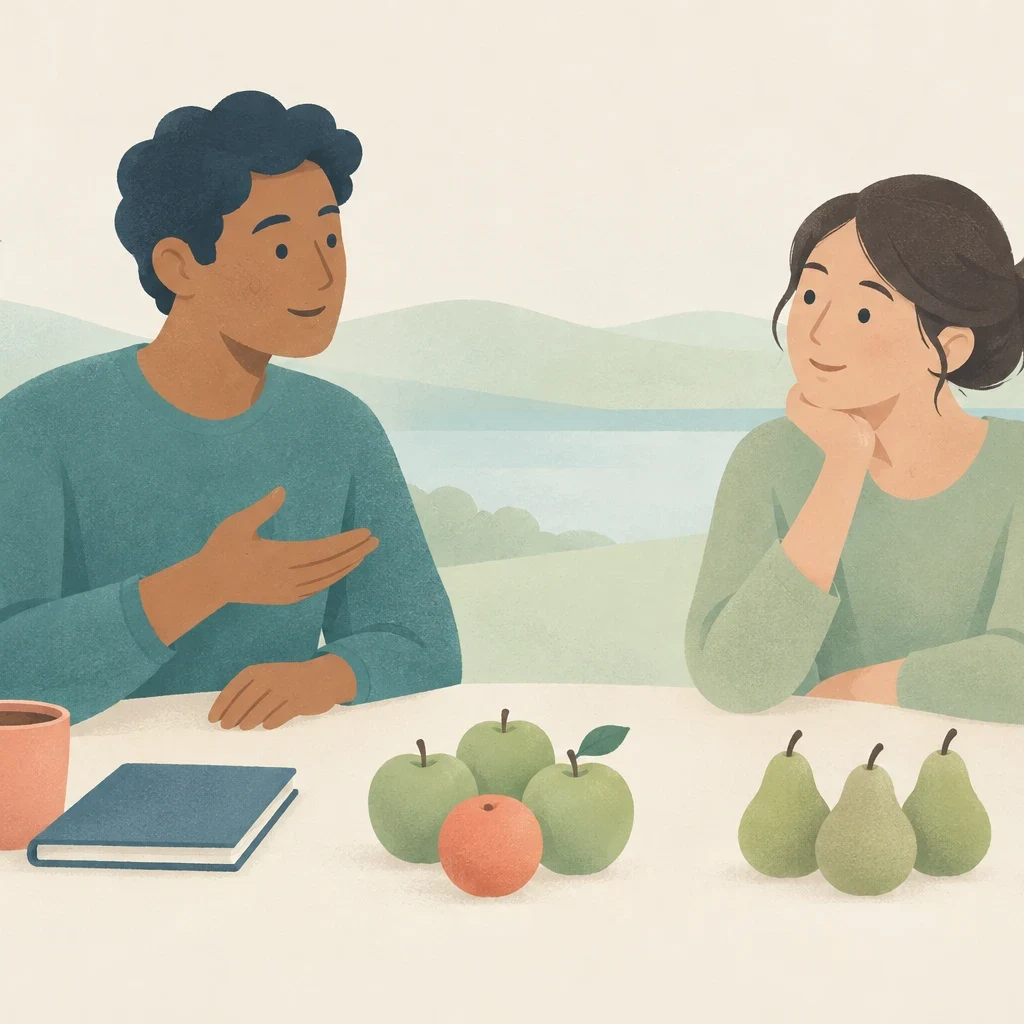
Beside, Besides, or Except: Choose the Right Word
Beside is a preposition that means next to or at the side of another person or object. Besides functions as a preposition meaning in addition to, or as a transition word that introduces another supporting reason. Except is a preposition meaning excluding or apart from, pointing directly to the member that does not belong to the stated group.
-

A or An: Choosing the Right Article
The words 'a' and 'an' are indefinite articles that introduce one nonspecific, countable item. Both words carry the exact same grammatical meaning. The only difference is phonetic: 'an' cushions a following vowel sound to keep spoken English flowing smoothly, while 'a' sits naturally before consonant sounds.
-
멤버십
모든 수업을 7일 동안 무료로 이용하세요.
- 받아쓰기와 듣기 테스트가 포함된 826개 수업
- 각 수업에 제공되는 발음 선택
- 공개된 수업, 자동 저장되는 학습 진도
카드 없이 이용할 수 있어요. 계속 이용하고 싶다면 월 $7.50부터.
무료 체험 시작 -

make or made: choose the right form
Make means to produce, create, prepare, or cause something. Make is the base form, makes is the third-person singular present form, and made is both the past simple and past participle. Use making with a form of be for an action in progress. The sentence structure determines which form fits.
-

Elusive: Meaning and Everyday Use
Elusive means difficult to find, catch, understand, or achieve. It can describe a person, object, answer, or goal.
-

Reflexive Pronouns: Choose the Right Form
A reflexive pronoun can refer back to the subject when the subject and object are the same person or thing. Forms include myself, yourself, himself, herself, itself, ourselves, yourselves, and themselves. They can refer to one person, so themselves can also have a singular referent.
-

Albeit Meaning: Use Clear Formal Contrasts
Albeit means although or even though. It introduces a concession or qualifying fact that limits the scope of the main clause without negating it.
-

About vs Around: Choosing the Right Word
About commonly means concerning a topic. Around commonly describes surrounding position or movement: a bus travels around the park. Depending on context, that may describe a route around its edge or movement in its area. Both words can mean approximately, and about also has spatial uses. Neither word has only one job.
-

English Question Forms: How to Ask Clearly
Interrogative sentences ask questions. Many direct questions put a helper verb or a form of be before the subject. Subject questions use a different pattern, and a statement can also function as a question in conversation. Start by identifying what information you are asking for.
-

Capricious Meaning: Unpredictable Changes
Capricious describes a sudden change driven by passing moods or arbitrary impulse rather than stable logic. When applied to people, it suggests that their opinions or choices cannot be relied upon to remain steady. When applied to rules, markets, or weather, it highlights unpredictable shifts that make planning difficult.
-

Sarcastic meaning: when words mean opposite
Sarcastic describes speech or writing where someone deliberately says something opposite to their actual view to mock, tease, or criticize. The speaker relies on context and tone to signal that the literal praise or positive phrase actually highlights a flaw or frustration.
-

Inevitable meaning: unavoidable results explained
Inevitable describes something that cannot be prevented from happening because current conditions leave no realistic alternative.
-

English vocabulary: learn and use words
Vocabulary refers to the total stock of words known and used by a person, or the specialized words associated with a particular subject or profession.
-

Adverbs of reason: link cause and result
Adverbs of reason and result show that a second statement follows logically from a first statement. When you use words such as therefore, consequently, thus, or hence, you present an outcome or decision based on facts your listener already heard. In contrast, because introduces the cause itself. Knowing whether you are presenting the origin of an event or its outcome determines which word you should choose.
-

Why English Class Matters: Practical Adult Skills
An English class is like a practical workshop. In class, you try out simple tools and see what works best. Reading exercises teach you to find facts quickly. Speaking tasks help you turn your thoughts into simple, clear sentences. Writing lessons show you how to name the person doing each action. Helpful feedback from your teacher shows you what to change next.
아직 연습해 보지 않으셨나요? 매일 무료 수업을 받아 보세요.
매일 짧은 받아쓰기 수업을 7일 동안 이메일로 보내 드려요. 계정 없이 어디서든 연습할 수 있어요.
배우고 싶은 표현이나 상황이 없나요?
수업 요청은 멤버십에 포함됩니다.
멤버십 보기