Small Talk im Alltag
Lerne Wendungen für alltägliche Gespräche kennen. Schau am Beispiel nach, wie der Ausdruck zur jeweiligen Situation passt.
Lektionen 37 bis 54 von 54
-
 Video · 7 Min.
 Bring up
Bring up has three distinct meanings in everyday English. First, it means to introduce a topic or start discussing an issue in conversation. Second, it means to care for, feed, and educate a child until adulthood. Third, in technology contexts, it means to make a document, image, or website appear on a screen.
-
 Video · 8 Min.
 Break up
Break up expresses four main ideas in modern English. First, it describes romantic partners ending a relationship. Second, it describes people in a gathering dispersing or an organizer ending an event. Third, it means dividing something larger into smaller pieces or groups. Fourth, it describes an unstable voice or video signal that cuts out during a conversation.
-
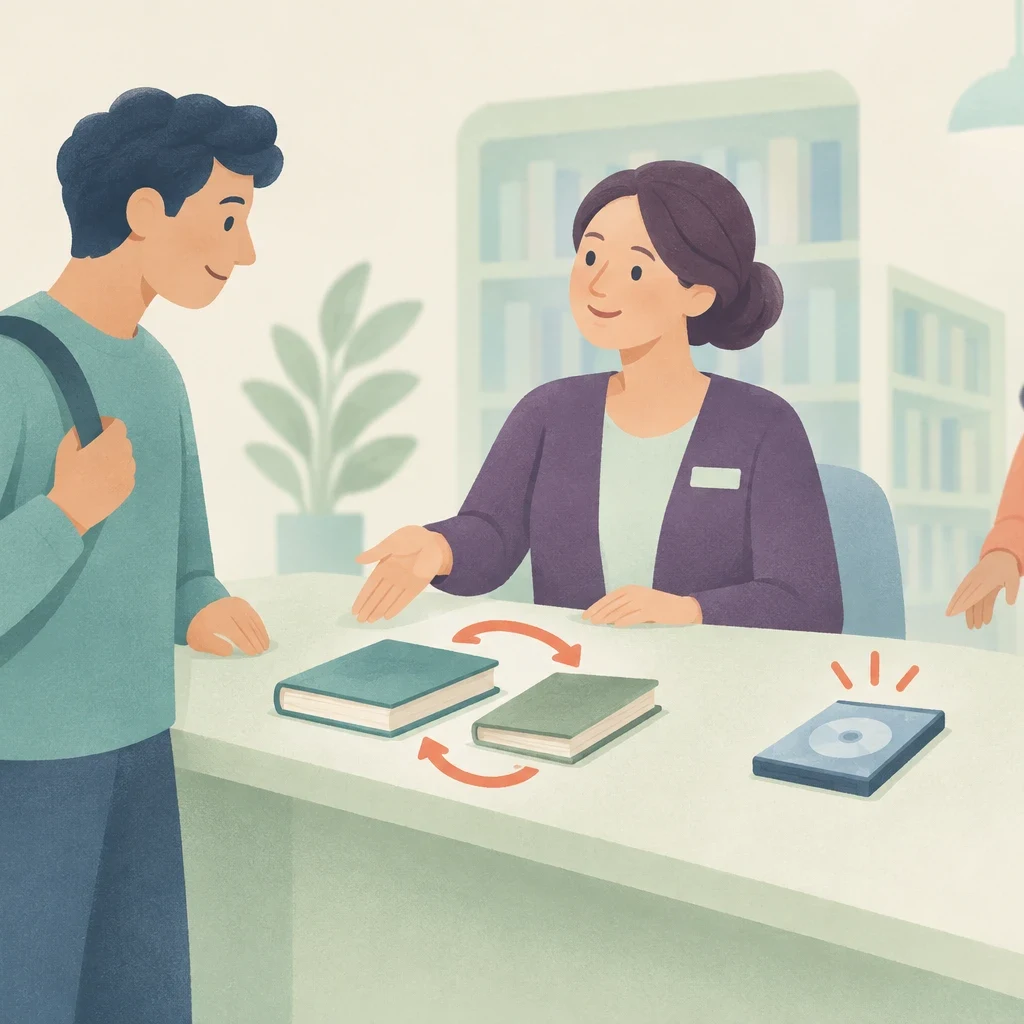
Renewing library items
Renewing an item grants permission to keep it past its original return date. If an item cannot be renewed, its original deadline remains active. In our conversation, the cookbook and audiobook receive new deadlines, while the reserved gardening book must still be returned on Saturday.
-

Weather-dependent plans
Conditional plans establish two possible paths based on an uncertain event. In this conversation, the friends prefer cycling outdoors, but rain makes that choice uncertain. The word if introduces the weather condition required for cycling. The word otherwise introduces the indoor alternative if that condition fails. The word instead highlights that cooking lunch replaces cycling rather than adding another event to their afternoon.
-
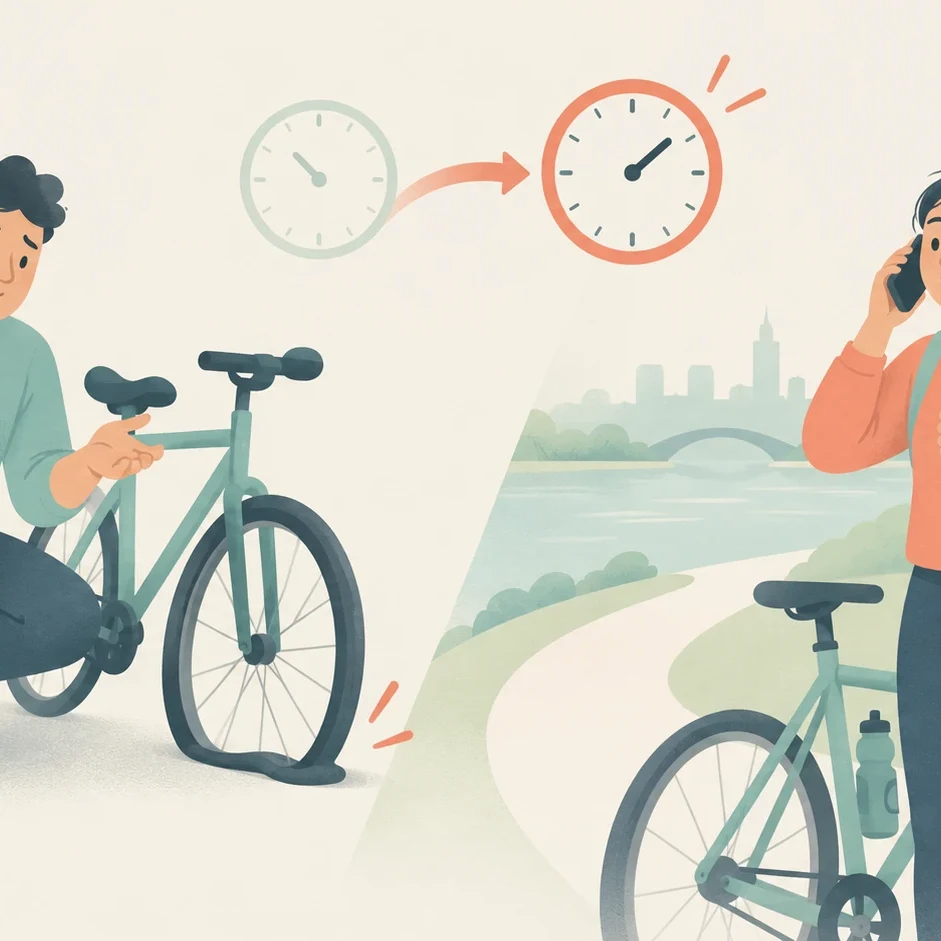
Changing a plan
When people change a plan, they keep the main activity but adjust one detail, such as the start time or meeting spot. In daily conversations, speakers explain why a delay happened, propose an alternative time, and wait for confirmation before the arrangement is settled.
-

Word of mouth
Word of mouth describes information, recommendations, or news passed directly from person to person through informal conversation rather than paid advertising or official announcements.
-
Mitgliedschaft
7 Tage kostenlos auf alle Lektionen zugreifen
- 570 Lektionen mit Diktaten und Hörtests
- Drei Akzente: britisch, amerikanisch und australisch
- Täglich neue Lektionen mit gespeichertem Lernfortschritt
Keine Karte erforderlich. Wer danach weiterlernen möchte, kann ab $7.50 pro Monat eine Mitgliedschaft wählen.
Kostenlos testen -
 Video · 5 Min.
 When it comes to
'When it comes to' means 'about this particular subject'. You name the subject and then say something about it. For example: 'When it comes to sewing, I need help.'
-

Touch a nerve
To touch a nerve means to say something that causes an immediate sensitive, defensive, or upset reaction because it mentions an uncomfortable topic.
-
 Video · 7 Min.
 Take it easy
'Take it easy' means to rest and reduce effort, to calm down when feeling anxious or agitated, or to offer a warm, casual goodbye.
-

Take for granted
Take something for granted has two distinct meanings in daily conversation. First, it means to accept a fact, plan, or outcome as true without verifying it. Second, it means to receive regular help, kindness, or support without acknowledging its value or thanking the person providing it.
-

Set your heart on
To set your heart on something means to want a specific outcome very strongly and to become emotionally invested in achieving it, such that any other result feels disappointing.
-

Ring a bell
Ring a bell means to awaken a vague feeling of recognition or familiarity, even when you cannot remember specific facts or identify the source.
-

Play it by ear
'Play it by ear' means to handle a situation as it develops rather than following an advance plan step by step.
-

Keep an eye out
To keep an eye out for someone or something means to remain alert and watchful so you notice them the moment they arrive or appear.
-
 Video · 10 Min.
 In your element
To be in your element means to feel happy, relaxed, and confident because you are doing an activity that suits your personal interests, skills, or personality.
-
 Video · 8 Min.
 Have a word
'Have a word' means to have a short conversation with someone. The conversation often takes place in private, especially when someone wants to discuss a quiet issue or solve a problem without an audience. However, the phrase itself does not mean someone did something wrong or that anyone is angry.
-
 Video · 7 Min.
 Get it out of your system
To get something out of your system means to express a strong feeling or satisfy an urge until it becomes weaker. The action provides a sense of release.
-
 Video · 8 Min.
 Future plans
Future expressions in English do not simply state that an event happens later. They reveal how the speaker views the plan: as a spontaneous reaction at the moment of speech, a personal intention decided previously, or a confirmed arrangement coordinated with others.
Noch kein Probeabo? Erhalte täglich eine kostenlose Lektion
7 Tage lang kommt jeden Tag ein kurzes Diktat per E-Mail. Übe, wo du gerade bist. Du brauchst kein Konto.
Du findest den gesuchten Ausdruck oder die passende Situation nicht?
Lektionsanfragen sind in der Mitgliedschaft enthalten.
Mitgliedschaft ansehen