A change in output is an incomplete account of dependence
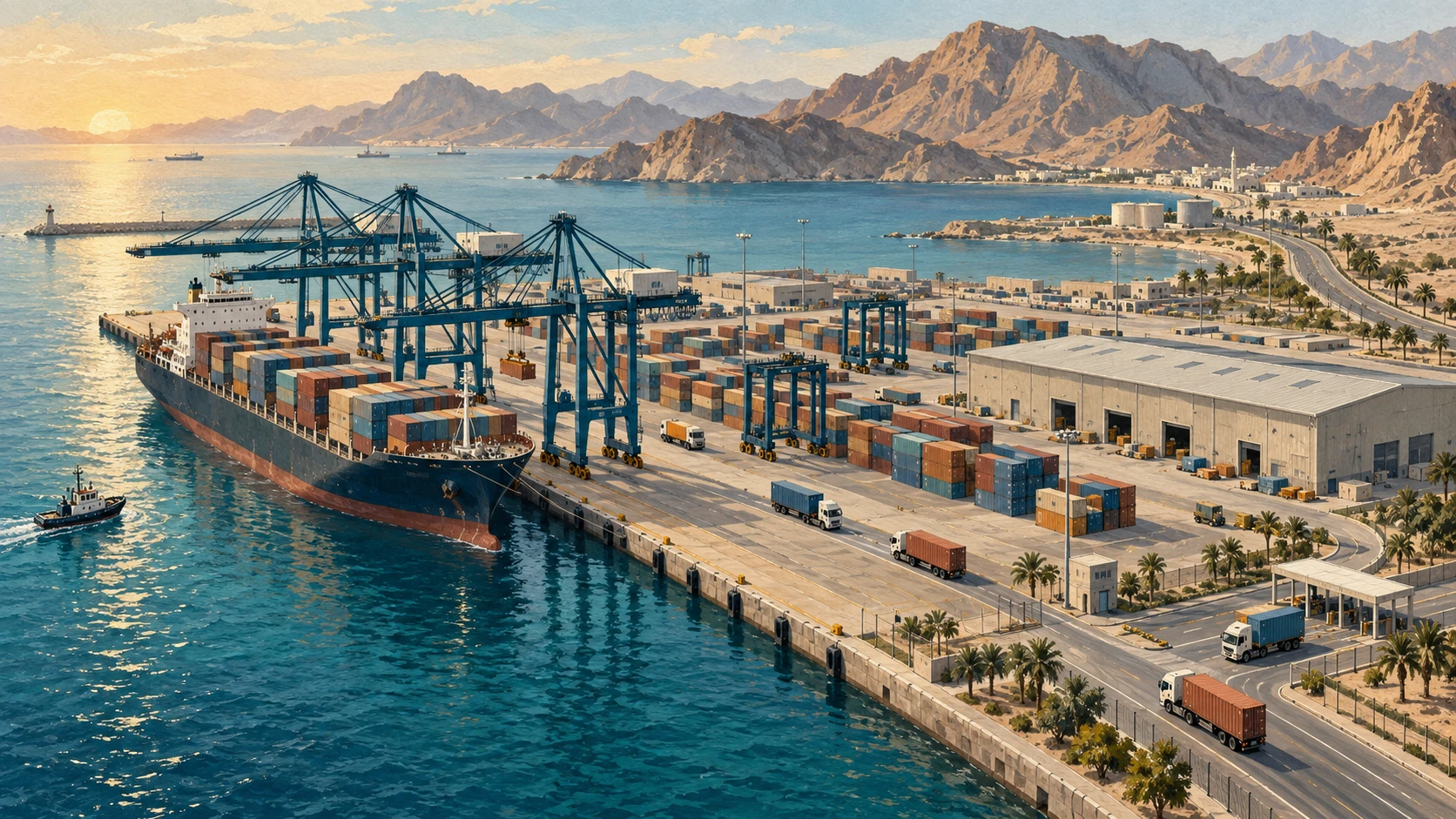
The evidence for Oman's diversification begins with a measurable development: in 2024, nonhydrocarbon output grew by 3.3 percent while total real GDP grew by 1.6 percent, according to the IMF's January 2026 Article IV report. Those figures establish that the economy outside oil and gas expanded. They do not, by themselves, establish how independently that activity was financed, where its customers obtained their income, or how its gains were distributed.
This distinction matters because diversification has several possible objects. An economy can diversify production, exports, tax receipts, or employment. These changes may reinforce one another, but their progress need not be identical. A non-oil business may sell to a public body whose spending still depends on hydrocarbon revenue. Its output belongs outside the hydrocarbon sector even when the demand supporting it remains exposed to oil. This is an analytical possibility, rather than a claim about the finances of a particular Omani firm.
Oman Vision 2040 makes diversification and fiscal sustainability part of the same economic direction. It also calls for private sector leadership and a productive workforce. The relationship among those aims supplies a more demanding standard than a rising sector share: activity capable of continuing under less favorable financial conditions. The national vision guides planning for 2021 to 2040, so its assessment must accommodate gradual change. A single year's growth is relevant evidence, but structural transformation concerns relationships that persist across years and across fluctuations in the income of the state.

Targets allocate attention before they establish outcomes
The Eleventh Five-Year Development Plan covers 2026 to 2030 and is the second implementation roadmap for Vision 2040. The January 2026 government announcement identifies manufacturing, tourism, and the digital economy as its central growth sectors. It sets an overall real growth target of about 4 percent, with announced sector targets of 5.9 percent for manufacturing, 5.7 percent for tourism, and 10.8 percent for the digital economy. Those figures express the government's intended direction during the plan.
The IMF's forecast is a different kind of statement. Its January 2026 report projected real growth of 2.8 percent and nonhydrocarbon growth of 3.5 percent for 2025. These values belong to a forecast framework based on the information available to its staff. Their publication after the calendar year does not turn them into final observations. Nor can they be compared directly with targets for a later five-year period without preserving the difference in timing and purpose.
Targets can help public bodies and businesses anticipate which activities will receive policy attention. They can also narrow attention prematurely if a sector percentage becomes the dominant measure of success. A rapidly expanding small sector may contribute less to aggregate growth than a slower, larger one. The development plan's work programs, followed by evaluation in 2030, offer opportunities to reassess implementation. The analytical requirement is continuity in measurement: unchanged definitions, transparent revisions, and a distinction between the amount invested, the capacity created, and the output subsequently sold.
Infrastructure and finance cannot manufacture customers
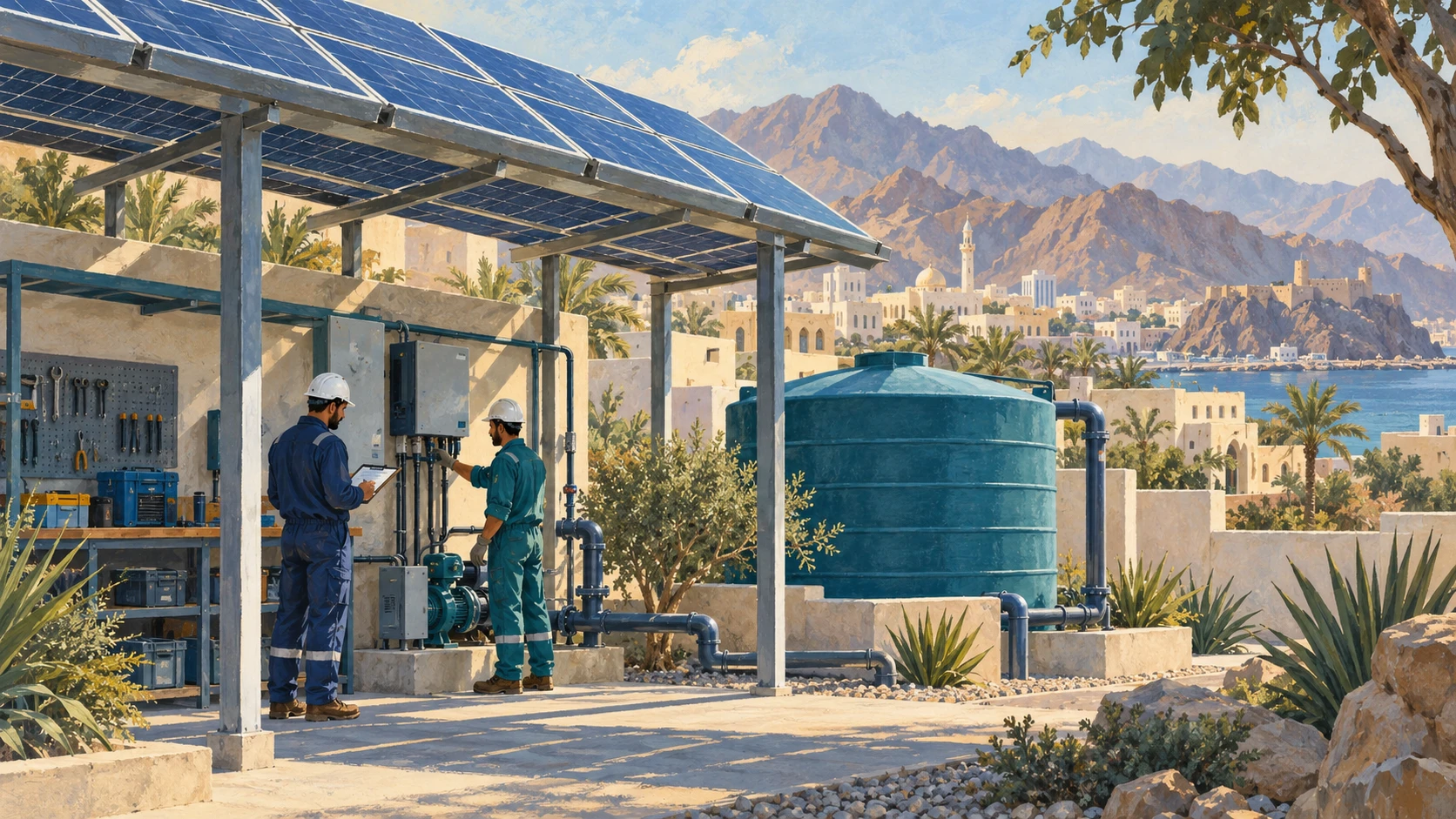
The vision's economic priorities support international commercial integration and connections between small firms and large corporations. The five-year plan names transport and logistics among its supporting sectors. Together, these directions recognize that a production site is part of a network. Goods need access to supplies, storage, shipment, and customers. The availability of one element does not guarantee that the remaining elements will operate at the required cost or scale.
The World Bank's October 2025 description of its Oman program records cooperation on investment climate reform, smaller enterprises, and public sector efficiency. It also describes financing support associated with Duqm's port and industrial zone, alongside agreements concerning clean energy and green manufacturing. These statements establish forms of institutional engagement. A guarantee supports a specified financial obligation; an investment agreement records a proposed commitment. Neither is interchangeable with evidence of the output, profitability, or wider benefits of an operating facility.
The distinction has consequences for policy evaluation. Construction expenditure can be observed before there is a durable customer base. Imported equipment can raise productive capacity before local supplier relationships develop. These are general economic sequences, not allegations about a named project. The public value of an enabling investment therefore depends partly on how it changes the options available to other firms. More dependable transport or clearer procedures may reduce their costs, but sustainable activity also requires commercial demand. Measuring the resources committed is necessary for accountability; measuring their use explains whether the investment has become economically productive.
Incentives determine whether expansion reaches workers
Vision 2040's employment direction emphasizes a skilled workforce and rewards related to productivity. The IMF's January 2026 assessment recommended narrowing public and private sector wage differences, increasing women's labor force participation, and improving vocational outcomes. Those recommendations connect the allocation of workers with the wider reform agenda. They are proposals for further action and cannot be cited as completed labor market improvements.
An expanding industry can affect employment in several ways. Additional demand may lead firms to hire, while changes in technology or organization may permit greater output from the existing workforce. Productivity growth and employment growth consequently answer different questions. The former concerns output relative to inputs; the latter concerns the amount of work available. A strategy may seek both, but the same headline figure cannot measure them together.
Workers also respond to the relative attractiveness of available positions. Compensation, stability, and the ability to use existing skills affect those choices. Firms face a related calculation about labor costs and the value that employees can produce. The policy implication is that sector promotion and workforce measures must be considered in relation to each other. Announced opportunities provide weaker evidence of household benefit than sustained employment. Even a count of filled positions leaves distribution and remuneration unresolved. An assessment concerned with daily living conditions would follow who obtains work, what that work pays, and whether the employment continues when initial project spending declines. These are proposed analytical criteria, rather than reported outcomes for Oman's workforce.
The state finances change while remaining exposed to shocks
The IMF warned that lower oil prices and greater global uncertainty could weaken Oman's fiscal and external balances. The report recorded central government debt at 36.1 percent of GDP at the end of September 2025. That ratio is a dated statement about a specified institutional boundary. It is not a consolidated account of every public entity's liabilities, and it provides limited information about when obligations fall due or which revenues will service them.
A diversification strategy creates a timing problem for public finance. Infrastructure and other enabling expenditure may precede the commercial activity expected to support a broader revenue base. In that interval, spending can remain dependent on the income source the strategy is intended to make less dominant. This is an inference about the financing sequence. It explains why expanding nonhydrocarbon output can coexist with continued sensitivity to oil prices.
The IMF recommended stronger fiscal frameworks and public investment management. Such recommendations are relevant to the relationship between project commitments and budget capacity. A project can have economic merit and still create pressure if its costs arrive before financing is secure. Conversely, postponing useful expenditure has consequences for the activity it would have supported. The tradeoff concerns timing, risk, and the quality of investment selection.
The report also examines an adverse oil-price scenario. A scenario specifies assumptions to investigate vulnerability; it is not a prediction that those assumptions will occur. Treating it as a forecast would exaggerate what the analysis establishes. Its purpose in evaluating diversification is to examine how fiscal commitments and economic activity might respond when an important source of income weakens.
Evaluation needs a chain of evidence, with its limits intact
The vision extends economic development across governorates and includes sustainable land use and accessible transport. This introduces a spatial dimension that national aggregates cannot resolve. A country's total output may rise without showing which communities gained employment or whether infrastructure and public services kept pace locally. The World Bank's engagement on renewable energy and water efficiency adds resource use to the assessment. Commercial expansion takes place within physical systems that have costs and limits.
Oman's implementation reports, including the 2024 to 2025 edition, document the official account of activity under the vision. They belong alongside institutional analysis, with each source's role made explicit. Official reporting can establish what authorities say was delivered; an IMF forecast estimates economic developments under stated assumptions. Neither source, on its own, identifies the causal contribution of the vision to every observed improvement. Attribution would require evidence about other influences and about what might have happened without the policy.
The standard proposed here follows a chain from commitments to usable capacity, operating businesses, and sustained benefits. Evidence at each stage answers a different question and should retain its original scope. On that basis, Oman's reported nonhydrocarbon expansion supports a bounded conclusion: production outside oil and gas grew during the observed period. A stronger claim of lasting diversification would require evidence that the resulting activity has dependable demand, productive employment, and a financing structure that can absorb weaker oil income. The economic achievement would lie in those relationships continuing to function after the initial expansion.