Institutional frameworks and commercial market entry
Over the past decade, the Sultanate of Oman has systematically reformed its corporate regulatory architecture to stimulate foreign direct investment. Under the Foreign Capital Investment Law, overseas corporations can establish wholly owned subsidiaries across nearly all economic sectors without requiring an Omani shareholder or commercial agent. This landmark statutory framework removes legacy joint-venture mandates, providing international capital with complete executive governance and operational autonomy.
In order to streamline market entry, the Ministry of Commerce, Industry and Investment Promotion opened the Invest Oman Lounge in Muscat. This centralized one-stop facility unites delegates from relevant government ministries, utility providers, and the tax authority under a shared physical roof. Supported by integrated digital platforms, the lounge delivers fast-track licensing services that compress corporate approvals, municipal permits, and commercial registrations from months into a matter of days.
Statutory safeguards further protect foreign enterprises by guaranteeing the full, unrestricted repatriation of profits, dividends, and original capital assets. To attract high-net-worth entrepreneurs and corporate executives, Oman instituted an investor residency program that confers renewable five-year or ten-year residency status based on defined capital commitments. Furthermore, the Sultanate has ratified extensive bilateral investment treaties and international trade pacts that afford robust legal recourse and arbitration rights to cross-border investors.
Coastal economic zones and global logistics gateways
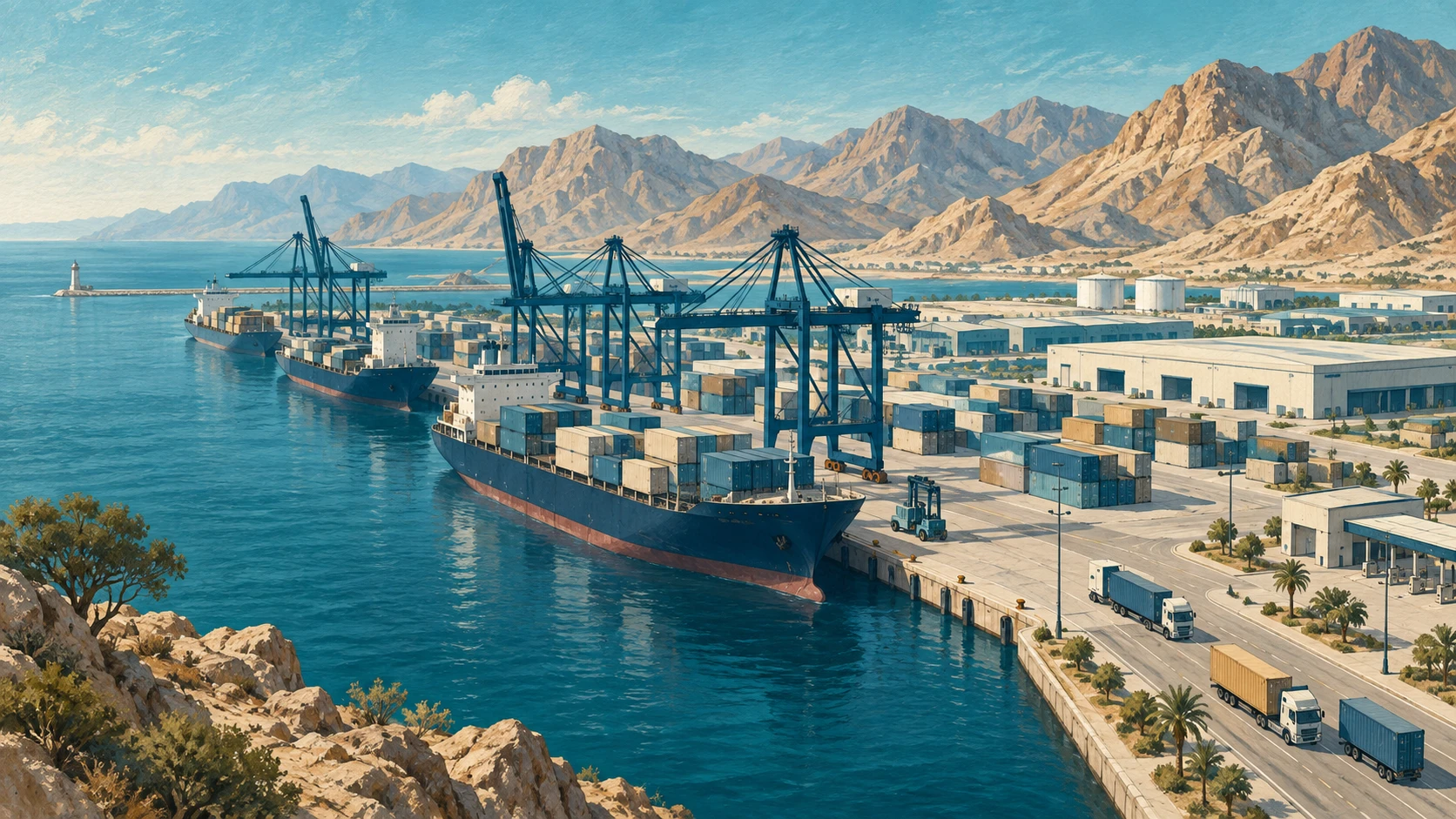
Oman has capitalized on its strategic maritime location along the Indian Ocean by constructing a nationwide network of specialized economic and free trade zones. Unified governance across all these regional assets is directed by the Public Authority for Special Economic Zones and Free Zones, known as OPAZ. By operating as a singular regulatory umbrella, OPAZ manages master concessions, coordinates environmental approvals, and standardizes commercial leasing policies for domestic and multinational tenants.
The focal point of this coastal strategy is the Special Economic Zone at Duqm, an ambitious industrial enclave spanning more than two thousand square kilometers along the Arabian Sea. Duqm integrates a versatile deepwater port, an advanced ship repair dry dock, a major crude oil refinery, and expansive plots reserved for heavy manufacturing and green energy developments. Further north along the Gulf of Oman, Sohar Port and Freezone provides world-class infrastructure for heavy industrial manufacturing, metals refining, and international container freight.
In the southern governorate of Dhofar, Salalah Freezone serves as a transshipment logistics powerhouse situated directly adjacent to main international sea trade lanes connecting Asia with Europe and Africa. Commercial enterprises operating within these specialized free zones benefit from substantial corporate tax holidays lasting up to thirty years, full exemptions from customs duties on imported raw materials, and seamless multimodal transport connectivity linking national highways directly to Saudi Arabia and the United Arab Emirates.
High-value manufacturing and industrial integration
Achieving meaningful economic diversification requires transforming Oman from a commodity exporter into an advanced manufacturing economy. National industrial planners prioritize non-oil manufacturing output by directing natural gas and electricity into high-yield industrial plants. This strategy generates skilled engineering employment, diversifies the national revenue base, and boosts foreign exchange earnings through the export of finished goods.
In Sohar, an integrated metals cluster features primary aluminum smelting and advanced steel rolling mills that supply critical materials to regional construction, automotive, and infrastructure sectors. In tandem, downstream petrochemical complexes convert natural gas liquids into specialized plastic resins, creating feedstock for local converters who fabricate industrial packaging, agricultural pipes, and medical equipment. Meanwhile, dedicated food hubs in Khazaen and Salalah expand commercial grain milling and dairy processing to fortify national food security.
Industrial operators must adhere to strict In-Country Value mandates that require them to procure equipment, fabrication services, and subcontracting support from registered local suppliers. In parallel, the Public Establishment for Industrial Estates, widely recognized as Madayn, operates regional industrial cities throughout Oman, offering fully serviced industrial plots, modern warehouses, and incubators that facilitate long-term business expansion.
Mineral processing and sustainable industrial circularity
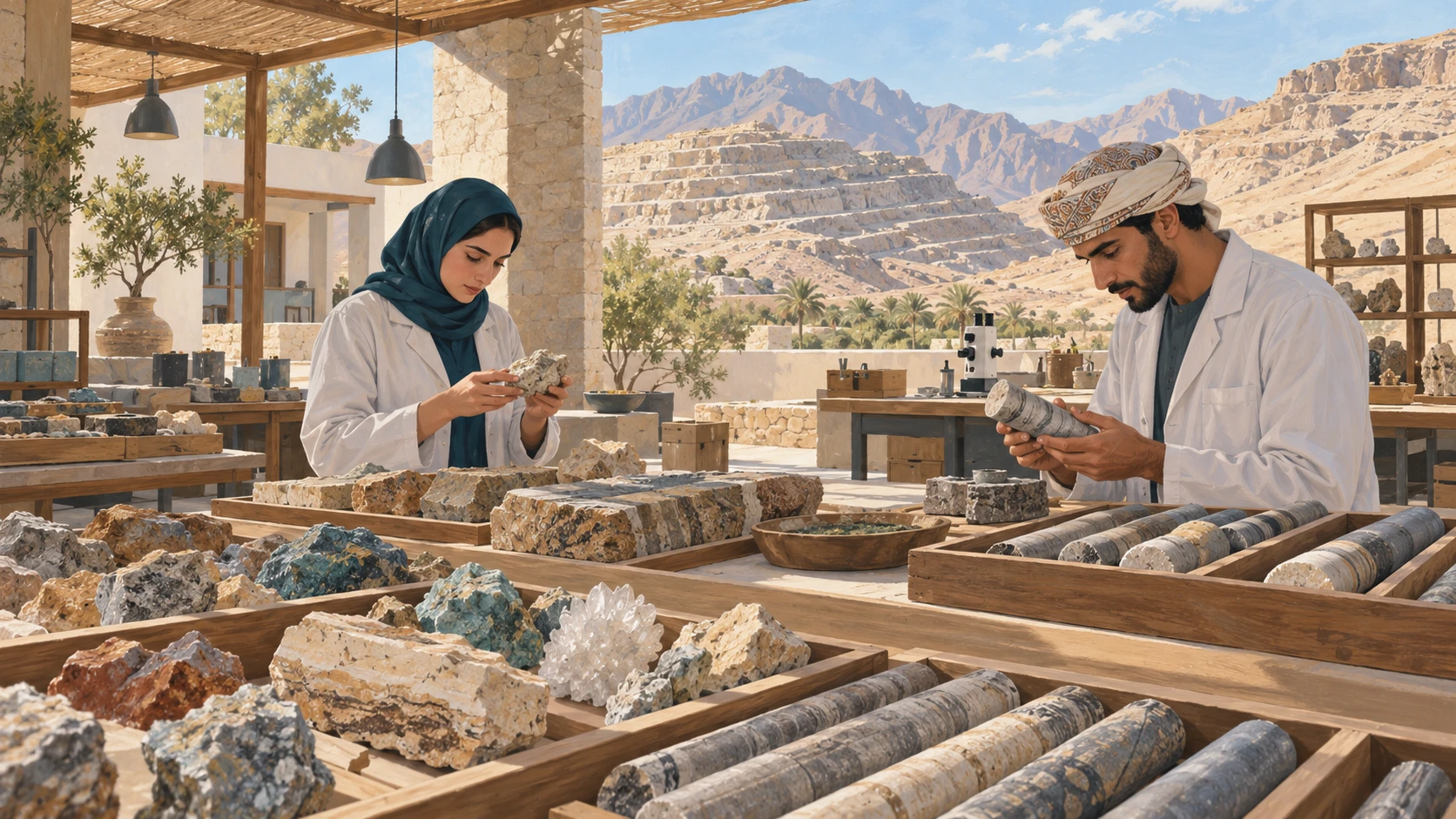
Beyond hydrocarbons, the Sultanate holds exceptional geological endowments of non-metallic and metallic minerals, including vast commercial deposits of gypsum, industrial limestone, silica sand, and copper ore. Gypsum has become a cornerstone of Oman's non-oil commodity trade due to its essential function in manufacturing construction plasterboard and Portland cement for international construction markets.
Oman currently stands as a leading global seaborne exporter of gypsum, shipping millions of tonnes annually to high-growth markets throughout Asia and East Africa. Strategic mining policy increasingly mandates mineral beneficiation over raw exports, compelling concession holders to establish domestic processing facilities that produce refined industrial inputs rather than unrefined crushed stone. Concurrently, historic copper mining operations in northern Oman are undergoing a substantial revival, utilizing modern processing methods to extract copper concentrate from underground and open-cast deposits.
In alignment with national resource conservation goals, manufacturing facilities are adopting circular economy practices that recycle industrial waste, scrap metals, and smelting byproducts into secondary materials. To balance heavy extraction with ecological preservation, all mining and quarrying concessions must obtain environmental permits from the Environment Authority, which enforces environmental impact assessments and legally binding land restoration programs following operational decommissioning.
Renewable energy transition and the hydrogen economy
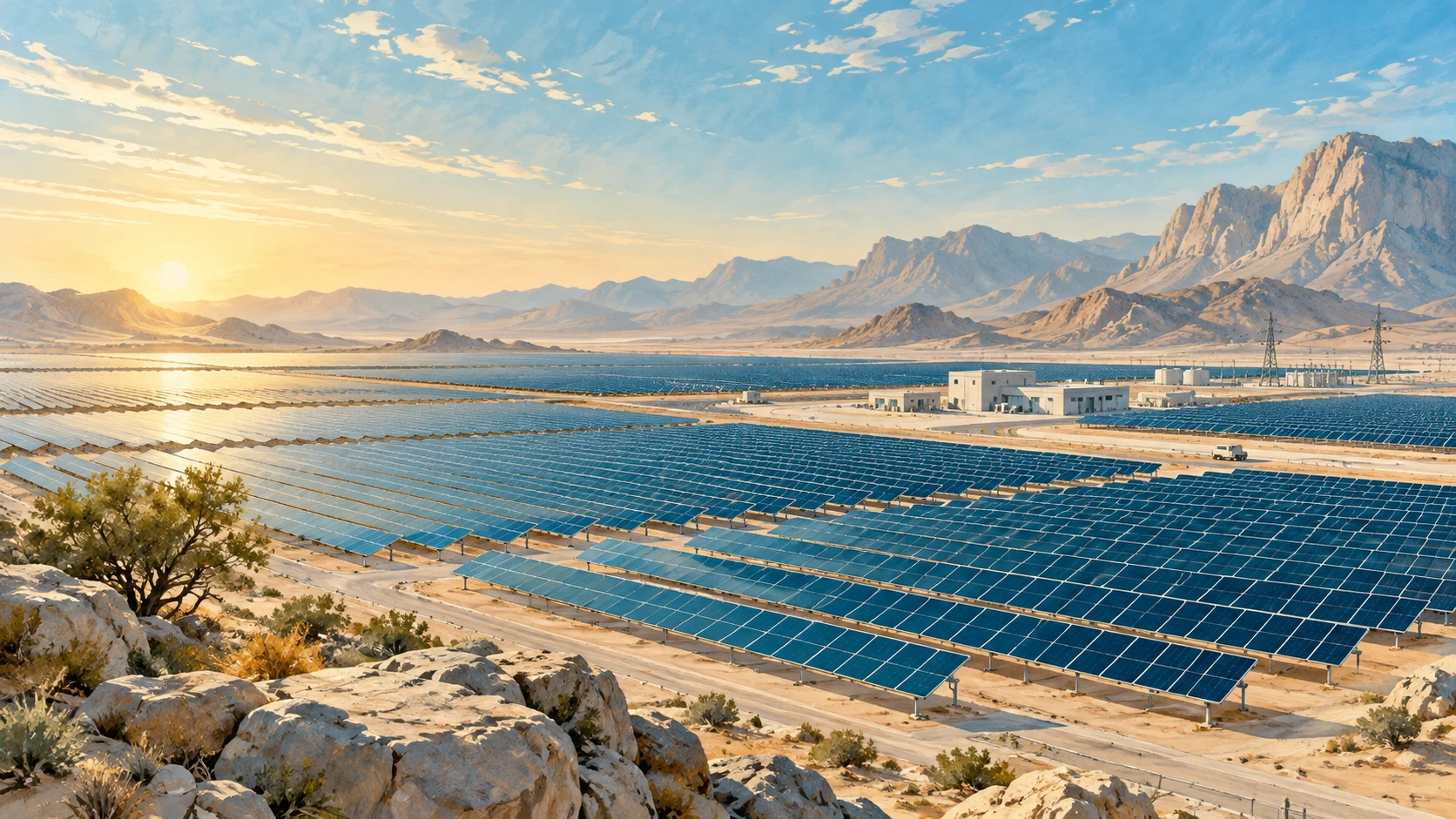
Oman has formulated an aggressive green hydrogen strategy intended to position the Sultanate among the premier clean fuel suppliers of the twenty-first century. The national target aims to achieve at least one million tonnes of green hydrogen production annually by 2030, rising significantly by mid-century. Green hydrogen is generated through commercial water electrolysis powered by vast arrays of solar photovoltaic panels and wind turbines.
To coordinate this large-scale economic transformation, the government established Hydrom, an autonomous entity that orchestrates competitive concession auctions to allocate prime land parcels to international energy consortia. The expansive desert plains of Al Wusta and Dhofar boast exceptional solar irradiance and steady diurnal winds, enabling renewable power plants to maintain continuous electricity production at highly competitive levelized costs.
This energy transition is reinforced by Future Fund Oman, a strategic investment fund holding two billion Omani rials created to deploy co-investment capital alongside institutional energy developers to support landmark decarbonization ventures. These clean energy investments directly advance Oman's binding commitment to reach net-zero carbon emissions by 2050. Meanwhile, industrial ports in Duqm and Salalah are developing world-class green ammonia export infrastructure, including cryogenic storage tanks and specialized marine berths for international transport.
Macroeconomic resilience and sovereign capital deployment
Under the strategic roadmap of Oman Vision 2040, national economic policymakers have established ambitious foreign direct investment inflow targets to ensure non-oil industries generate the predominant share of gross domestic product. Attracting international enterprise capital into advanced logistics, clean utilities, and export manufacturing constitutes a paramount national priority to maintain strong investment momentum.
Rigorous fiscal discipline, budgetary consolidation, and proactive public debt reduction have yielded consecutive sovereign credit rating upgrades from major international credit agencies. These sovereign rating improvements have substantially lowered borrowing costs for state enterprises and private corporations alike, enhancing macroeconomic stability. In tandem, the Muscat Stock Exchange is accelerating capital market deepening by executing initial public offerings of state enterprises and working to privatize commercial utilities under transparent concession contracts.
Although regional competition pressures among neighboring Gulf economies continue to intensify, the Sultanate maintains distinct advantages through deepwater oceanic ports situated outside the Strait of Hormuz, abundant mineral endowments, and stable commercial jurisprudence. Moreover, public investments in specialized technical colleges and universities ensure targeted skilled workforce development across engineering and logistics, positioning cross-border investment as an indispensable structural transformation anchor for long-term national resilience.