
다음 수업 찾기
배우고 싶은 표현을 검색하거나 어떤 말을 하고 싶은지 적어 보세요. 현재 제공되는 수업 중에서 골라 연습할 수 있어요.
163–180 / 826개 수업
-

Evoke or invoke: choose the right verb
Evoke describes causing a mental or emotional response. A sound, smell, story, or photograph can evoke memories, evoke sympathy, or evoke an image of a distant place. The subject is the thing that causes the reaction. Invoke describes actively calling on a rule, legal right, established policy, or authority to justify an action or decision. The subject is typically a person, committee, or organization that relies on that authority.
-

Among or between: choose the right word
Among indicates that an item is enclosed by, mixed into, or part of a collective group or community. Between indicates that an item connects, separates, or relates distinct reference points, individual options, or specific parties. While between frequently connects two items, it also connects three or more items when those items are treated as separate individual entities.
-

Phrasal verbs with break: meanings and everyday use
While the standalone verb break suggests physical damage, adding particles such as down, into, out, up, or away produces distinct meanings. Break down indicates operational failure or step-by-step explanation. Break into marks unauthorized entry. Break out describes sudden disruptions such as fires, protests, or laughter. Break up indicates the separation of gatherings or personal partnerships, while break away describes departing from a larger group.
-

veteran meaning: service and work guide
Veteran carries two primary meanings in modern English. First, it identifies a person who completed service in the armed forces. Second, it identifies someone who possesses substantial experience in a profession, trade, or sport. Surrounding vocabulary establishes whether the speaker refers to military history or long civilian practice.
-

Phrasal verbs with bring: meanings and daily uses
While bring on its own usually describes carrying something toward the speaker, combining it with different particles creates figurative actions. Bring up means to mention an issue for conversation or to raise a child. Bring back means to return an object or recall a past memory. Bring about means to cause a significant development. Bring in means to recruit an expert or earn money. Bring out means to publish a commercial release or make a subtle quality visible.
-
Either or ither: which spelling is correct?
Either refers to one choice out of two possible options. When someone offers you two compatible items, saying either charger works means that both options are acceptable solutions, and picking one will fulfill your need. It does not mean that only one unidentified item works.
-
멤버십
모든 수업을 7일 동안 무료로 이용하세요.
- 받아쓰기와 듣기 테스트가 포함된 826개 수업
- 각 수업에 제공되는 발음 선택
- 공개된 수업, 자동 저장되는 학습 진도
카드 없이 이용할 수 있어요. 계속 이용하고 싶다면 월 $7.50부터.
무료 체험 시작 -

Nihilism meaning: what it really means
Nihilism refers to philosophical views that deny or question an objective foundation for meaning, purpose, morality, or authority. An objective foundation is one that exists independently of personal feelings or opinions. Existential nihilism claims life has no built-in cosmic meaning, while moral nihilism claims there are no objective moral facts. It is not simply an emotional state or a temporary bad mood.
-

Bazaar or bizarre: choose the right word
A bazaar is an organized market or sale event where vendors or neighbors sell various goods. Bizarre is an adjective that describes an object, situation, or event that is noticeably strange, eccentric, or difficult to explain.
-

Suppose or supposed: Choose the right form
Suppose means to think something is probable or to offer a thought for consideration. In contrast, be supposed to indicates an obligation, an official guideline, an arrangement, or an intended outcome. Supposed without be functions as the standard past-tense form of suppose, meaning someone held an assumption in the past.
-

Encase or In Case: Choose the Right Form
Encase means to enclose, cover, or surround something completely with an outer material. For instance, a potter might encase a ceramic vase in cardboard, or a technician might encase wiring in rubber. In contrast, in case expresses preparation for a potential event. It tells why an advance action makes sense before a problem or situation develops. While incase is occasionally seen as an alternate spelling for the verb encase, the precautionary expression is always written as two words: in case.
-

Stative Verbs: Choose the Correct Tense
A stative verb expresses a state of being, a perception, a belief, an emotional preference, or a relationship of possession rather than an observable physical action. Because these situations describe ongoing conditions without active physical progression, standard English represents them using simple present or simple past tenses instead of continuous forms.
-

Adverb exercises: rules and clear practice
Adverbs supply specific details that make an action or description clearer to your listener. A manner adverb like carefully explains how an action takes place. A frequency adverb like usually tells how often an event occurs. Time adverbs like tomorrow and place adverbs like outside establish when and where actions happen, while degree adverbs like very or extremely show the intensity of an adjective or another adverb. Selecting the right adverb helps you convey your exact meaning without unnecessary words.
-

Run-on sentences: find and fix them
A run-on sentence joins independent clauses without the necessary punctuation or coordinating conjunction. A fused sentence pushes two complete thoughts together with no punctuation at all. A comma splice inserts only a comma between two independent clauses. In standard edited English, a comma alone is not strong enough to join two complete sentences.
-
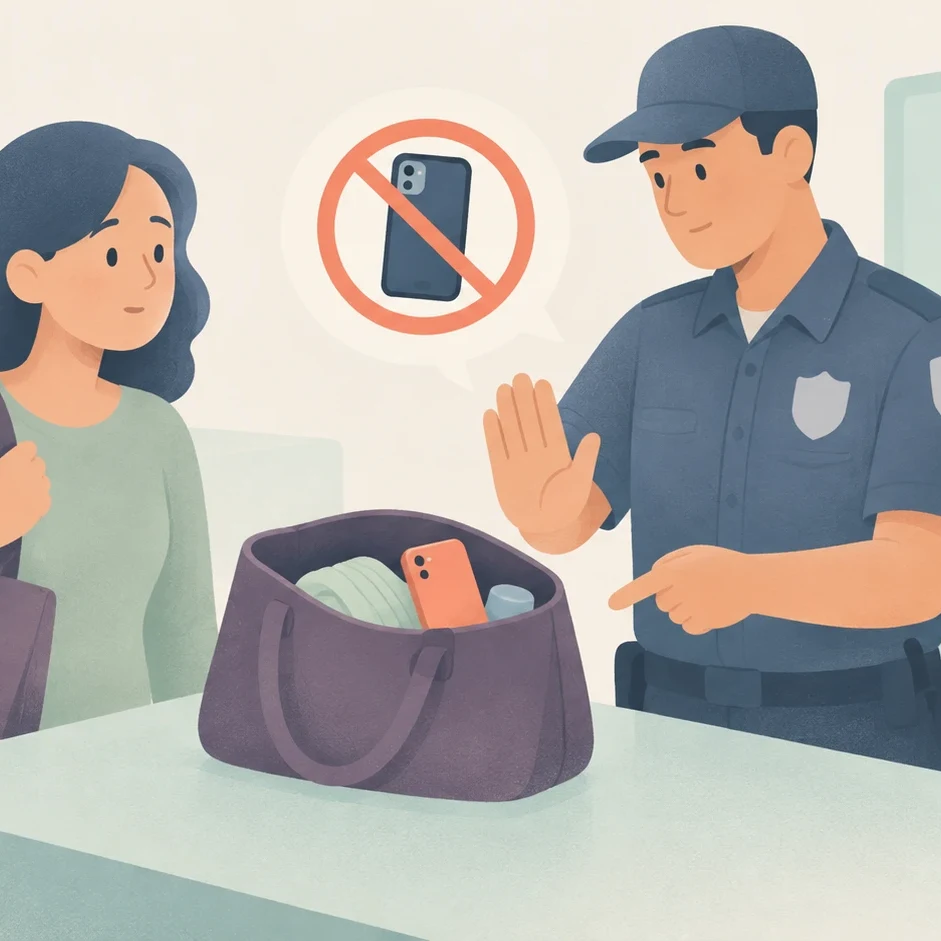
Contraband Meaning: Prohibited Goods Explained
Contraband refers to goods or physical property that a governing authority forbids people from bringing in, taking out, or possessing in a controlled space. It does not refer to a person or to the general crime of smuggling. Because the prohibition stems from a specific law, regulation, or institutional guideline, an item can be contraband in one location while remaining entirely lawful in another.
-

Few or little: choose the right word
Both few and little indicate a limited quantity. The grammatical separation rests on how English categorizes the noun. Plural countable nouns, such as desks, messages, and colleagues, take few or a few because you can enumerate them one by one. Uncountable nouns, such as time, patience, and advice, take little or a little because they express an overall mass or concept without plural forms. When you omit the article a, both words emphasize scarcity. When you include the article a, the phrase highlights presence and usefulness.
-
Ambiguous Meaning: Clarify Two Different Readings
An ambiguous statement allows two or more reasonable interpretations. An interpretation is simply a possible meaning that makes sense in the sentence. When wording is ambiguous, a listener cannot decide between those meanings without more facts.
-

Like and such as: give clear examples
Such as points directly to examples that belong to a broader category. When you mention board games such as chess and checkers, the items are real members of that group. Like primarily points to similarity, showing that two things share features. In everyday speech, speakers also use like to introduce examples, though such as states the category connection more directly.
-

Resign from or on: Choose the Right Preposition
To resign means to leave a formal job, post, or office through an official statement or notice. This differs from simply walking away from a physical location. When you name the job, position, or organization being vacated, use the preposition from. When you name the specific role or title being vacated, use as. When you specify the weekday or calendar date of the announcement, use on.
아직 연습해 보지 않으셨나요? 매일 무료 수업을 받아 보세요.
매일 짧은 받아쓰기 수업을 7일 동안 이메일로 보내 드려요. 계정 없이 어디서든 연습할 수 있어요.
배우고 싶은 표현이나 상황이 없나요?
수업 요청은 멤버십에 포함됩니다.
멤버십 보기