
日常英语听力
从短录音开始,再试稍长一些的表达。第一遍听懂情境,第二遍再听清具体的词。
显示第613–621节,共621节课
-

Checking a café order
In an order such as two soups, but one without cream, the customer wants two portions and changes only one. With introduces something included; without introduces something excluded. An allergy explains why an ingredient must be avoided.
-

Delivery voicemail corrections
A delivery message can correct an arrival time, part of a reference code or a collection location. Listen for the replacement detail and keep the words that define the time window. The written examples and separate recordings use different details, so do not assume every message has the same time or code.
-
Changing a plan
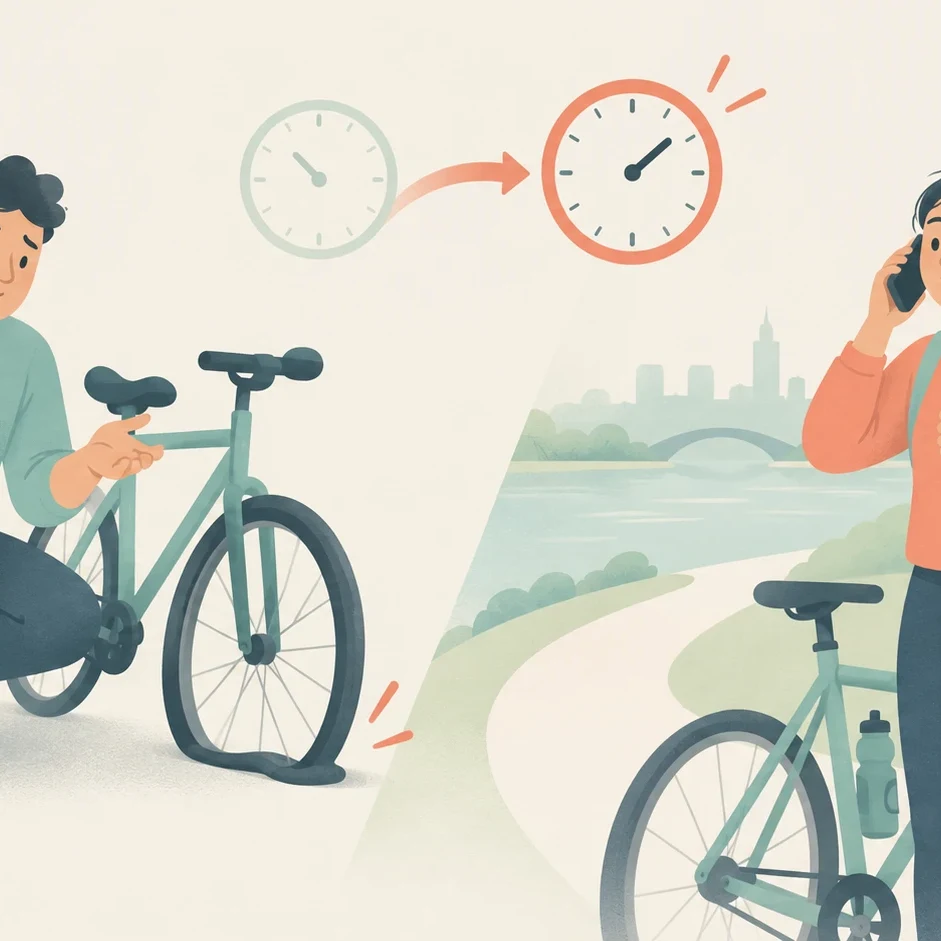
A changed plan keeps an activity but alters a detail, such as its time or place. A canceled plan does not go ahead as arranged. Listen to the whole exchange to find out what the friends decide and whether they accept a replacement plan.
-

Take it easy
'Take it easy' means to rest and reduce effort, to calm down when feeling anxious or agitated, or to offer a warm, casual goodbye.
-

Third conditional: explanation and examples
The third conditional looks back at completed past events and imagines how changing one condition would have produced a different outcome. Both the condition and the result refer entirely to the past, describing an imaginary version of events that never actually took place.
-

Gerunds and infinitives with stop, try, remember and need
Some English verbs can be followed by either an -ing form or a to-infinitive, but the choice creates two completely different meanings. With stop, the -ing form ends an activity, while the to-infinitive states a purpose for pausing. With try, the -ing form tests a possible solution, while the to-infinitive focuses on making an effort at a difficult task. With remember, the -ing form recalls a past experience, while the to-infinitive focuses on completing a necessary chore. With need, the to-infinitive indicates that the subject performs an action, while the -ing form expresses a passive meaning showing what requires maintenance.
-
会员
全部课程免费学7天
- 881节课程,包含听写和听力测试
- 三种口音:英式、美式和澳式
- 可保存学习进度
无需绑卡。之后如想继续使用,每月$7.50起。
开始免费试用 -

Future predictions
Predictions describe expected future events rather than certain facts. English uses will to share personal beliefs, expectations, and opinions without direct proof. It uses be going to when observable clues, trends, or current information show an outcome already in progress. When an outcome is merely possible, speakers choose might, may, or could.
-

Future plans
Future expressions in English do not simply state that an event happens later. They reveal how the speaker views the plan: as a spontaneous reaction at the moment of speech, a personal intention decided previously, or a confirmed arrangement coordinated with others.
-

Conditionals
A conditional sentence connects a condition with a result. English uses distinct verb combinations to show how the speaker views the relationship between these two clauses: as a universal constant, an actionable future possibility, an imagined present alternative, or a missed past opportunity.
还没想好是否试用?每天收一节免费课
连续7天,每天发一段短听写到邮箱。在哪里都能练,不用注册账户。
找不到想学的表达或场景?
定制课程是会员功能。
查看会员方案