The Sabika Hill and Nasrid Origins
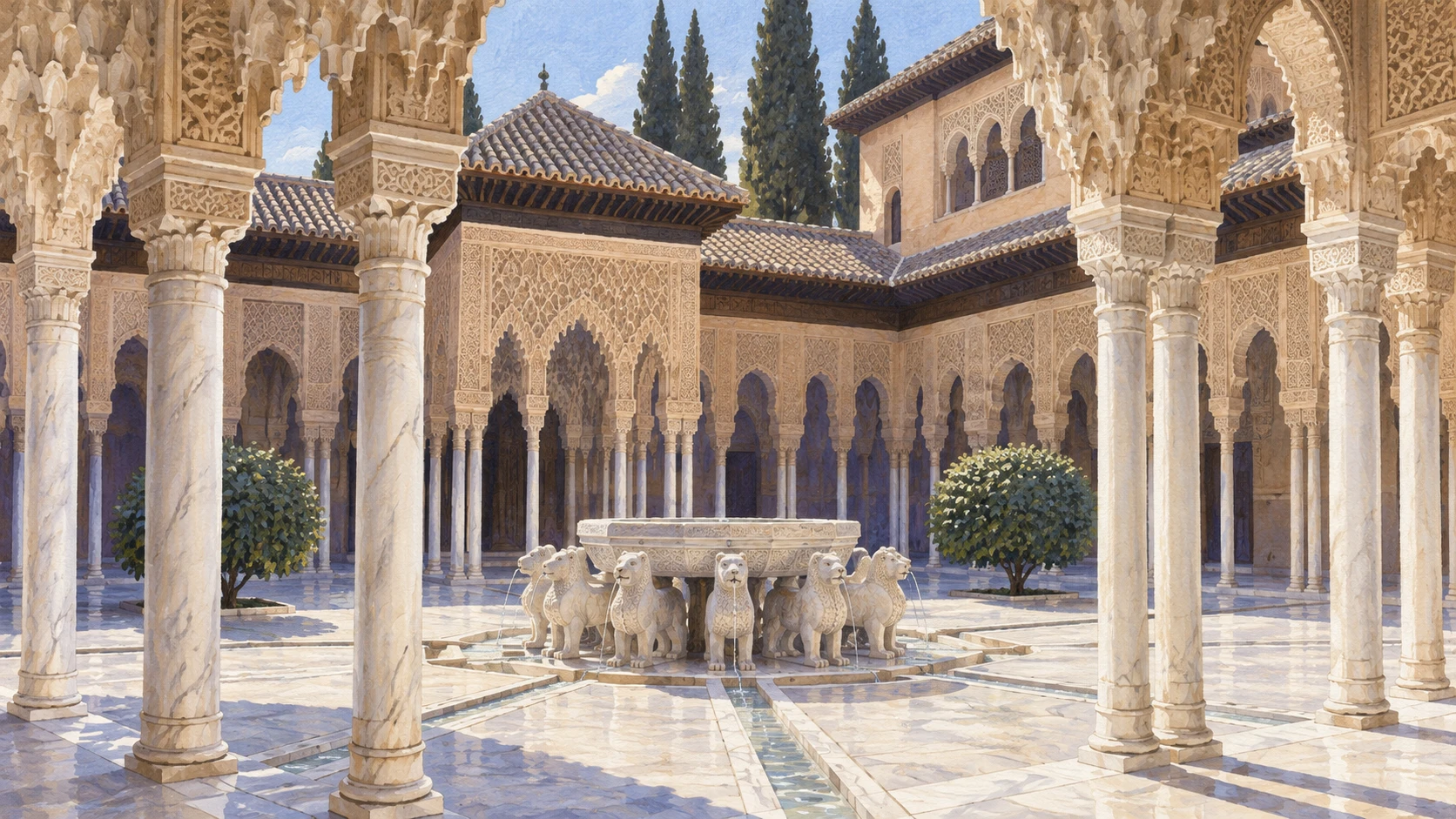
The Alhambra is a medieval fortified palatine city established on the Sabika hill overlooking Granada and the wide Vega river basin. Constructed primarily during the thirteenth and fourteenth centuries by monarchs of the Nasrid Dynasty, the complex encompasses thirty-five hectares. The monumental ensemble combines the defensive citadel of the Alcazaba, royal palaces, aristocratic residences, and the Generalife country estate.
UNESCO inscribed the Alhambra and Generalife on the World Heritage List in 1984 as an exceptional testimony to Islamic architecture and garden design. The fortress walls incorporate reddish rammed earth known as tapial, which gives the monument its historic Arabic name al-Qal'a al-Hamra. Today, the complex is managed as an autonomous public heritage agency by the Patronato de la Alhambra y Generalife under the Regional Government of Andalusia.
Hydraulic Engineering and Royal Waterways
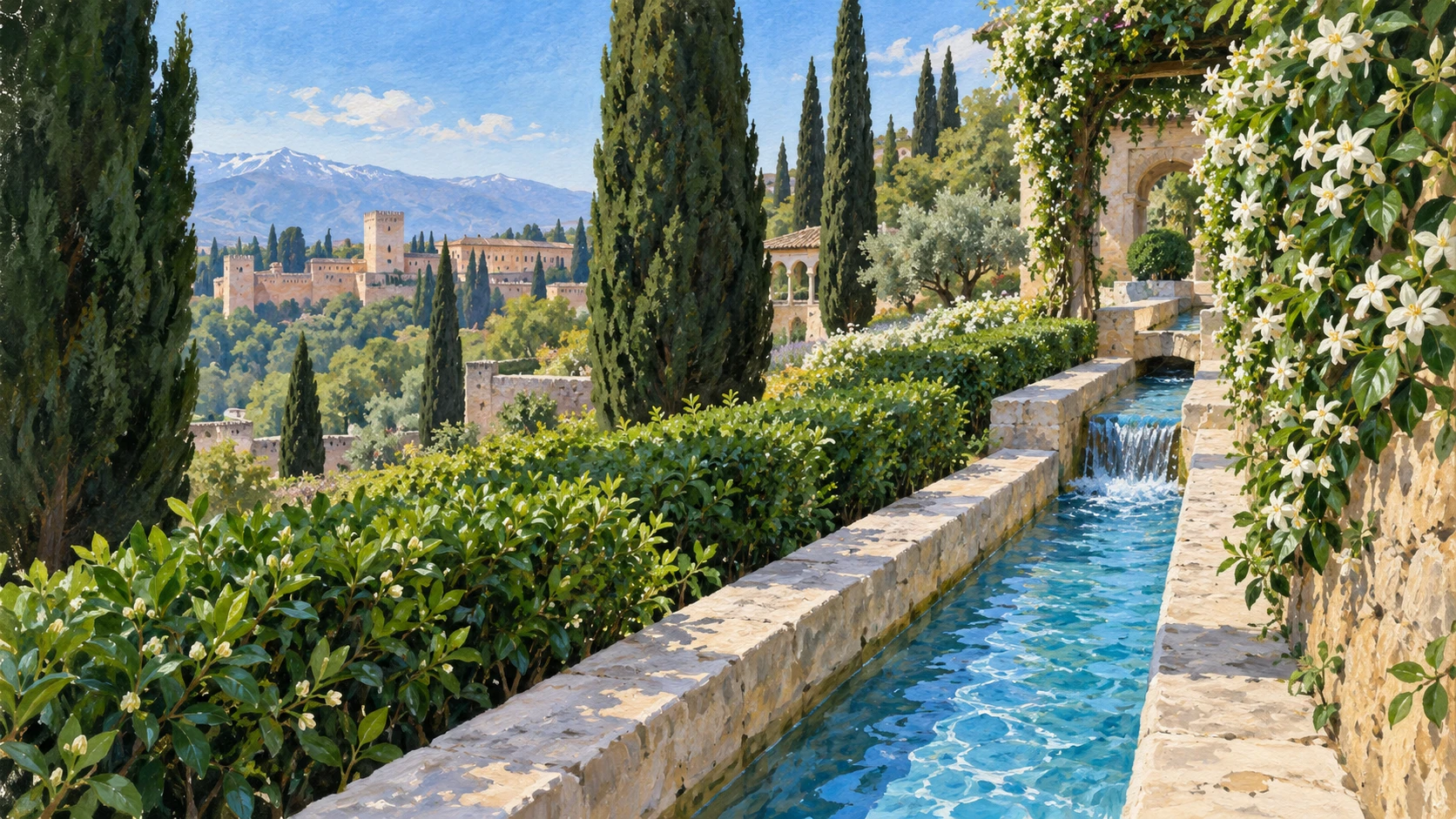
Medieval engineers constructed the six-kilometer Acequia Real aqueduct canal to divert water from the upstream Darro river to the fortress hill. A complex gravity-fed network of open masonry channels, hydraulic siphons, and underground conduits supplies fresh water throughout the complex. Water pressure drives architectural fountains, courtyard reflection pools, and palace bathhouses without motorized mechanical pumping.
The iconic Court of the Lions features a central dodecagonal fountain resting on twelve sculpted marble lions channeling water into four cardinal rills. Ancient Albercones water storage reservoirs atop the hill regulate seasonal hydraulic pressure and store municipal contingency water. Modern conservation hydrologists maintain stone canal banks and silt-traps to preserve the continuous flow of the Darro water supply.
Generalife Agricultural Estates and Huertas
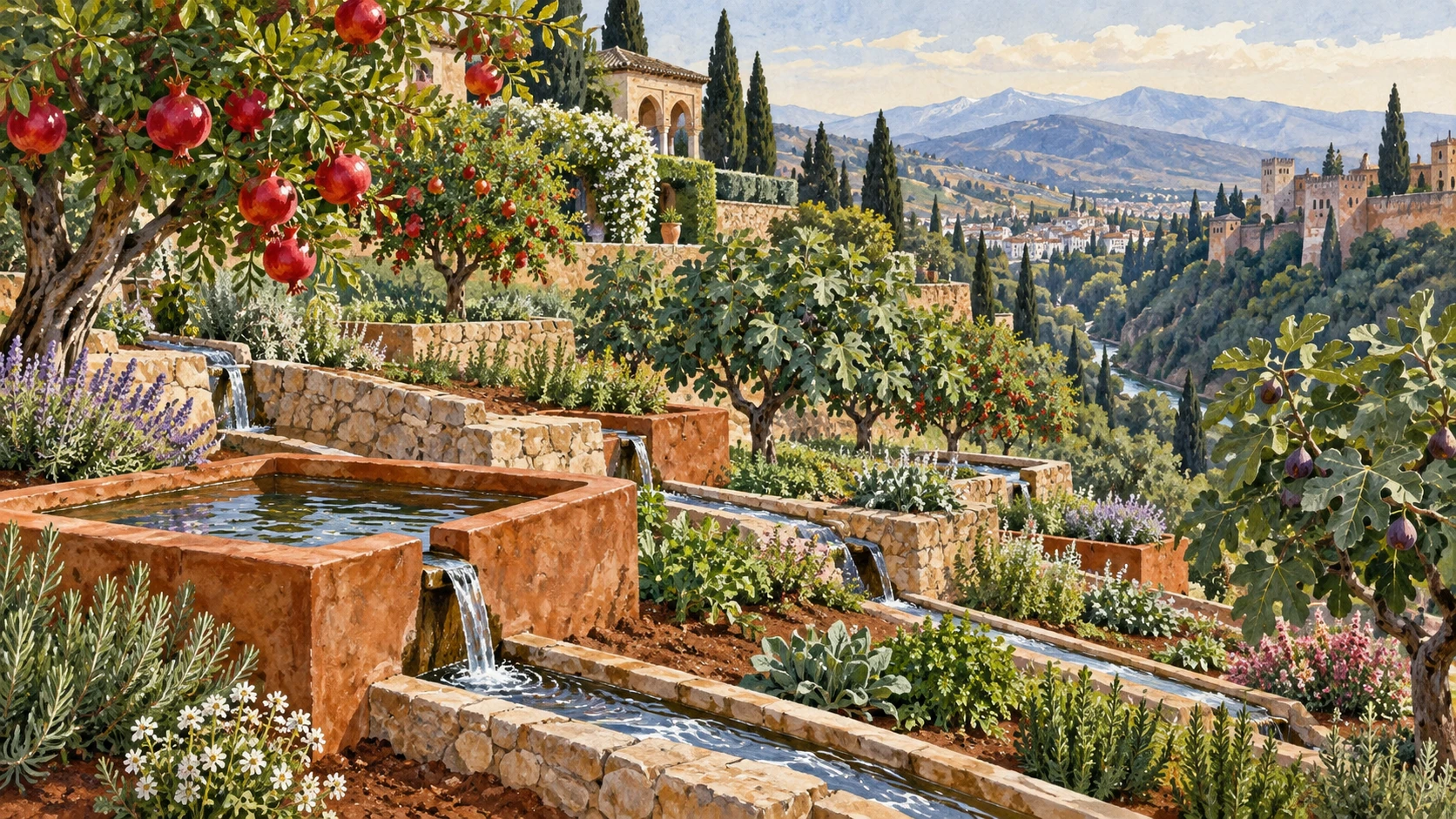
The Generalife was designed as a rustic summer retreat and functioning agricultural estate known as a munia on the Cerro del Sol. Four extensive medieval horticultural terraces known as huertas have been continuously cultivated for over seven centuries below the palace. Gravity-flow irrigation ditches distribute water along earthen furrows nourishing heritage fruit orchards, olive groves, and legume plots.
Historic cultivars including ancient pomegranates, figs, quinces, and heirloom vegetable varieties are safeguarded as botanical germplasm. Traditional agro-ecological techniques avoid chemical pesticides, relying on crop rotation, beneficial insects, and organic compost amendments. Annual agricultural yields from the Generalife huertas are distributed to local charitable soup kitchens and social welfare institutions.
Architectural Restoration and Conservation
Specialized artisan workshops on-site employ skilled master restorers to preserve delicate plaster muqarnas, ceramic zellij tiles, and carved cedar ceilings. Electronic environmental telemetry sensors monitor ambient temperature, relative humidity, and structural vibration across sensitive palace chambers. Strict daily visitor quotas and timed reservation entries limit foot-traffic degradation across the fragile Nasrid Palaces.
Restoration protocols prioritize reversibility and the use of authentic traditional materials including slaked lime mortars and natural earth pigments. The surrounding historic forest of the Alhambra acts as an environmental buffer zone mitigating urban heat island impacts and atmospheric pollutants. Academic research archives and photographic registries maintained by the Patronato document historic architectural interventions since the nineteenth century.