Alpine Pastures and Mountain Milk Blends in Cabrales
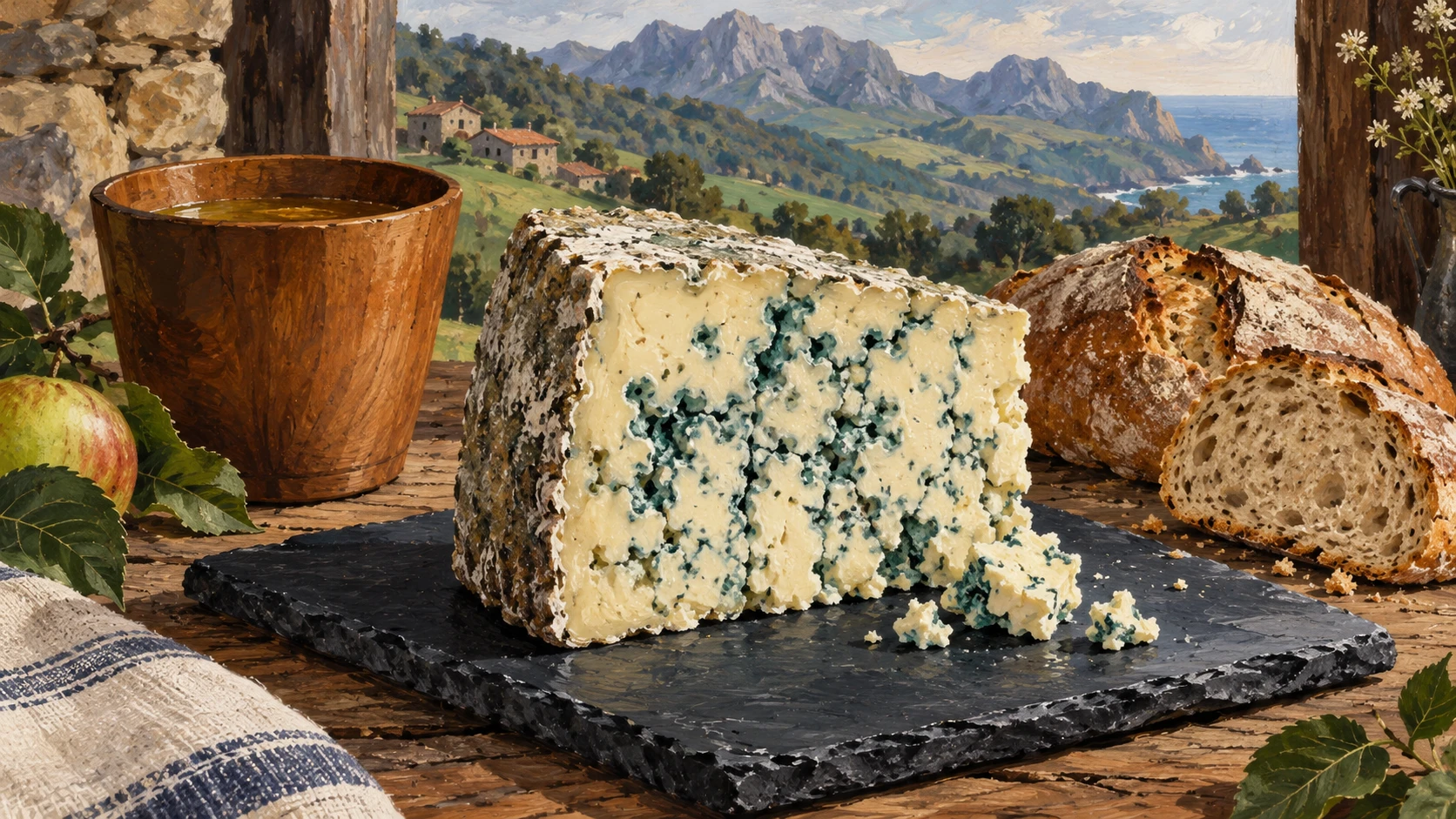
Cabrales cheese is an artisanal blue cheese produced exclusively within the municipality of Cabrales and three neighboring parishes in eastern Asturias. The delimited manufacturing territory occupies the rugged limestone massif of the Picos de Europa National Park, where dairy cattle and small ruminants graze across unfenced alpine pastures. During spring and summer months, dairy herds ascend to high-altitude communal grazing tracts known as puertos de montaña, transferring complex aromatic forage terpenes directly into raw milk supplies.
Regulatory council specifications permit cheese production utilizing unpasteurized raw milk from cows, sheep, and goats, blended according to seasonal dairy herd lactations. Raw milk deliveries must originate from certified herds certified free of bovine brucellosis and tuberculosis under mandatory veterinary health surveillance protocols. Seasonal variations in goat and sheep milk availability influence textural density and fatty acid composition, with three-milk blends generating substantially sharper piquant notes and pronounced organoleptic intensity.
Artisan Coagulation, Curd Molding, and Dry Salting
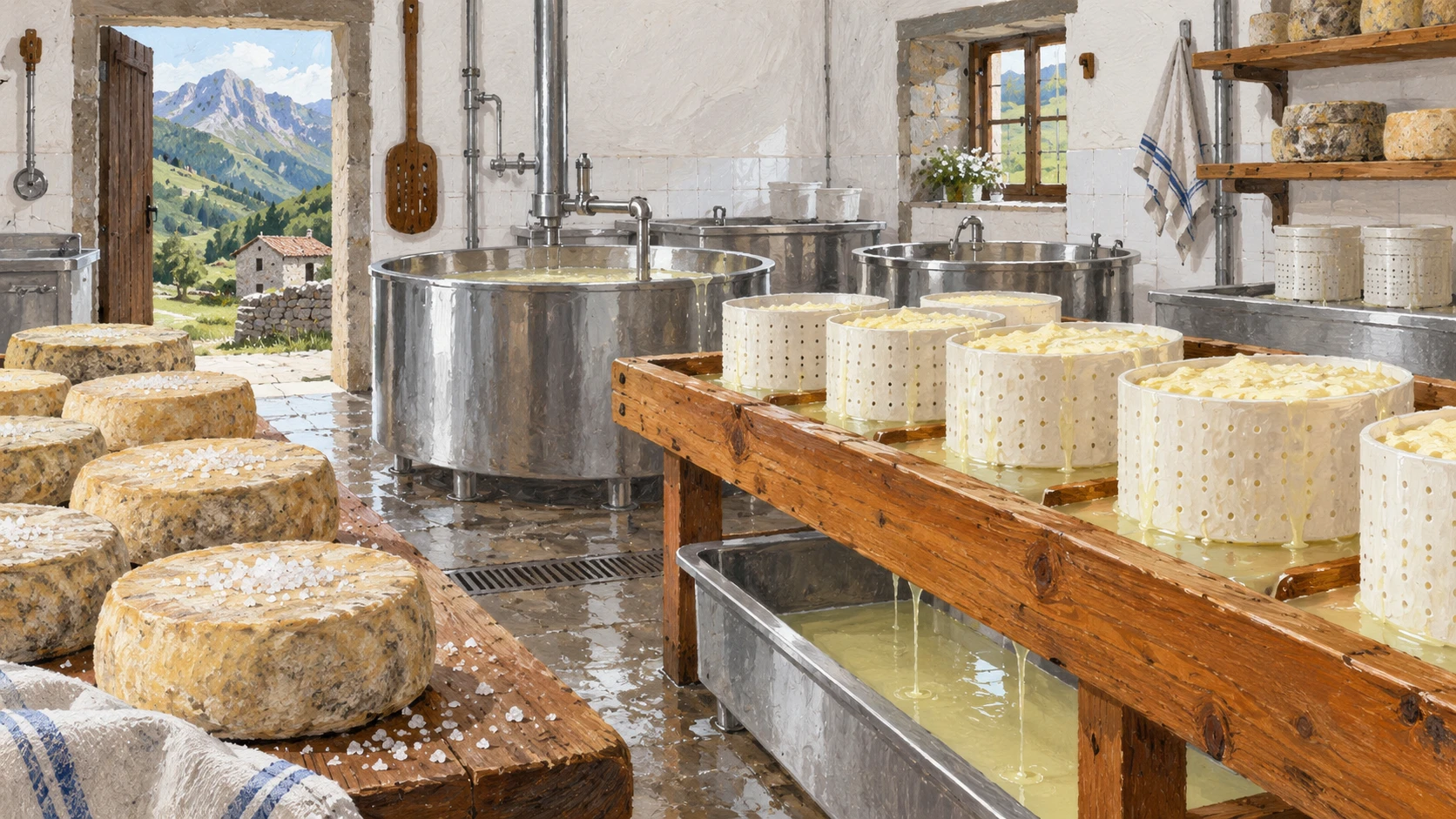
Artisan cheesemakers heat unpasteurized raw milk to thirty degrees Celsius before introducing natural animal rennet to initiate slow enzymatic coagulation. Once firm, workers slice the curd mass gently into hazelnut-sized grains using wire harps, facilitating gradual whey separation while preventing premature shattering of delicate fat globules. Cheesemakers ladle the curd manually into perforated cylindrical molds without mechanical pressing, deliberately maintaining loose internal interstitial gaps essential for subsequent fungal aeration.
Unpressed curd cylinders drain spontaneously on tilted wooden draining boards over several days at ambient mountain temperatures. Following unmolding, cheesemakers apply coarse dry sea salt manually across the upper surface, perimeter rind, and bottom face of each young wheel in successive stages. While nineteenth-century producers historically wrapped mature wheels in sycamore maple leaves, modern sanitary regulations mandate uniform wrapping in food-grade aluminum foil embossed with the official protected designation emblem.
Karst Caves, Cave Air Currents, and Natural Penicillium Maturation
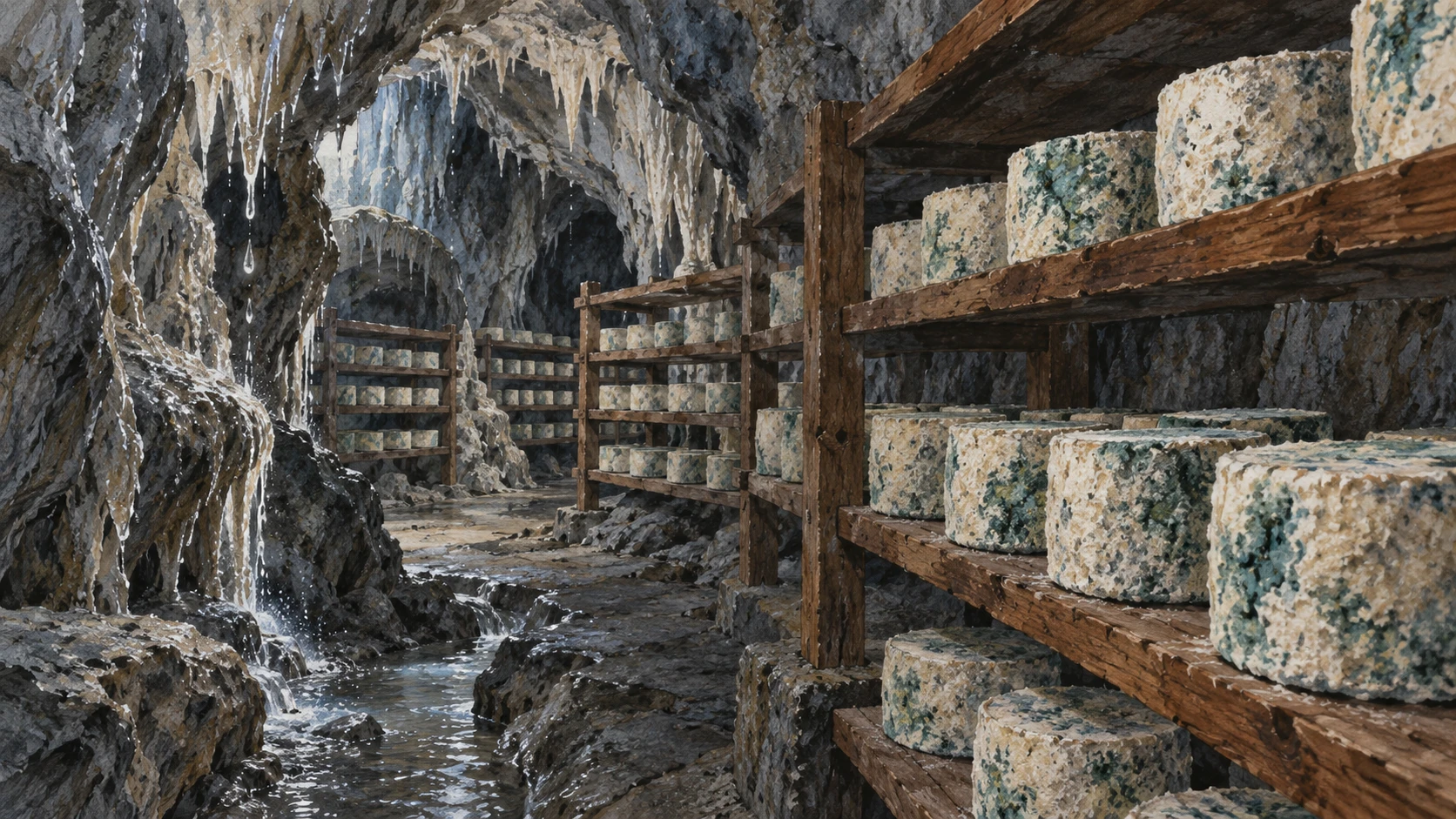
Freshly salted cheese wheels travel into natural limestone karst caves scattered across the Picos de Europa for mandatory subterranean maturation. These high-altitude cavern chambers maintain perpetual year-round relative humidity exceeding ninety percent alongside stable cool temperatures between seven and twelve degrees Celsius. High-velocity subterranean air drafts known locally as soplados circulate through deep karst fissures, regulating moisture condensation and continuously oxygenating natural limestone galleries.
Endemic airborne strains of Penicillium roqueforti naturally colonize the humid interstitial voids inside each wheel, propagating intricate networks of blue-green mold veins without artificial fungal inoculations. Throughout a mandatory maturation period of two full months, cave operators regularly turn, scrape, and wash every wheel to manage surface yeasts and prevent crust solidification. Extended enzymatic breakdown transforms the dense curd into a creamy, spreadable matrix exhibiting penetrating pungency, rich dairy fat, and lingering piquancy.
DOP Regulatory Standards, Certification, and Auction Records
The Cabrales Protected Designation of Origin regulatory council enforces strict conformity assessments through accredited chemical analyses and mandatory blind organoleptic tastings before certifying commercial batches. Each August, the mountain hamlet of Las Arenas hosts the renowned Certamen del Queso de Cabrales, culminating in a spirited commercial auction where regional restaurateurs compete for the finest award-winning wheel. Winning competition specimens routinely establish official Guinness World Records for the highest price ever recorded for an individual cheese wheel sold at public auction.
Notwithstanding international prestige, mountain cheese producers confront acute structural hurdles including generational succession deficits and strenuous logistical transit costs across alpine trails. In regional cider houses known throughout Asturias as sidrerías, patrons traditionally pair mature Cabrales wedges with crisp, freshly poured natural cider whose bright acidity counterbalances rich dairy lipids and concentrated mineral salinity. Robust commercial registries indicate expanding exports across European and North American gourmet specialty markets, affirming the enduring gastronomic relevance of traditional Asturian cheesemaking.