Liberalizing foreign investment law and commercial registration
The Sultanate of Oman has enacted a thorough recalibration of its foreign investment regime, dismantling traditional restrictions that once required foreign businesses to partner with local sponsors. Under Royal Decree 50/2019, the Foreign Capital Investment Law permits 100 percent foreign ownership across almost every commercial sector. To streamline setup procedures for multinational firms, the government created the Invest Oman lounge in Muscat as a unified administrative concourse where overseas executives can complete corporate registration, labor permits, and tax filings in one setting. Automated commercial licensing now issues operating permits under clear statutory deadlines, eliminating bureaucratic friction.
These regulatory shifts are accompanied by strong legal guarantees that protect invested capital against unilateral state interference or uncompensated nationalization. Foreign firms enjoy the statutory right to repatriate profits, dividends, and invested capital back to their home markets without restriction. For high-net-worth entrepreneurs, the Investor Residency Programme provides renewable five-year and ten-year residency permits based on verified capital commitments. Bilateral investment treaties and established international arbitration provisions assure investors that cross-border contract disputes will be settled through recognized legal standards rather than local administrative discretion.
Strategic coastal enclaves and Indian Ocean maritime logistics
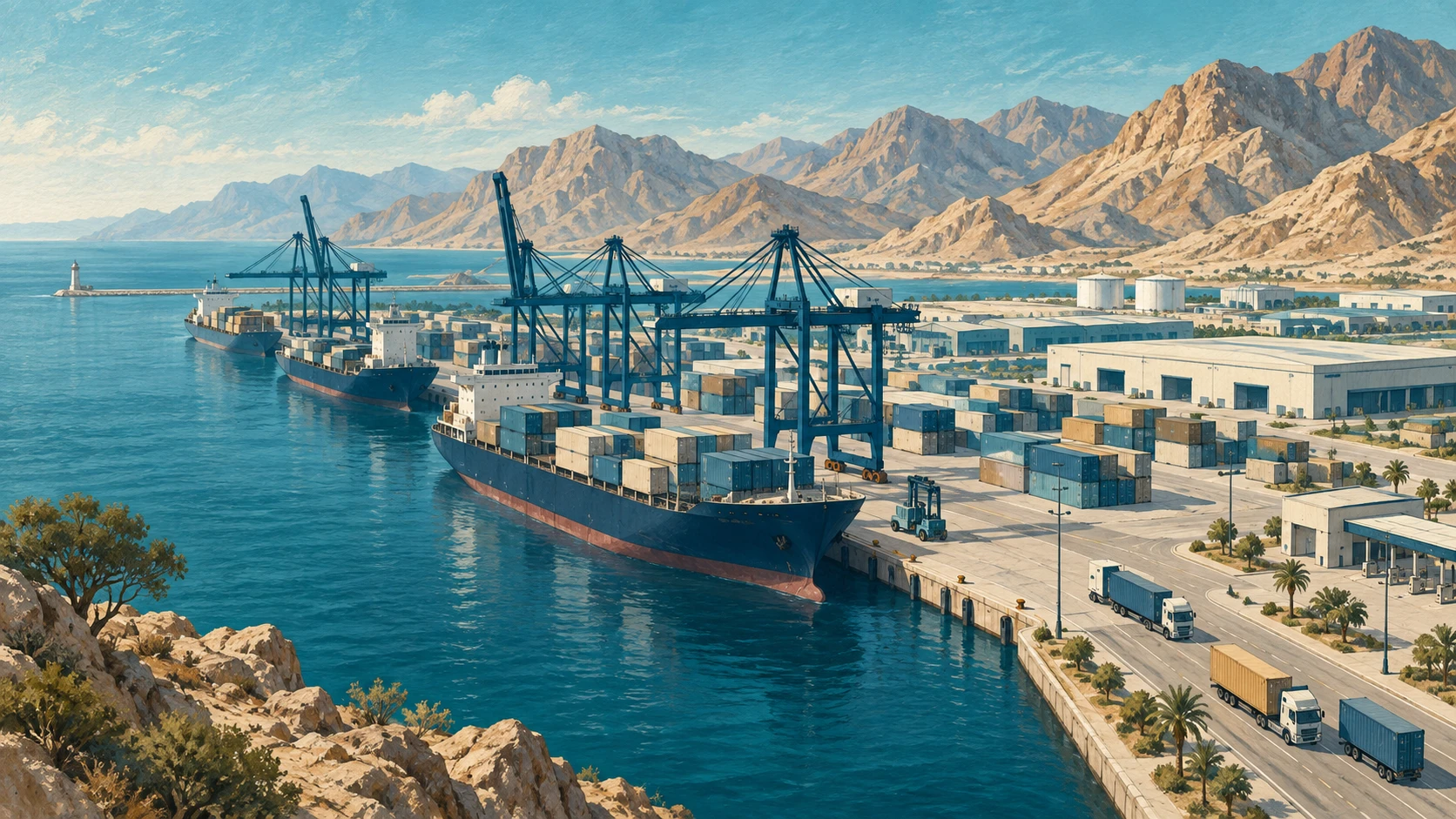
Positioned outside the Strait of Hormuz along major international shipping routes, Oman is using its coastline to capture global trade. The Public Authority for Special Economic Zones and Free Zones provides unified administration over the country's primary logistics and industrial hubs. The flagship development is the Special Economic Zone at Duqm, a vast coastal enclave spanning over two thousand square kilometers. Duqm combines a multipurpose deepwater commercial port, an advanced ship repair dry dock, a world-scale oil refinery, and expansive industrial parcels designated for heavy manufacturing.
In the south, Salalah Freezone sits directly on the prime container corridor connecting Asia, the Red Sea, and Europe, challenging traditional regional shipping hegemony with its high-volume transshipment berths and thriving chemical plants. In the north, Sohar Port and Freezone anchors heavy industry and food logistics. Across these designated zones, enterprises enjoy long-term corporate tax concessions, zero customs duties on imported materials, and flexible local workforce ratios. Modern highway corridors link these maritime complexes overland to commercial centers in Saudi Arabia and the United Arab Emirates.
Industrial diversification, metals clusters, and local supply rules
Transforming the economy requires moving beyond crude oil exports toward downstream industrial valorization. In Sohar, an integrated metals cluster combines primary aluminum smelting and advanced steel manufacturing, turning imported iron ore and domestic power into rolled structural metal. In Duqm and Sohar, modern petrochemical plants refine oil and gas fractions into polymer feedstock for domestic and international plastics producers. In Khazaen Economic City and Salalah, industrial food clusters process grains, dairy, and seafood to bolster regional supply chains.
To ensure industrial growth takes root locally, the Sultanate enforces strict In-Country Value mandates on all major developers. Concessionaires and industrial plants must procure machinery, fabrication work, and specialized maintenance from qualified Omani suppliers. Supporting this domestic supply base, industrial estates developed by Madayn offer fully serviced plots, factory shells, and utility networks across Oman's governorates, creating a reliable vertical supply chain connecting small machine shops with large multinational factories.
Mineral beneficiation, copper revival, and environmental oversight
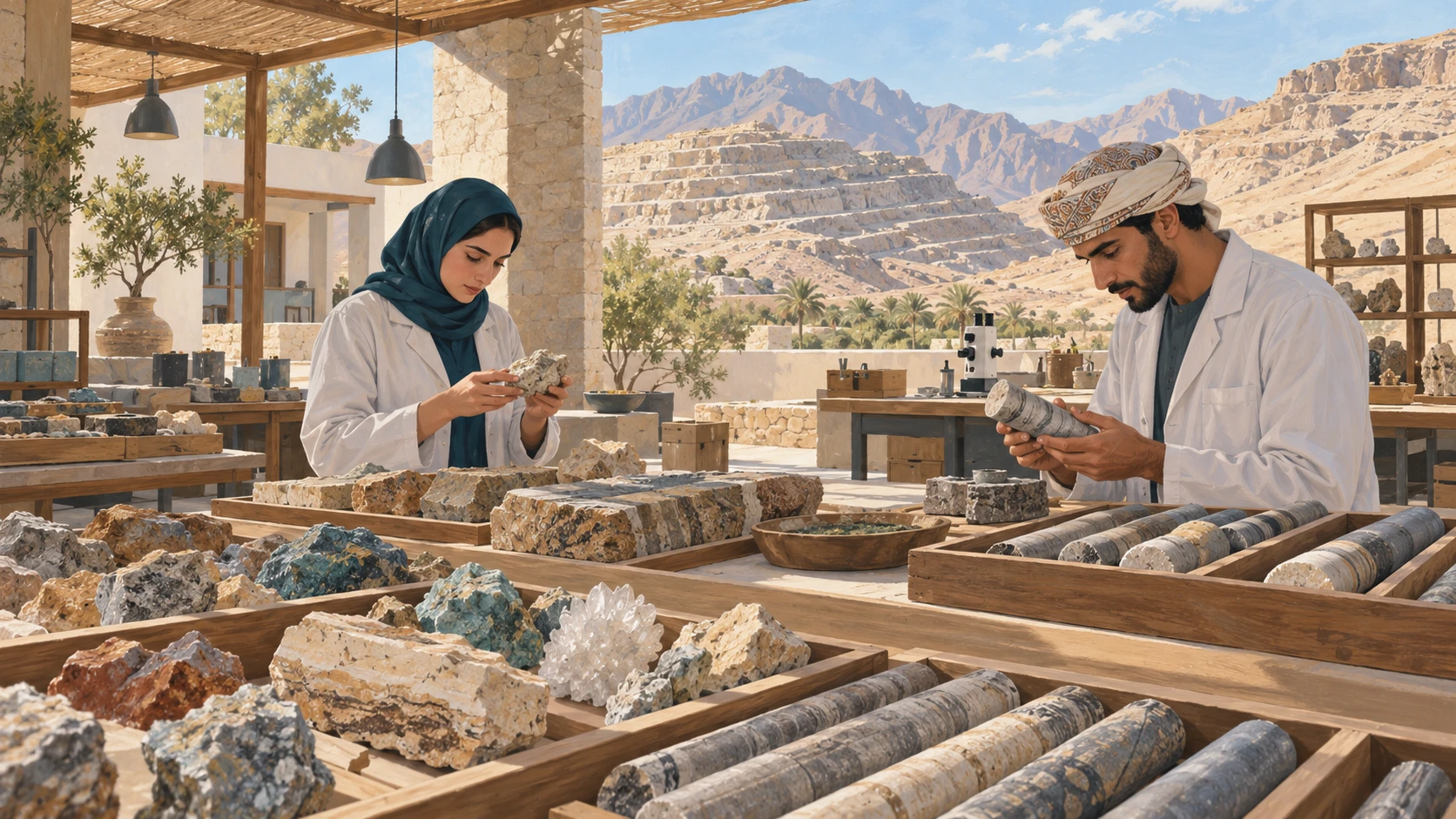
Beneath its rugged terrain, Oman possesses world-class geological endowments of industrial and metallic minerals, including high-purity gypsum, limestone, dolomite, silica sand, and copper deposits. The Sultanate is one of the world's leading exporters of seaborne gypsum, supplying cement plants across Asia and Africa. National mining policy strictly discourages the export of untreated raw stone, requiring companies to invest in domestic beneficiation facilities that turn mined minerals into gypsum plasterboard, chemical fillers, and high-value industrial products.
Copper mining is experiencing a modern revival in northern Oman, where historic open pits are being re-engineered with modern extraction and domestic smelting technology. Environmental standards have tightened alongside production: mining operators must secure formal clearances from the Environment Authority, adhere to strict water conservation limits, and submit binding decommissioning plans to restore natural habitats once quarrying ends. Manufacturers are also embracing circular economy practices, recycling industrial slag and construction waste into durable green cement.
The green hydrogen frontier and sovereign co-investment
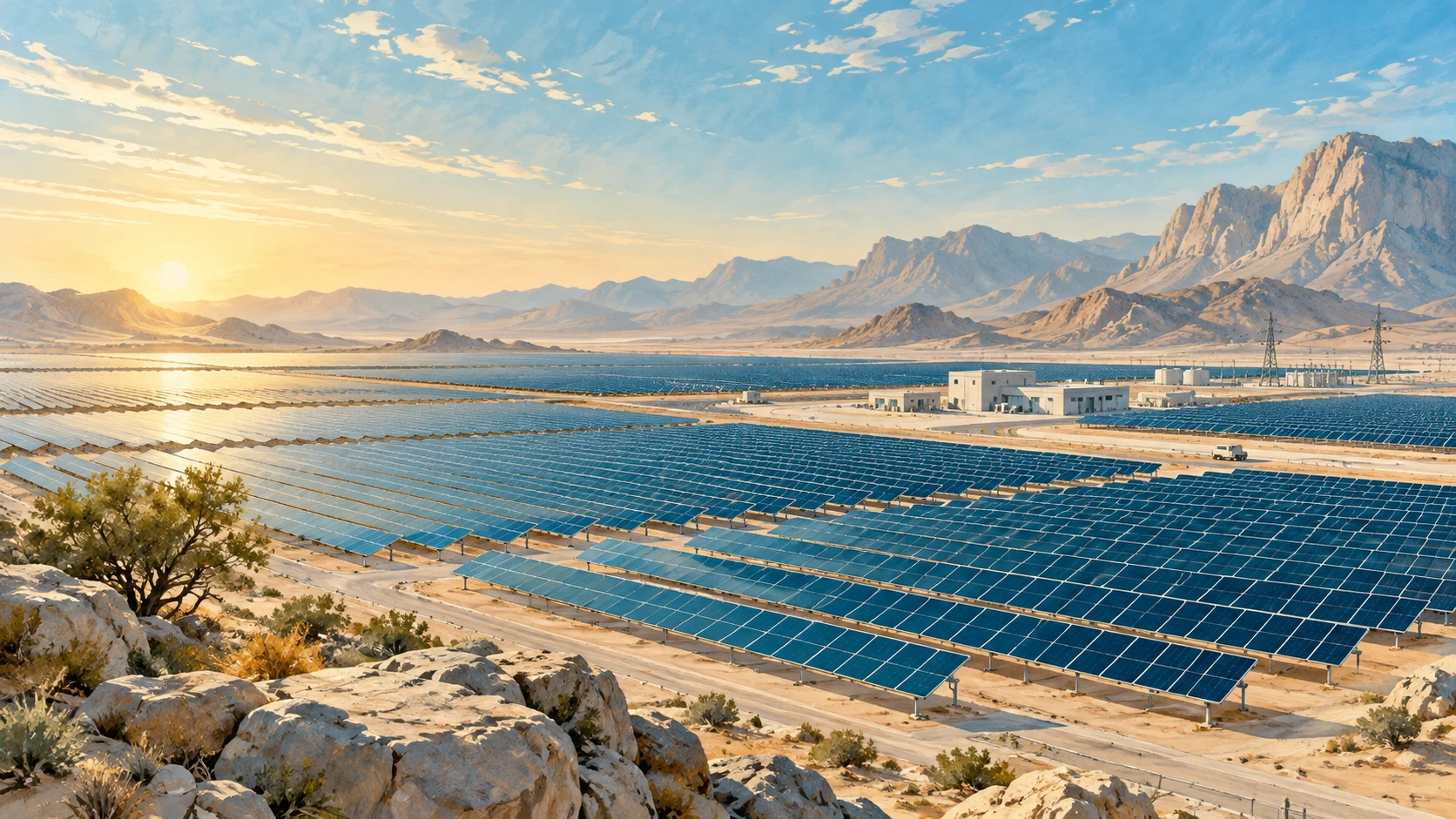
Abundant year-round sunshine and steady coastal winds make Oman an ideal frontier for the global renewable energy paradigm. Under its national clean fuel roadmap, the Sultanate aims to produce at least one million tonnes of zero-carbon hydrogen annually by 2030, using renewable power to split desalinated seawater through industrial electrolysis. To organize this transformation, the government created Hydrom, an autonomous company that conducts structured international land auctions, leasing designated renewable parcels in Al Wusta and Dhofar to leading global energy consortia.
To facilitate overseas trade, ports in Duqm and Salalah are developing dedicated export berths, pipeline networks, and storage terminals to ship green ammonia directly to international energy markets. The state supports these private capital projects through Future Fund Oman, a two-billion-rial co-investment vehicle managed by the Oman Investment Authority. By anchoring clean fuel ventures with sovereign capital, Oman is pursuing deep industrial decarbonization while establishing a durable position in the future global energy trade.
Sovereign fiscal discipline, capital markets, and regional competition
Under Oman Vision 2040, expanding foreign direct investment above ten percent of gross domestic product is essential to funding post-oil growth. Decisive fiscal consolidation and disciplined public debt reduction after 2020 have earned Oman consecutive credit rating upgrades from major international agencies, restoring investor confidence and reducing external borrowing costs across the economy.
Policymakers are also working to deepen the Muscat Stock Exchange by privatizing state-owned companies through public listings, providing transparent investment avenues for domestic institutions and global fund managers. Nevertheless, attracting foreign capital involves navigating fierce regional competition, as neighboring Gulf economies deploy vast capital expenditure budgets, competitive corporate tax rates, and lavish business subsidies. Winning in this competitive landscape requires constant investment in the domestic workforce, equipping young Omani professionals with the engineering and managerial expertise needed to run advanced industrial facilities.