Overhauling commercial law and opening doors to foreign capital
In 2019, the Sultanate took a historic step to attract global business by passing the Foreign Capital Investment Law under Royal Decree 50/2019. The law permits 100 percent foreign ownership of commercial enterprises without requiring an Omani partner, transforming the country's business jurisprudence. To cut through bureaucratic red tape, the government opened the Invest Oman lounge in Muscat as a single window where international executives can secure permits and complete licensing under one roof. Automated digital registration provides fast-track approvals within synchronized administrative timelines, sparing investors the costly delays and arbitrary penalties that once plagued cross-border corporate expansion.
Beyond simplified licensing, Oman provides rock-solid protections for international capital. Under statutory covenants and bilateral investment treaties, foreign companies enjoy the unrestricted right to repatriate net profits, dividends, and original invested capital. Qualified international investors can also secure renewable five-year and ten-year residency permits under the Investor Residency Programme, anchoring top management in the country. If commercial disputes arise, independent international arbitration agreements ensure that investors can resolve grievances fairly without being confined solely to domestic municipal jurisdiction.
Coastal ports and industrial free zones beyond the Strait of Hormuz
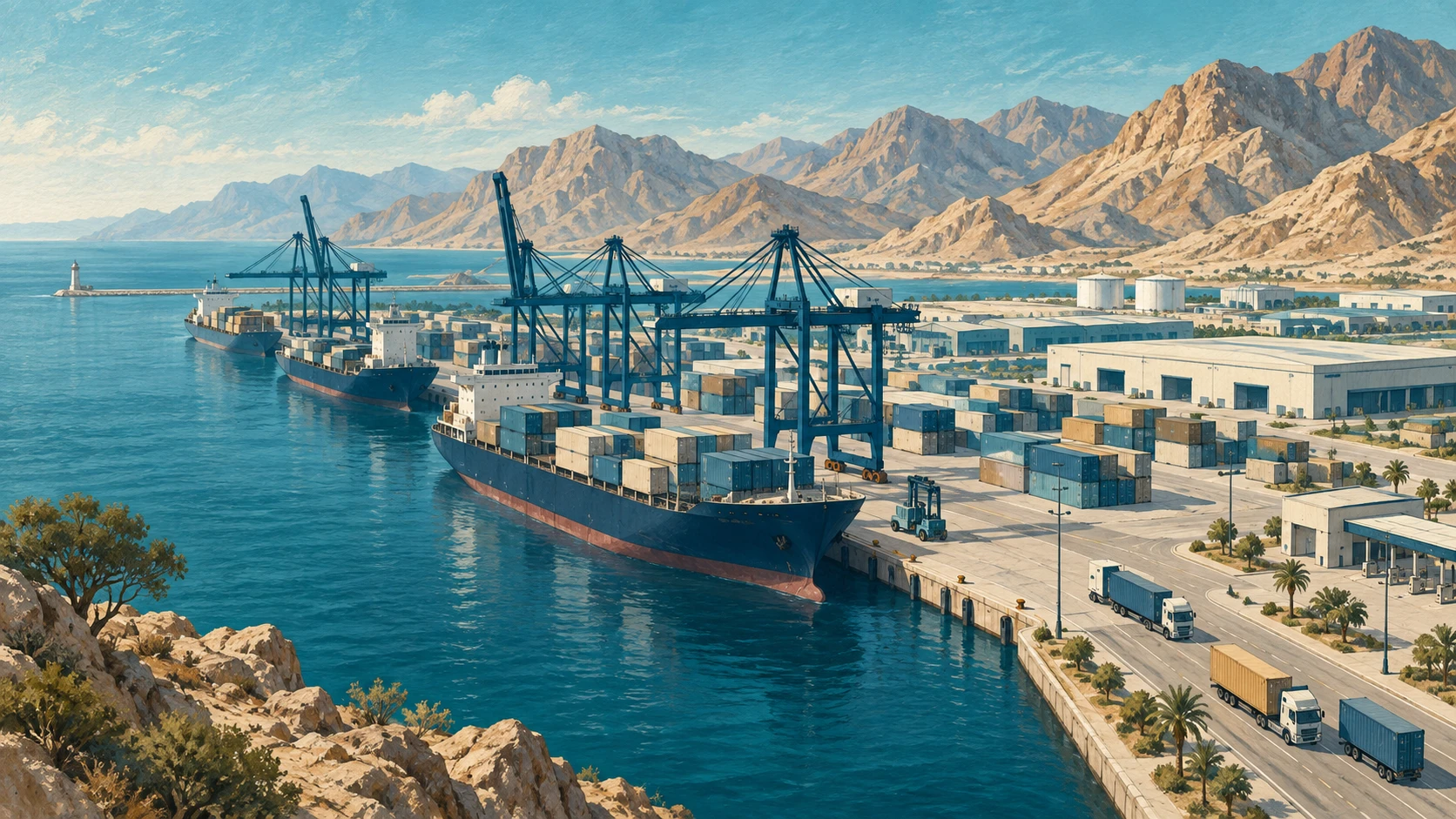
Oman enjoys a distinct geographic advantage: over three thousand kilometers of open coastline lying entirely outside the congested Strait of Hormuz. To capitalize on these sea lanes, the Public Authority for Special Economic Zones and Free Zones oversees major economic clusters and industrial cities across the country. At the center of this strategy is the Special Economic Zone at Duqm, an ambitious development covering more than two thousand square kilometers along the central Arabian Sea. Duqm integrates a multipurpose deepwater port, a major dry dock, an oil refinery, and large tracts of industrial land dedicated to global manufacturing and trade.
Further south, Salalah Freezone borders vital shipping routes entering the Red Sea, serving as a global transshipment hub for cargo and hosting advanced petrochemical and pharmaceutical plants. In northern Oman, Sohar Port and Freezone handles container freight alongside major metals and food processing facilities. Within these designated zones, registered businesses receive long-term tax concessions, duty-free equipment imports, and relaxed workforce quotas. Upgraded multi-lane highways connect each deepwater port overland directly to neighboring markets in Saudi Arabia and the United Arab Emirates.
Developing domestic factories and corporate supply chains
Moving beyond raw crude exports requires diversifying domestic manufacturing into high-value processed goods. In Sohar, an integrated metals cluster processes imported iron ore and raw aluminum into rolled sheet, industrial wire, and structural components. Meanwhile, modern petrochemical plants in Duqm and Sohar convert natural gas and liquid fuels into polymer feedstock for regional plastics factories. In Khazaen Economic City and Salalah, specialized food processing centers package dairy, grains, and seafood to bolster regional supply resilience.
To ensure foreign investment benefits local enterprise, Oman enforces strict In-Country Value mandates across large industrial and energy projects. Prime contractors must procure equipment, fabrication services, and professional maintenance from Omani subcontractors. Industrial estates managed by Madayn provide ready-to-use factory buildings, piped utilities, and paved logistics yards across secondary regional towns, helping local suppliers scale up operations alongside multinational tenants.
Adding value to industrial minerals and green recycling
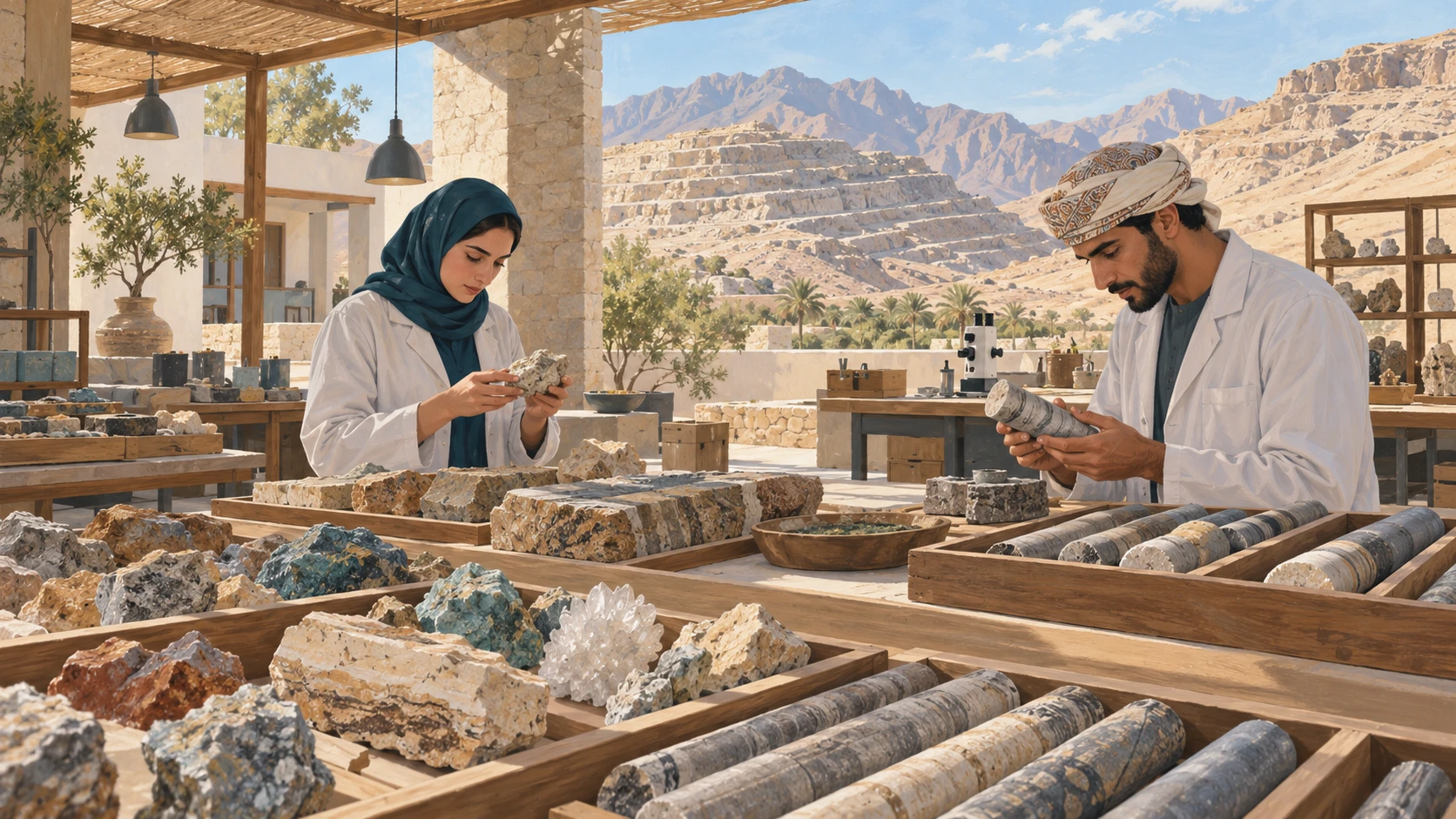
Beyond oil and gas, the Sultanate possesses rich geological endowments of industrial and metallic minerals, including high-purity limestone, dolomite, gypsum, silica sand, and copper ore. Oman is currently one of the world's leading seaborne exporters of gypsum, shipping millions of tonnes each year to cement producers throughout Asia and East Africa. Rather than allowing unprocessed raw rock to leave the country cheaply, the government actively mandates local mineral beneficiation, requiring quarry operators to process stone into plasterboard, refined chemicals, and export-grade materials within Oman.
In northern Oman, historic copper mines are finding new life through advanced exploration, modern open-pit extraction, and domestic smelters. At the same time, heavy industrial plants are adopting circular manufacturing methods, reusing steel slag and construction rubble in sustainable cement making. Before any new quarry or mine can open, operators must secure strict environmental permits from the Environment Authority and commit to complete site rehabilitation once excavation concludes.
Betting on green hydrogen and solar energy
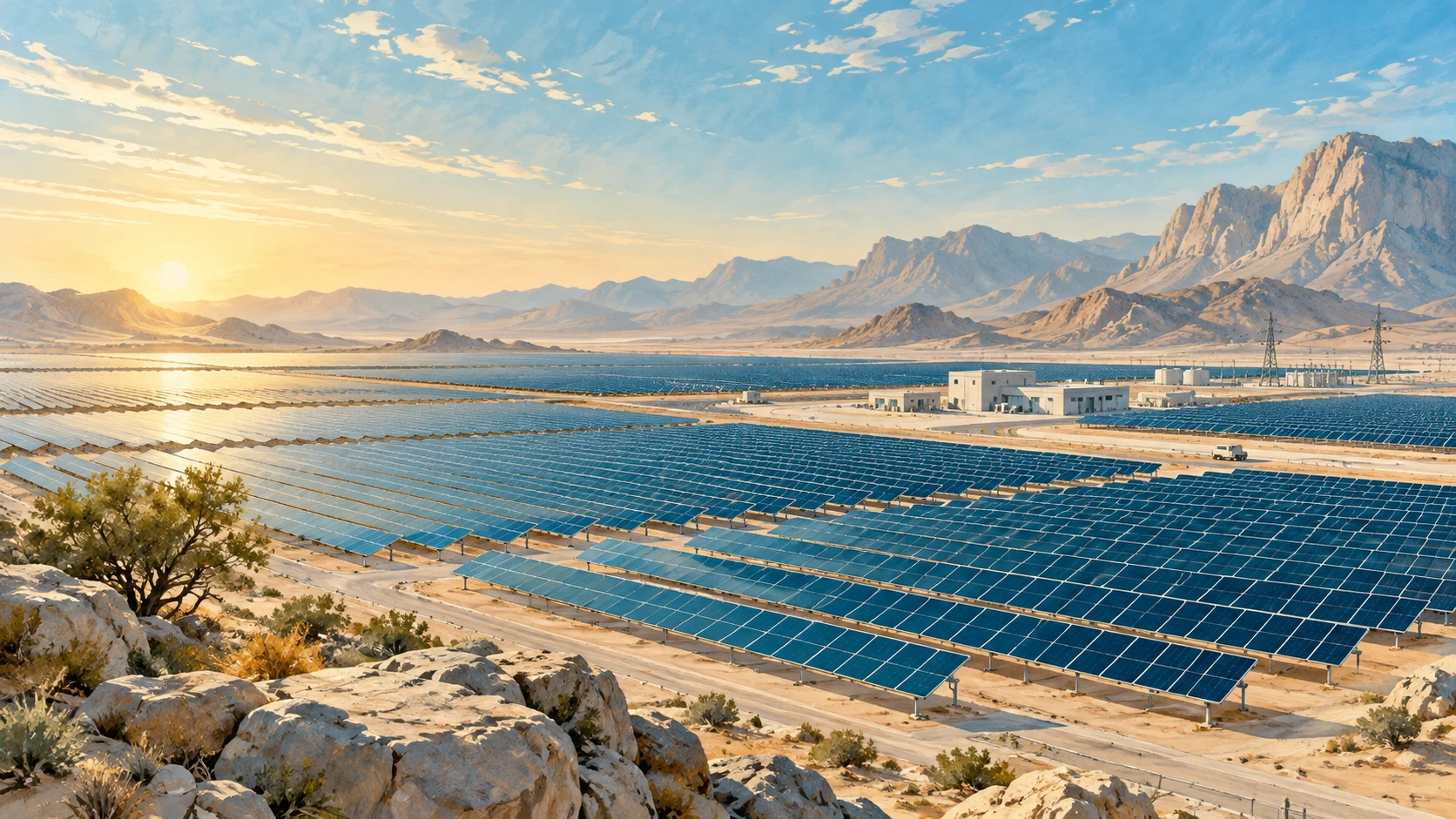
With vast expanses of sun-drenched desert and steady coastal winds, Oman has launched an ambitious green hydrogen strategy. The country targets producing at least one million tonnes of zero-carbon hydrogen annually by 2030, using renewable electricity and large-scale water electrolysis plants. To manage this buildout, the government established Hydrom, an autonomous agency that runs competitive international land auctions, awarding prime wind and solar concessions in Al Wusta and Dhofar to leading global energy consortia.
Industrial ports at Duqm and Salalah are already building specialized pipelines, cryogenic storage tanks, and export terminals to ship green ammonia to buyers in Europe and Asia. Backing this clean transition is Future Fund Oman, a two-billion-rial sovereign fund created by the Oman Investment Authority to co-invest alongside private energy developers. These clean fuel projects form the core of Oman's national plan to reach net-zero carbon emissions by 2050, turning decarbonization into a powerful engine for new industrial jobs.
Balancing public finances, stock listings, and regional competition
Attracting foreign capital is central to Oman Vision 2040, which aims to lift foreign direct investment above ten percent of gross domestic product. Prudent fiscal consolidation and aggressive public debt reduction after 2020 have earned Oman successive sovereign credit upgrades from international rating agencies. Stronger public finances lower corporate borrowing costs and give global investors confidence in the state's long-term economic stewardship.
To deepen local capital markets, the government is moving to privatize state-owned enterprises through public share sales on the Muscat Stock Exchange, expanding trading opportunities for domestic and foreign funds. At the same time, policymakers face sharp competition from wealthy Gulf neighbors, who offer aggressive corporate tax incentives and lavish capital expenditure subsidies of their own. For Oman, staying ahead requires continuous technical education for its young workforce, ensuring factories have the skilled engineers and managers needed to maintain long-term industrial competitiveness.