Micro-listening
schadenfreude: pleasure at someone's misfortune
Should I capitalize schadenfreude when writing in English?
Schadenfreude refers to satisfaction, amusement, or pleasure triggered by another person's bad luck, defeat, or embarrassment. It does not mean happiness about your own hard work or good fortune. The satisfaction depends entirely on someone else experiencing a problem or setback.
Key points
- Schadenfreude is pleasure at someone else's misfortune.
- Use it as an uncountable noun with verbs such as feel or express.
- Consider the situation carefully: naming the feeling can imply a harsh judgment, especially when the harm is serious.
This lesson has 5 stages. You can stop at any time and continue later.

Stage 1 of 5
Understand
What it means, when to use it, and mistakes to avoid.
Examples
I felt a sudden rush of schadenfreude when the boastful lawyer dropped his briefcase.
Why it works: Shows the typical pattern with the verb feel and connects the emotion to an arrogant person's harmless accident.
2 more examples
-
Our manager warned the department against indulging in schadenfreude after our main competitor lost an account.
Demonstrates the phrase indulge in schadenfreude to warn staff against unprofessional gloating.
-
She could not conceal her schadenfreude as the noisy neighbor received a parking ticket.
Uses schadenfreude as the direct object of conceal to describe a visible reaction to poetic justice.
Read the full guide
Identify whether your pleasure comes from someone else's trouble
Before choosing this term, verify whose misfortune created the pleasure. If you win a race through your own stamina, you feel pride or joy. Schadenfreude occurs only when your satisfaction depends on another person experiencing bad luck, making a public mistake, or suffering a setback. The feeling often surfaces when someone who acted boastful finally fails. If no one suffered an unlucky moment, the term does not fit.
-
Hannah felt schadenfreude when the loud critic tripped on his way to the podium.
Why it works: The critic's physical mistake directly triggers Hannah's secret amusement.
Your turn
In which situation does a speaker experience genuine schadenfreude?
Answer: A designer feels secret amusement when a rude competitor drops a tray of samples.
Show the answer
Answer: A designer feels secret amusement when a rude competitor drops a tray of samples.
Schadenfreude requires that the pleasure is triggered by another person's mistake or bad luck, not personal good fortune.
Distinguish personal relief from malicious satisfaction
Learners frequently confuse relief with schadenfreude because both emotions can appear when a difficult situation concludes. Relief describes the relaxing sensation that your own stress, fear, or heavy workload has ended. Schadenfreude, however, specifically requires an element of enjoyment at another person's embarrassment or failure. You can feel relieved after an audit finishes without experiencing any delight in anyone else's trouble. Keep these two mental states separate in your descriptions.
-
I felt relieved that the inspection ended, but my colleague felt schadenfreude when the harsh auditor misplaced his files.
Why it works: Relief relates to the end of pressure, while schadenfreude targets the auditor's personal blunder.
You can practise this again in aloof meaning: distant and detached and Whatever or what ever: choosing the right form.
Your turn
Why is taking a deep breath after finishing a difficult exam not an example of schadenfreude?
Answer: It represents relief from personal pressure rather than pleasure at another person's failure.
Show the answer
Answer: It represents relief from personal pressure rather than pleasure at another person's failure.
Relief marks the lifting of your own burden, whereas schadenfreude specifically demands satisfaction in someone else's trouble.
Separate a desire for justice from petty amusement
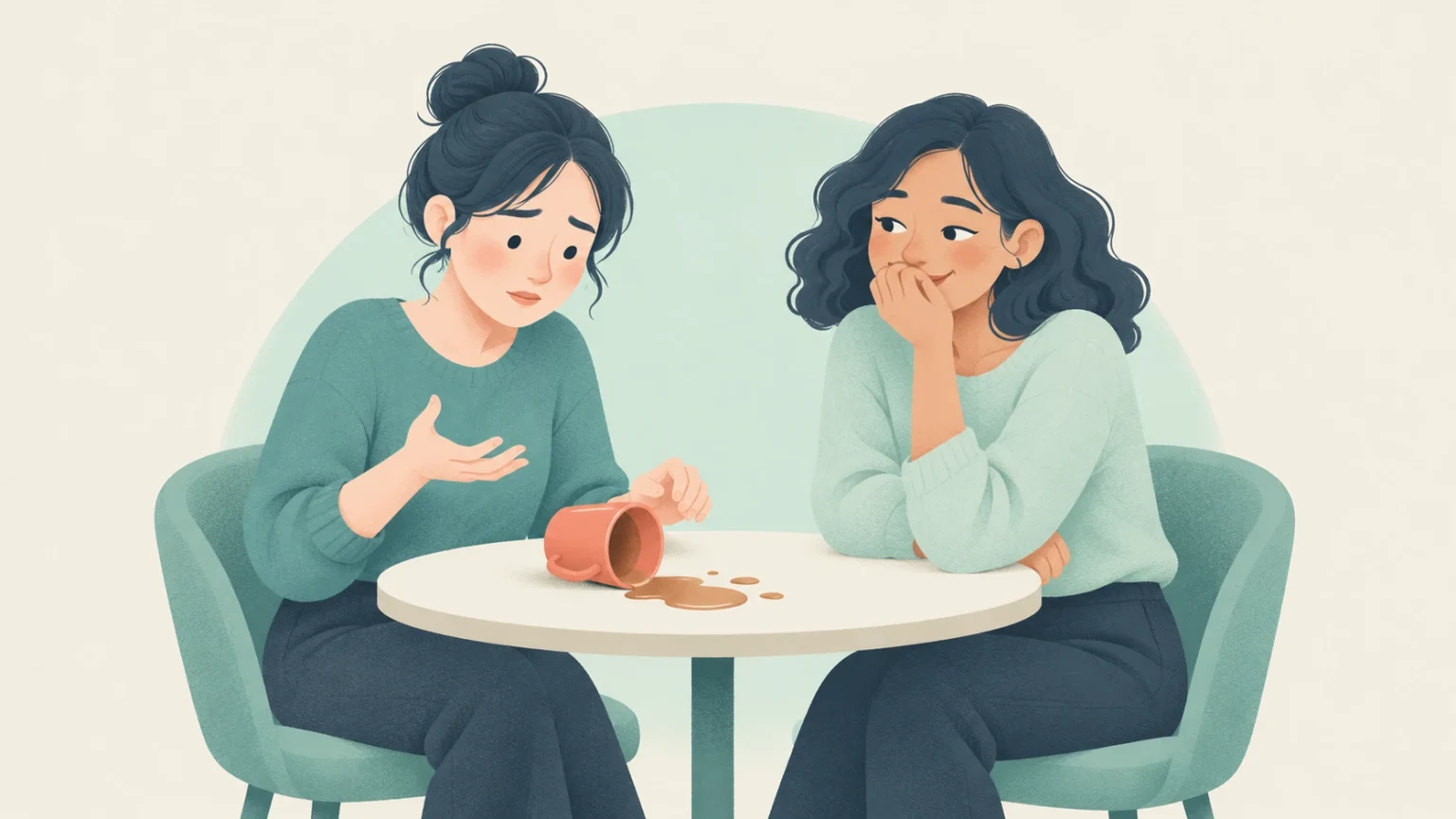
A sense of justice occurs when a person believes that a rule was applied correctly or that an offender received a deserved consequence. Schadenfreude describes the personal emotional spark of pleasure that watches someone struggle. While the two feelings can happen simultaneously when an arrogant rule-breaker gets caught, justice is a moral evaluation about fairness. Schadenfreude is the emotional chuckle you try to hide behind your hand.
-
The committee supported the fine out of fairness, but private schadenfreude circulated among the staff.
Why it works: Fairness evaluates the legal penalty, whereas schadenfreude names the staff members' petty amusement.
Your turn
What is the key difference between justice and schadenfreude when a penalty is issued?
Answer: Justice is a moral judgment about correct rules, whereas schadenfreude is emotional pleasure at someone's misfortune.
Show the answer
Answer: Justice is a moral judgment about correct rules, whereas schadenfreude is emotional pleasure at someone's misfortune.
Justice evaluates whether an outcome is fair, while schadenfreude refers strictly to personal enjoyment of an unlucky event.
Treat the term as an uncountable noun
In English syntax, treat schadenfreude as an uncountable noun. Never place an indefinite article before it, and do not attempt to form a plural by adding an s. Instead, combine the word with quantifiers like some, a bit of, a touch of, or a flash of. Common supporting verbs include feel, experience, suppress, admit to, and display. Using these patterns keeps your writing natural and grammatically sound.
-
The reporter detected a touch of schadenfreude in the politician's voice.
Why it works: Uses the quantifier a touch of with the uncountable noun.
Your turn
Which sentence uses the word schadenfreude with correct English grammar?
Answer: She admitted to a little schadenfreude when her rival's cake collapsed.
Show the answer
Answer: She admitted to a little schadenfreude when her rival's cake collapsed.
Schadenfreude is uncountable, so it pairs with quantifiers like a little rather than plural endings or indefinite articles.
Evaluate the social context before speaking
Schadenfreude can describe pleasure at a small setback or at serious misfortune. The more serious the harm, the more cruel that reaction may seem. Describing someone else as feeling schadenfreude does not mean you share or approve of the feeling. Be careful when naming another person's motives, especially in a sensitive situation.
-
Discussing our neighbor's burnt toast involved harmless schadenfreude, but his house fire called for immediate sympathy.
Why it works: The example contrasts reactions to minor and serious harm. Schadenfreude can name either reaction, but enjoying serious harm may seem especially cruel.
Your turn
Which statement distinguishes describing schadenfreude from endorsing it?
Answer: You can criticize someone's schadenfreude without sharing their pleasure.
Show the answer
Answer: You can criticize someone's schadenfreude without sharing their pleasure.
The word names pleasure at another person's misfortune. A writer can report or criticize that reaction, including when the misfortune is serious.
Pronounce the borrowed German syllables cleanly
English speakers pronounce this four-syllable German loanword as SHAH-duhn-froy-duh. The primary stress falls firmly on the first syllable. The second syllable features a reduced vowel sound similar to the unstressed syllable in button. The third syllable rhymes with boy or toy. The final syllable ends with an unstressed neutral schwa sound. Do not pronounce the final letter as an English long e sound.
-
The podcast host pronounced schadenfreude with primary stress on the first syllable.
Why it works: Highlights the importance of placing vocal energy on the initial syllable SHAH.
Your turn
Which syllable receives the primary stress when pronouncing schadenfreude in English?
Answer: The first syllable, rhyming with the start of father.
Show the answer
Answer: The first syllable, rhyming with the start of father.
The main stress lands on the first syllable SHAH, while subsequent syllables carry secondary or reduced stress.
Identify indirect expressions of malicious delight at work
A smile or glance does not prove that a colleague enjoys someone else's setback. Calling a reaction schadenfreude interprets that person's feelings and may sound critical. In a work message, describe what you observed and avoid presenting an assumption about motives as a fact.
-
A quiet glance between the project leads revealed their schadenfreude when the rival team's budget was cut.
Why it works: Illustrates how coworkers signal petty pleasure without uttering a single spoken word.
Your turn
What can you conclude from a colleague's brief smile after someone else makes a mistake?
Answer: The smile alone does not establish what the colleague feels.
Show the answer
Answer: The smile alone does not establish what the colleague feels.
A smile or glance can have several meanings. Look for context or an explicit statement before describing someone's reaction as schadenfreude.
Frame personal and analytical writing with emotional precision
When drafting analytical essays, book reviews, or personal memoirs, schadenfreude provides an exact label for complex human motives. Instead of writing that a character was mean or happy about bad news, naming the emotion shows mature vocabulary control. Pair the noun with descriptive adjectives such as momentary, unearned, unspoken, or thinly veiled. This precision clarifies whether the character felt guilty about their reaction or indulged in it openly.
-
The novelist captured the protagonist's thinly veiled schadenfreude during the courtroom scene.
Why it works: The adjective thinly veiled modifies schadenfreude to describe poorly hidden pleasure.
Your turn
Why is schadenfreude a valuable vocabulary choice in analytical essays?
Answer: It names a specific psychological response that simple words like happy or mean fail to capture.
Show the answer
Answer: It names a specific psychological response that simple words like happy or mean fail to capture.
Schadenfreude captures the exact mix of pleasure and another person's misfortune that generic terms miss.
Use it naturally
How people really use “schadenfreude”
Neutral Fine almost anywhere, at work or with friends.
Words it often goes with
- feel schadenfreudePeople sometimes feel schadenfreude when someone who treated them badly has a setback.
- a rush of schadenfreudeI felt a rush of schadenfreude when the rude customer spilled his drink.
- hide her schadenfreudeShe tried to hide her schadenfreude when her boastful cousin lost his keys.
- indulge in schadenfreudeIt is tempting to indulge in schadenfreude when an unpleasant person gets embarrassed.
What people also say
- “I felt schadenfreude.” instead of “I felt a schadenfreude.” Schadenfreude is uncountable, so leave out "a".
Questions about "schadenfreude: pleasure at someone's misfortune"
Should I capitalize schadenfreude when writing in English?
In German, all nouns begin with a capital letter, but in modern English, schadenfreude is usually written in lowercase. You only capitalize it when it begins a sentence or appears in a title. Some older texts retain the German capital letter, but standard modern style guides treat it like an ordinary borrowed English noun.
She admitted to a feeling of schadenfreude after the debate.
Schadenfreude is an uncomfortable emotion to acknowledge.
Can I say schadenfreudes if multiple people feel happy about a failure?
No. Schadenfreude is an uncountable noun in English, meaning it has no plural form. You cannot add an s to the end, and you should never say a schadenfreude. If you want to describe several instances or people feeling this emotion, use quantifiers such as a feeling of schadenfreude, moments of schadenfreude, or widespread schadenfreude.
The whole team shared a quiet moment of schadenfreude.
We observed widespread schadenfreude among the rival supporters.
How is schadenfreude different from gloating?
Schadenfreude specifically means pleasure at another person's misfortune. Gloating means dwelling on or showing satisfaction, often about your own success or someone else's failure. Gloating can be private as well as openly expressed. The words overlap when someone enjoys another person's setback.
He hid his schadenfreude behind a neutral expression.
Her boastful comments on social media crossed the line into gloating.
When is it inappropriate or offensive to use the word schadenfreude?
Expressing pleasure at serious illness, injury, or grief can sound cruel. Schadenfreude can still name that reaction when you are describing or criticizing it. In a sensitive conversation, make clear whose feeling you mean and avoid assuming that a person feels pleasure without evidence.
Feeling schadenfreude over a broken coffee mug is harmless.
Nobody should express schadenfreude when an opponent suffers a physical injury.
Before you go
Remember this
Schadenfreude is pleasure at someone else's misfortune. Use it as an uncountable noun with verbs such as feel or express. Consider the situation carefully: naming the feeling can imply a harsh judgment, especially when the harm is serious.
Stage 2 of 5
Listen
Hear it in real sentences, from short to long, and write what you hear.
0 of 4 done
Listening 1 of 4
Listening 2 of 4
Try a longer clip. Listen once, then replay the part you missed.
Listening 3 of 4
This clip is longer. Follow the instruction above the answer field.
Listening 4 of 4
Listen, then type the missing words. The rest of the text is already there.
0:00
Practice complete
You listened closely.
Your result is saved in this browser.
Keep your progress. Your practice is saved on this device only. Create a free account to keep it everywhere.
Create a free accountThat was today's free lesson. Tomorrow you get another one. Want more today? See membership.
Create a free SubLearn account to keep this progress across devices.
Save my progressStage 3 of 5
Speak
Say it with the speaker, then use it in your own answer.
Shadow
Say it along with the speaker
Play the line slowly, then speak at the same time as the speaker. Copy the rhythm, not just the words.
Your turn
Say it your way
Speak for 30 to 60 seconds from memory. On vacation, you see a tourist push past people at an ice cream stand, then drop his ice cream. Describe your reaction and explain how it differs from the pleasure of enjoying your own treat.
Use: schadenfreude
Take ten seconds to think, then answer out loud without looking at the lesson. Speak for the time shown in the task above. Nothing is sent unless you ask for feedback.
0:00
Hear how someone else might say it
I think I would feel a little schadenfreude if the tourist dropped his ice cream after pushing past everyone. His behavior was rude, so seeing his treat fall might make me smile for a moment. That pleasure would come from his bad luck. Enjoying my own ice cream would be different because nobody would need to suffer for me to feel happy. Still, dropping an ice cream is frustrating, especially on vacation. Once my first reaction passed, I would probably offer him a napkin and get back to enjoying my day.
Try once more and answer this: Would you help him pick up the mess?
Stage 4 of 5
Write
Use what you've learned to write about your day or week, then write a message.
Write
Put it in your own words
- I used “schadenfreude”.
- It is about my life, not the lesson’s example.
- I read it once aloud to check it sounds right.
Write your own response
Choose a situation and write 30–50 words of your own. In this activity, you decide what to say rather than copy the words in a recording.
Check your own writing
Read one possible response
Use these checks to revise your message. Grammar and meaning are not automatically graded. Each task keeps its own draft in this browser tab.

You finished the free part of this lesson
- Understand
- Listen
- Speak
- Write
- CheckPart of membership
Worth another look
With a free account, the lessons you finish come back for review to help you remember them.Create a free account
Stage 5 of 5 · Part of membership
Check
New clips without hints.
Listening tests are included with membership. Try the free dictation first, then decide whether to continue.
Listening 1 of 2 Part of membership
Listening 2 of 2 Part of membership
Follow MicroEnglish
Find lesson updates, short videos and quick quizzes. Pick the app you already use.
Questions & comments
Ask about this lesson, share an example, or help another learner.
Example
Memory tip
Goes with
Related forms
Not to be confused with
In this lesson
This word isn't in our dictionary. Check the spelling, or try another form of the word.
We couldn't load this word. Try again.
