Micro-listening
Insane Meaning: Choose the Right Word
Does insane mean good or bad?
Insane is an adjective that describes something as extreme, shocking, unreasonable, or impressively good. While historical and legal contexts used the word to describe severe mental illness, casual modern speakers use it to express an intense reaction to an unusual event or extraordinary action.
Key points
- The word itself signals high intensity, but it does not specify whether that intensity is positive or negative.
- Remember that insane signals an extreme reaction, but context determines whether it represents praise or criticism.
- The word is pronounced /ɪnˈseɪn/ with stress on the second syllable.
This lesson has 5 stages. You can stop at any time and continue later.

Stage 1 of 5
Understand
What it means, when to use it, and mistakes to avoid.
Examples
The steep mountain descent was insane, but every cyclist reached the valley safely.
Why it works: Insane emphasizes the extreme difficulty of the mountain road in informal conversation.
2 more examples
-
Her ability to sprint uphill after a long ride was insane.
Insane expresses enthusiastic admiration for extraordinary athletic performance.
-
Proposing an eight-hour ride in freezing rain is unrealistic for our weekend group.
Unrealistic clearly identifies why the plan cannot work without resorting to exaggerated slang.
Read the full guide
Decide What Kind of Reaction You Hear
Insane is a strong describing word. In everyday conversation, it can mean extremely bad, surprising, or amazingly good. The situation helps you understand which meaning the speaker intends. When someone uses this word casually, they are almost never talking about medical health or psychology. Instead, they are expressing an intense reaction to an event, an action, or a physical condition that goes far beyond normal limits. Because the word carries high intensity, listeners pay attention immediately to whether the speaker is shocked, annoyed, or delighted.
-
The wind along the coastal trail was insane yesterday.
Why it works: Insane describes severe weather conditions that made cycling unusually difficult.
-
His recovery after the crash was insane.
Why it works: Insane expresses amazement at how fast the injured rider healed.
Your turn
What does an informal speaker usually mean when they describe a bicycle hill as insane?
Answer: The hill has an extreme slope that provokes a strong reaction.
Show the answer
Answer: The hill has an extreme slope that provokes a strong reaction.
In casual speech, insane indicates an extreme degree or difficulty rather than a clinical statement.
Use Context to Distinguish Praise from Criticism
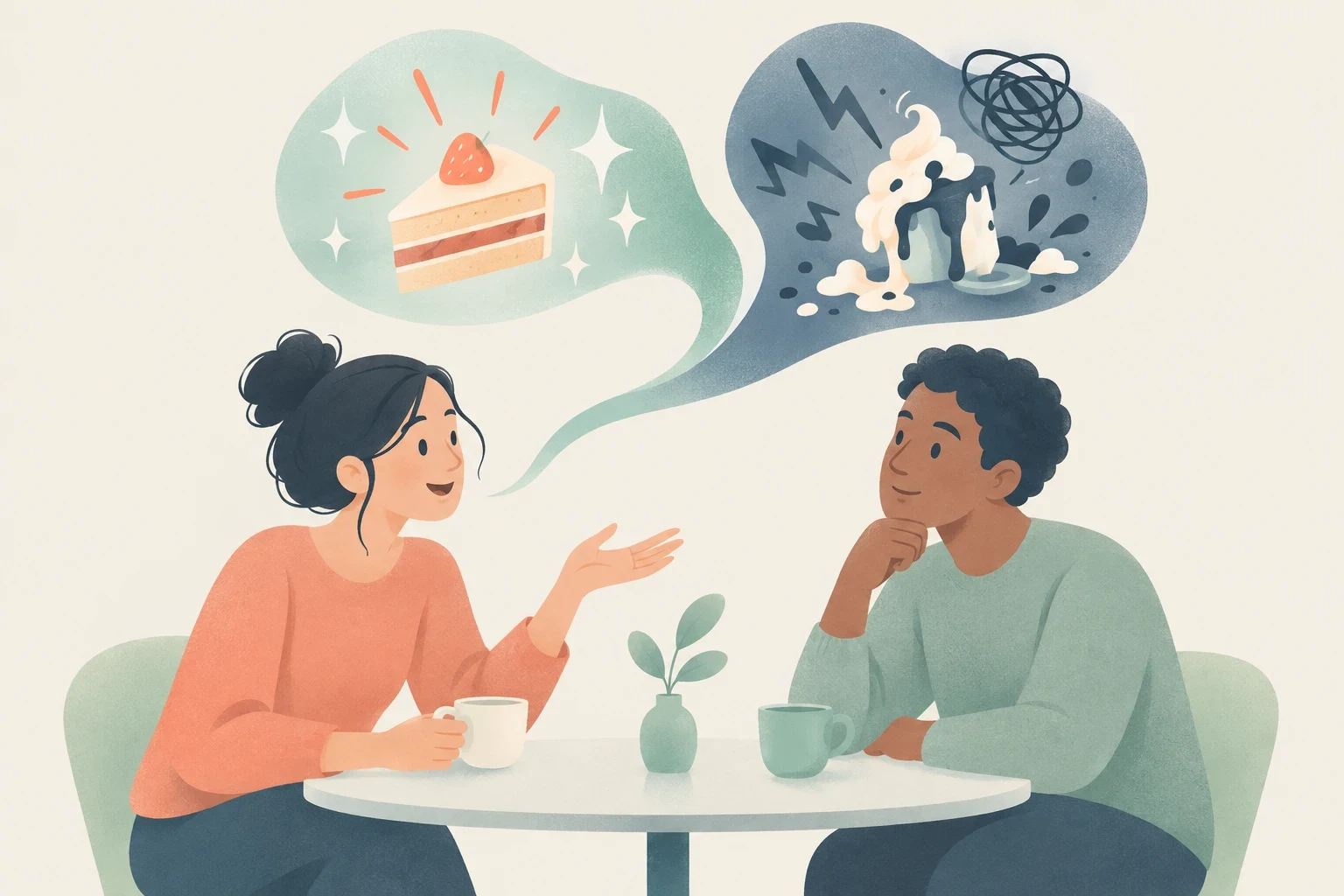
The short phrase that is insane never tells you by itself whether the speaker approves or disapproves. You must look at the surrounding circumstances, the speaker's facial expression, and the words that come before or after. For example, if a friend watches an acrobatic jump and smiles with excitement, insane expresses high praise. If another friend points at a sharp drop beside broken glass, the exact same word signals danger and disapproval. Context provides the evidence you need to interpret the reaction accurately.
-
Marco: Did you see Leo jump that wooden barrier? His balance was insane!
Why it works: Marco uses insane to praise Leo's impressive technical bike handling.
-
Elena: That rocky shortcut through the ravine is insane; the path drops straight into deep mud.
Why it works: Elena uses insane to object to a dangerous route and criticize the choice.
You can practise this again in Adverse or Averse: Choose the Right Word and General Determiners: Choose the Right Noun.
Your turn
Why is the isolated sentence 'That route is insane' ambiguous without context?
Answer: It can mean either dangerously risky or impressively exciting depending on the situation.
Show the answer
Answer: It can mean either dangerously risky or impressively exciting depending on the situation.
Without context, the listener cannot know whether the speaker is warning about danger or admiring a thrilling ride.
Place Insane After Be or Before a Noun
In English grammar, insane functions as a describing word. You can place it directly after the linking verb be, as in That climb is insane. You can also place it directly before a noun, as in an insane speed. Because insane begins with a short vowel sound /ɪ/, use the indefinite article an rather than a when a singular countable noun follows. Notice also the related word insanely, which ends in -ly. That form modifies other adjectives, such as in an insanely expensive bicycle, but our focus remains on the primary describing word.
-
That final climb is insane after fifty miles of hard riding.
Why it works: Insane follows the verb is to describe the difficulty of the hill.
-
She maintained an insane speed along the flat paved road.
Why it works: Insane comes before the noun speed, requiring the article an.
Your turn
Which sentence correctly places insane before a singular noun with the proper article?
Answer: He rode down the hill at an insane pace.
Show the answer
Answer: He rode down the hill at an insane pace.
Because insane begins with a vowel sound, singular noun phrases require the indefinite article an.
Avoid Using Insane as a Personal Label
Historical literature and specialized legal records sometimes use insane to describe severe psychiatric conditions or legal accountability. However, it is not a modern medical diagnosis. Calling a person insane or asking Are you insane? can sound deeply offensive because it reduces someone to a careless insult. If you disagree with a teammate or worry about their safety, describe the specific action instead of judging their mind. For example, explain that riding without brakes is dangerous. While insane is not a formal swear word, using it carelessly can easily touch a nerve in sensitive discussions. See /idioms/touch-a-nerve/ for more on sensitive reactions.
-
Asking someone 'Are you insane?' during a debate often causes anger.
Why it works: The question attacks the person rather than addressing the actual disagreement.
-
His decision to ride down the mountain in complete darkness was dangerous.
Why it works: Describing the decision as dangerous addresses the behavior respectfully without labeling the rider.
Your turn
What is the best way to voice concern when a friend proposes a reckless cycling trick?
Answer: Describe the physical danger of the trick rather than labeling the person.
Show the answer
Answer: Describe the physical danger of the trick rather than labeling the person.
Naming the physical hazard communicates the concern clearly without resorting to personal insults.
Select a Precise Replacement for Your Meaning
When you want your listener or reader to understand you without confusion, choose a specific replacement. Follow a three-step sequence: first, identify what you actually mean; second, consider who will hear or read your words; third, name the exact quality and give a short reason. If you admire great skill, use amazing or extraordinary. If safety is at risk, say dangerous or hazardous. If a price is unreasonable, say too expensive. If a schedule or route cannot work in reality, use unrealistic. If the difficulty exceeds what someone can manage, use overwhelming. Replacing a vague reaction with an exact word ensures professional clarity.
-
Admiration: His sprint to the finish line was amazing.
Why it works: Amazing clearly conveys admiration for athletic skill.
-
Safety: The descent along the wet cliff is dangerous.
Why it works: Dangerous identifies a safety hazard rather than expressing general shock.
-
Cost: That titanium frame is too expensive for our club budget.
Why it works: Too expensive specifies a financial limitation clearly.
-
Feasibility: Expecting beginner cyclists to climb three peaks before noon is unrealistic.
Why it works: Unrealistic explains that a plan cannot be achieved in real life.
Your turn
Which sentence provides the clearest professional feedback about an unworkable project timeline?
Answer: This timeline is unrealistic because parts take two weeks to arrive.
Show the answer
Answer: This timeline is unrealistic because parts take two weeks to arrive.
Unrealistic identifies the practical problem and provides a concrete reason for the delay.
Do Not Treat Insane as Simply Unusual
A common mistake among English learners is treating insane as a neutral synonym for unusual, different, or quirky. Calling a friend's new bicycle color insane sounds unnecessarily dramatic if the color is merely uncommon. Furthermore, using insane in formal workplace emails or official safety reports damages your credibility, as colleagues expect measured and factual language. If you need to discuss an irregular practice with a colleague, it is better to have a word in private using calm terms. You can explore how to manage quiet discussions at /idioms/have-a-word/.
-
Mistake: She painted her bicycle helmet an insane yellow shade.
Why it works: Awkward because a bright or unusual color does not justify such extreme language.
-
Correction: She painted her bicycle helmet an unusual yellow shade.
Why it works: Unusual accurately describes a rare color without exaggerated emotional drama.
Your turn
Why is 'The manager proposed an insane schedule' inappropriate in a formal written report?
Answer: Because insane is too casual and emotional for objective business documentation.
Show the answer
Answer: Because insane is too casual and emotional for objective business documentation.
Formal reports require neutral, precise language like demanding or unrealistic rather than emotional slang.
Hear Syllable Stress and Intonation Together
The word insane has two syllables with the phonetic transcription /ɪnˈseɪn/. The primary stress falls firmly on the second syllable: in-SANE. In spoken English, pitch and intonation carry emotional energy, but intonation alone cannot tell you whether someone is happy or upset. A rising pitch can indicate delighted surprise or horrified shock. Therefore, you must listen to the stressed syllable while simultaneously tracking surrounding clues, such as tone of voice and physical context. For more listening practice on subtle tone shifts, examine /micro-listenings/13-2/.
-
Pronunciation: in-SANE /ɪnˈseɪn/
Why it works: The first syllable is unstressed and short, while the second syllable is long and stressed.
-
Listening clue: A wide smile with 'That jump was insane!' confirms admiration.
Why it works: Visual and situational cues work alongside intonation to clarify the speaker's intent.
Your turn
Where does the primary stress fall when pronouncing the word insane?
Answer: On the second syllable: in-SANE.
Show the answer
Answer: On the second syllable: in-SANE.
Insane is pronounced /ɪnˈseɪn/, with stress placed strongly on the second syllable.
Rewrite a Reaction for Clear Group Communication
Now practice turning an initial emotional reaction into clear communication. When you look at an unsafe shortcut, your first private thought might be This route is insane. That reaction tells you how you feel, but it does not help your cycling group make a safe choice. To communicate effectively, decide whether the situation involves praise or concern. Then replace the vague reaction with clear facts. Stating that a rocky descent is hazardous because loose gravel causes falls gives the group organizer actionable information that protects everyone.
-
Initial reaction: Choosing that muddy trail is insane!
Why it works: Expresses strong frustration but gives no useful details about the actual problem.
-
Effective rewrite: Choosing that muddy trail is hazardous because deep ruts can damage our wheel rims.
Why it works: Identifies the specific risk and provides a practical reason for changing routes.
Your turn
Which message best helps a bicycle tour organizer understand why a shortcut should be avoided?
Answer: The shortcut has steep gravel drops that create a high risk of falling for road bikes.
Show the answer
Answer: The shortcut has steep gravel drops that create a high risk of falling for road bikes.
Specifying the gravel drops and falling risk gives the organizer the factual evidence needed to alter the route.
Use it naturally
How people really use “insane”
Informal Relaxed; better with friends and colleagues than in formal writing.
Words it often goes with
- insane speedThe motorcycle passed us at an insane speed.
- insane amountThey spent an insane amount of money on concert tickets.
- insane talentThat young drummer has insane talent.
What people also say
- “Her performance was incredible.” instead of “Her performance was very good to an extreme degree.” This makes your praise clear.
- “That plan is unrealistic.” instead of “That plan is outside practical possibility.” This clearly says the plan is unlikely to work.
A stronger way to say it
The ride would be difficult. → The ride would be exhausting.
An eight-hour ride in freezing rain would be exhausting.
Questions about "Insane Meaning: Choose the Right Word"
Does insane mean good or bad?
Insane can mean either good or bad depending entirely on the context and the speaker's tone. When used to describe an impressive athletic stunt or an exciting concert, it functions as high praise meaning extraordinary. When used to describe an unsafe road, an unreasonable demand, or extreme weather, it expresses strong criticism or shock. Because the word itself only indicates an extreme degree, you must examine the surrounding words to know whether the meaning is positive or negative.
His speed on the final lap was insane.
Waiting three hours in the freezing rain was insane.
Is insane a swear word?
Insane is not a swear word or profanity in English. You can hear it on daytime television and in standard conversational broadcasts. However, it is strong informal slang and carries historical connections to mental illness. This means that a platform may apply its own moderation rules, and the word may offend listeners who consider it insensitive to people experiencing mental health conditions.
That steep cliff road is insane.
Is it rude to call someone insane?
Yes, directing the word at a person or asking 'Are you insane?' is generally considered rude and confrontational. It dismisses the person's judgment and uses a historical mental health label as an insult. In discussions where you disagree with someone's idea or behavior, focus on the action rather than the individual. Describe a plan as risky, impractical, or unworkable instead of labeling the person.
Riding down that rocky slope without a helmet is dangerously risky.
Can I use insane in a work email?
Avoid using insane in professional emails and formal workplace documents. It sounds overly emotional, informal, and imprecise to managers, clients, and colleagues. In professional settings, precise language explains problems much more effectively. If a deadline cannot be met, explain that it is unrealistic; if a budget is too high, describe it as excessive or unaffordable.
Completing the report by tomorrow morning is unrealistic because the data verification takes two full days.
What can I say instead of insane?
Select an alternative based on the exact meaning you want to convey. For exciting achievements, use amazing, extraordinary, or remarkable. For safety concerns, use dangerous or hazardous. For excessive financial cost, use too expensive or unaffordable. For unworkable plans, use unrealistic. For workloads that feel like too much to handle, use overwhelming. Choosing precise words makes your communication clear.
Her downhill cycling technique was extraordinary.
The proposed climb is hazardous because loose gravel covers the curves.
What is the difference between insane and insanely?
Insane is an adjective that describes nouns or follows linking verbs, as in That climb is insane or an insane speed. Insanely is an adverb ending in -ly that modifies adjectives or adverbs to mean extremely, as in an insanely expensive bicycle or she rode insanely fast. Adverbs intensify another describing word, whereas the adjective directly describes the thing itself.
The racing bicycle was insanely expensive.
That steep descent is insane.
Before you go
Remember this
Remember that insane signals an extreme reaction, but context determines whether it represents praise or criticism. The word is pronounced /ɪnˈseɪn/ with stress on the second syllable. In careful writing and sensitive conversations, replace insane with exact words like amazing, dangerous, unrealistic, or too expensive to keep your message clear and respectful.
Stage 2 of 5
Listen
Hear it in real sentences, from short to long, and write what you hear.
0 of 4 done
Listening 1 of 4
Listening 2 of 4
Try a longer clip. Listen once, then replay the part you missed.
Listening 3 of 4
This clip is longer. Follow the instruction above the answer field.
Listening 4 of 4
Listen, then type the missing words. The rest of the text is already there.
0:00
Practice complete
You listened closely.
Your result is saved in this browser.
Keep your progress. Your practice is saved on this device only. Create a free account to keep it everywhere.
Create a free accountThat was today's free lesson. Tomorrow you get another one. Want more today? See membership.
Create a free SubLearn account to keep this progress across devices.
Save my progressStage 3 of 5
Speak
Say it with the speaker, then use it in your own answer.
Shadow
Say it along with the speaker
Play the line slowly, then speak at the same time as the speaker. Copy the rhythm, not just the words.
Your turn
Say it your way
Speak for 30 to 60 seconds from memory about a concert you attended with a friend. Describe an impressive performance and an unreasonable ticket price using insane. Then explain each reaction with a more precise word.
Use: insane
Take ten seconds to think, then answer out loud without looking at the lesson. Speak for the time shown in the task above. Nothing is sent unless you ask for feedback.
0:00
Hear how someone else might say it
I went to a concert with my friend last Friday, and the drummer's performance was insane. She played a really difficult solo without slowing down once. By insane, I mean incredibly skillful. I was praising her playing. But the ticket price was also insane. We paid almost two hundred dollars each, and our seats were far from the stage. In that case, I mean overpriced. I loved the music, but I wouldn't pay that much again. Next time, we'll look for a smaller venue with cheaper tickets.
Try once more and answer this: Which part of the performance impressed you most?
Stage 4 of 5
Write
Use what you've learned to write about your day or week, then write a message.
Write
Put it in your own words
- I used “insane”.
- It is about my life, not the lesson’s example.
- I read it once aloud to check it sounds right.
Write your own response
Choose a situation and write 30–50 words of your own. In this activity, you decide what to say rather than copy the words in a recording.
Check your own writing
Read one possible response
Use these checks to revise your message. Grammar and meaning are not automatically graded. Each task keeps its own draft in this browser tab.

You finished the free part of this lesson
- Understand
- Listen
- Speak
- Write
- CheckPart of membership
Worth another look
With a free account, the lessons you finish come back for review to help you remember them.Create a free account
Stage 5 of 5 · Part of membership
Check
New clips without hints.
Listening tests are included with membership. Try the free dictation first, then decide whether to continue.
Listening 1 of 2 Part of membership
Listening 2 of 2 Part of membership
Follow MicroEnglish
Find lesson updates, short videos and quick quizzes. Pick the app you already use.
Questions & comments
Ask about this lesson, share an example, or help another learner.
Example
Memory tip
Goes with
Related forms
Not to be confused with
In this lesson
This word isn't in our dictionary. Check the spelling, or try another form of the word.
We couldn't load this word. Try again.
