Distingue dónde empieza y termina cada palabra
Escucha una vez sin escribir. Vuelve a escuchar y distingue dónde termina una palabra y empieza la siguiente. Reproduce la frase completa para comprobarlo.
Mostrando del 163 al 180 de 639 lecciones
-

Pretentious meaning: How to use it
Pretentious describes something the speaker thinks is trying too hard to seem impressive, cultured, or important. It is a critical judgment about the display, not proof that the person or work has no real value.
-

Past Simple Verbs: Choose the Right Form
The past simple expresses actions, states, or events that started and finished at a definite time in the past. Regular verbs mark this past meaning by adding -ed or -d to their base form. Irregular verbs mark the past through historical vowel changes, consonant shifts, or unchanged forms rather than adding -ed.
-

English Class Activities: Plan Effective Speaking Tasks
A structured classroom activity is a purposeful communication task with an explicit language aim, defined partner roles, and a measurable outcome. Unlike unstructured conversation, an activity requires learners to exchange missing facts or solve a specific problem using targeted vocabulary and sentence patterns.
-

Hear vs Listen: Making the Right Choice
Hear indicates the physical ability to receive sound, notice an acoustic event, or receive news about a topic. It does not require conscious effort. Listen describes an active process where someone deliberately focuses on words, sounds, or instructions to understand their meaning.
-

English writing practice: four steps for clarity
Writing practice means drafting a short message for a clear communication goal. Revision means reading that draft again as the recipient would, adjusting words and order so the intended action is clear.
-
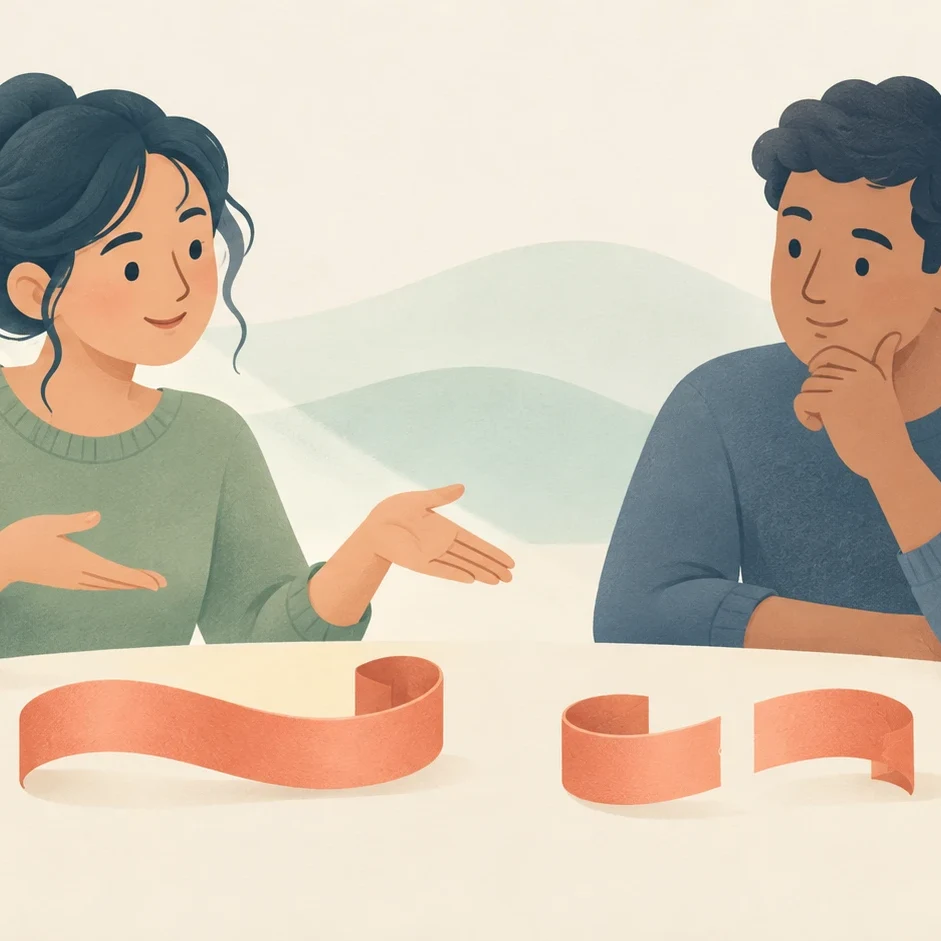
However or how ever: quick spelling guide
However can mean despite that when linking contrasting ideas. With an adjective or adverb, it can mean no matter how. In an emphatic question, however or how ever adds emphasis to how.
-
Membresía
Accede a todas las lecciones gratis durante 7 días
- 639 lecciones con dictado y pruebas de comprensión auditiva
- Tres acentos: británico, estadounidense y australiano
- Tu progreso se guarda
No necesitas tarjeta. Después, desde $7.50 al mes si decides continuar.
Iniciar prueba gratis -

Exclamations with What and Such: Clear Rules and Examples
Speakers use what and such to highlight a notable quality or situation. Instead of asking a question, these structures emphasize your personal reaction, like surprise, pleasure, or frustration. What directly introduces the noun phrase, while such typically modifies an adjective and noun together inside a statement.
-

Correlative conjunctions: rules and examples
A correlative conjunction consists of two linked words that show how two thoughts connect. Both...and combines two things together. Either...or offers a choice between two options. Neither...nor rejects two alternatives at once. Whether...or investigates two possible conditions or outcomes.
-

Attitude Adverbs: A Practical Guide
Attitude adverbs, frequently categorized as sentence adverbs, modify a whole clause rather than a single verb, adjective, or manner of action. When you use words such as fortunately, surprisingly, or honestly, you provide an interpretive lens for the statement that follows. The listener learns your stance toward the situation before evaluating the factual details.
-

Unless vs until: choose time or condition
Until marks the limit of an ongoing state or action. It answers how long something continues before a change happens. Unless introduces an exception or a required condition. It means except if, showing that a stated outcome will occur unless this specific event intervenes.
-

cognitive meaning: mental processes explained
Cognitive means related to the mental processes of perception, memory, judgment, and reasoning, in contrast with physical actions or purely emotional reactions.
-

Insidious meaning: slow hidden damage
Insidious describes something harmful that develops in a subtle, gradual, or concealed way. Because the early stages appear minor or invisible, people often fail to respond until substantial damage has occurred.
-

Job interview English: Clear answers and pauses
An interview is a professional conversation to decide whether your skills fit a job. Clear communication does not require continuous speaking without breaks. You can pause while you organize your thoughts. A strong answer gives the direct fact first, adds one relevant example from your work or volunteer experience, and stops when the point is made. If you make a small language slip, you can quickly correct the word and keep going.
-

Lexical verbs: find the main verb
A lexical verb supplies the main meaning of an action, state, event, or process. Auxiliary verbs help express tense, questions, negatives, possibility, and other grammatical meanings. In a verb phrase made of auxiliaries and a main verb, the main verb carries the central meaning. A clause can also contain coordinated main verbs.
-

Common English Mistakes: Choose the Right Form
In the present simple, most verbs add -s or -es with he, she, it, or a singular name. With I and you, use the base form. In questions and negatives with do, does, or did, the main verb stays in its base form. Choose there, their, or they're by meaning. Use listen to before the sound or speaker, and explain something to someone for the recipient of an explanation.
-

Auxiliary verbs: be do and have
Be, do, and have function as primary auxiliary verbs, which are helping words that combine with main verbs to indicate aspect, voice, questions, and negation. An auxiliary verb changes its form for subject agreement and tense, leaving the main verb to specify the concrete action. These three words also serve as independent main verbs, but when they help another verb, they follow strict pairing rules with base verbs, -ing forms, and past participles.
-

adamant meaning: how to use it
Adamant means utterly firm, unshakeable, and unwilling to change an opinion, decision, or refusal. It describes a person or group that resists persuasion and holds their ground under pressure.
-

Subordinating conjunctions: connect your ideas clearly
A subordinating conjunction creates a relationship of dependence. One part of your sentence carries the primary information, while the joined clause adds necessary context such as cause, timing, or contrast. For instance, knowing that a meeting was canceled is helpful, but adding why it was canceled gives the listener the complete picture.
¿Todavía no quieres probar? Recibe una lección gratis cada día
Recibe por correo un dictado corto cada día durante 7 días. Puedes practicar donde estés, sin crear una cuenta.
¿No encuentras una lección sobre lo que necesitas?
Las solicitudes de lecciones se incluyen con la membresía.
Ver la membresía