सुनकर अलग-अलग शब्द पहचानें
पहली बार कुछ लिखे बिना सुनें। दूसरी बार ध्यान दें कि एक शब्द कहाँ खत्म होता है और अगला कहाँ शुरू होता है। पूरा वाक्यांश फिर सुनकर जाँचें।
601 पाठों में से 163 से 180 तक
-

Articles exercises with answers: Choose A An The
Articles signal whether a noun refers to a general concept, an unidentified single item, or an item that the listener can identify. The indefinite articles a and an introduce one singular countable noun whose exact identity is not yet shared or important. The definite article the points to an identifiable noun, whether singular, plural, or uncountable. When you discuss plural categories or uncountable substances in general, English leaves out the article entirely.
-

Deer or deers: how to choose
Deer refers to a hoofed forest animal. The word has an unchanged plural form in standard English, meaning that the singular and plural forms look and sound exactly the same. The quantity comes from surrounding words such as determiners, numbers, and verbs.
-

Will or Going to: Choose the Right Future
Will can express decisions, promises, offers, and predictions. Be going to can express an intention or a prediction connected to the present situation. The choice often changes the emphasis rather than the basic time reference. Either form can work without an explicit future time phrase when the context is clear.
-

Daytime or day time: choose the right spelling
Daytime refers to the period of natural light between sunrise and sunset. It contrasts directly with nighttime. When used before another noun, daytime describes activities, conditions, or schedules that take place during those light hours. It does not mean any random point on a calendar day, nor does it refer to an exact clock hour.
-

How to Spell Exercise: Avoid Common Mistakes
Exercise functions both as a noun and as a verb. As an uncountable noun, it denotes bodily exertion intended to sustain physical fitness. As a countable noun, it refers to a structured learning task or problem in a textbook. As a verb, it describes performing physical movements or applying a right, authority, or caution.
-

Furthermore or Moreover: Adding Connected Points
Furthermore and moreover both add information or another supporting point. They often work in the same position and can be interchangeable. Context may give a point extra emphasis, but neither word imposes a fixed ranking of evidence.
-
सदस्यता
7 दिनों तक सभी पाठ मुफ़्त खोलें
- सुनकर लिखने के अभ्यास और सुनने के टेस्ट वाले 601 पाठ
- तीन लहजे: ब्रिटिश, अमेरिकी और ऑस्ट्रेलियाई
- हर दिन नए पाठ। आपकी प्रगति भी सहेजी जाती है
कार्ड की ज़रूरत नहीं। उसके बाद जारी रखना चाहें, तो $7.50 प्रति माह से प्लान उपलब्ध हैं।
मुफ़्त आज़माना शुरू करें -

Too long or to long: Choose the right word
Too long describes a duration or measurement that exceeds what is practical, acceptable, or desirable. The adverb too modifies the adjective long to show an unwanted surplus. In contrast, the word to is either a preposition indicating direction or an infinitive particle that precedes a base verb. The spelling to long does not function as a standard phrase for excess in modern English.
-

Onto or Into: Choosing the Right Direction
Onto combines movement with arrival on a surface, such as a table, a roof, a stage, or a shelf. Into combines movement with arrival inside an interior, such as a room, a box, a vehicle, or a container. Both words follow dynamic verbs like put, step, drop, pour, and slide.
-

Tentative Meaning: Plans That Might Change
Tentative means not fixed, final, or certain, describing provisional arrangements that may change. It also describes physical actions or manners showing caution, hesitation, or uncertainty.
-

Adjective Order: Build Clear Natural Descriptions
An adjective gives specific qualities to a noun, such as size, age, shape, color, origin, or material. When you say a comfortable wooden chair, the words comfortable and wooden clarify what kind of chair you mean. Adjectives also complete sentences after linking verbs, as in the chair feels comfortable, where the word links back to describe the subject.
-

Resume experience lines: write clear bullet points
A resume experience line is an incomplete sentence that acts as a concise work record. It leaves out the subject pronoun because your name already appears at the top of the page. The initial verb tells the reader what action you took, while the following words give the context.
-

Emphasizing adjectives: four common choices
Emphasizing adjectives direct attention to a specific feature of a noun phrase. Own highlights that something belongs to a person or that they are personally involved. Very identifies a specific, exact person, thing, place, or time. Only restricts the situation by showing that no other choices exist or by limiting an exact count. Mere frames an amount, object, or obstacle as minor or surprisingly small. Rather than making a description generally stronger, each word performs a distinct semantic job.
-
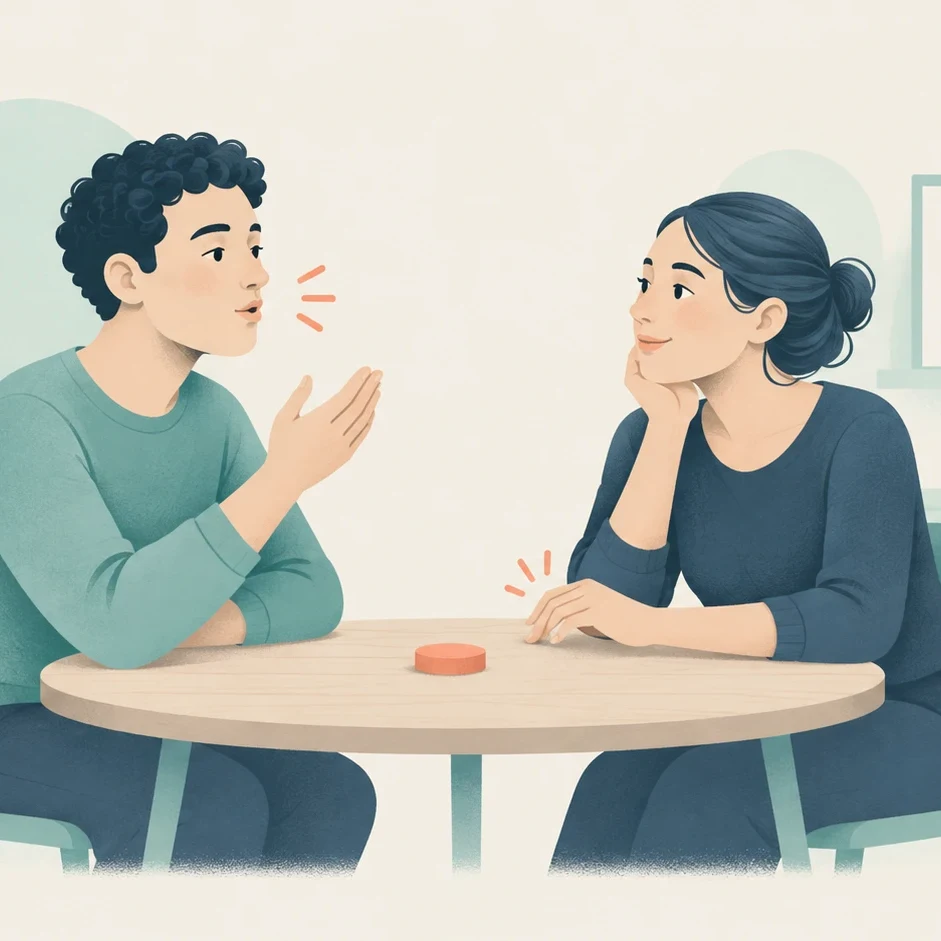
English pronunciation: clear daily practice
English pronunciation is the deliberate production of vowel and consonant sounds, rhythm, syllable stress, and phrase boundaries to convey clear meaning in speech. It guides how a listener separates individual words and identifies the central focus of your message.
-

Stative Verbs: Choosing the Correct Form
A stative use describes a condition, relationship, perception, or attitude rather than an activity presented as unfolding. Such uses usually take simple forms. Some verbs also have dynamic meanings, and some allow continuous forms to emphasize a temporary experience.
-

English grammar: choose your lesson
English grammar describes predictable patterns words follow to express time, relationships, questions, and descriptions. Choosing a topic begins by identifying what you want to communicate.
-

Jerk Meaning: Movement and Slang
As a movement word, jerk refers to a short, sharp motion or the physical action of pulling, pushing, or twitching abruptly. It can describe mechanical actions, sudden vehicle starts, or involuntary muscle reflexes. In informal social contexts, jerk functions as a pejorative noun describing an unpleasant, self-centered, or discourteous person. While common in casual American speech, using the word as an insult reduces complex interpersonal problems to name-calling and tends to inflame disagreements.
-

Trauma meaning: physical injury and shock
In a medical context, trauma can mean injury to the body. Emotional trauma refers to harm connected with distressing experiences. A sentence may name the experience, its effects, or both. Check the context rather than assuming that every use describes the same injury or reaction.
-

Free TOEFL preparation: A daily study plan
Use each practice attempt to decide what to work on next. Try a specific task, check what caused difficulty, and choose a follow-up exercise. Your study log should show the problem you found and how you plan to practice it.
अभी ट्रायल नहीं लेना चाहते? रोज़ एक मुफ़्त पाठ पाएँ
7 दिन तक रोज़ ईमेल में सुनकर लिखने का एक छोटा अभ्यास मिलेगा। जहाँ हैं वहीं अभ्यास करें। खाता बनाना ज़रूरी नहीं है।
अपने शब्दों या स्थिति से जुड़ा पाठ नहीं मिल रहा?
पाठ बनवाने के अनुरोध सदस्यता में शामिल हैं।
सदस्यता देखें