Micro-listening
Vain meaning: pride and failed efforts
What is the difference between vain and in vain?
Vain can describe someone who is too proud of their looks or abilities. It can also mean unsuccessful, as in a vain attempt. In vain means without success or without the hoped-for result.
Key points
- Vain describes someone who demands admiration or focuses too much on appearance.
- In vain describes an attempt that produced no useful outcome.
- Keep the two structures separate in speech and writing.
This lesson has 5 stages. You can stop at any time and continue later.

Stage 1 of 5
Understand
What it means, when to use it, and mistakes to avoid.
Examples
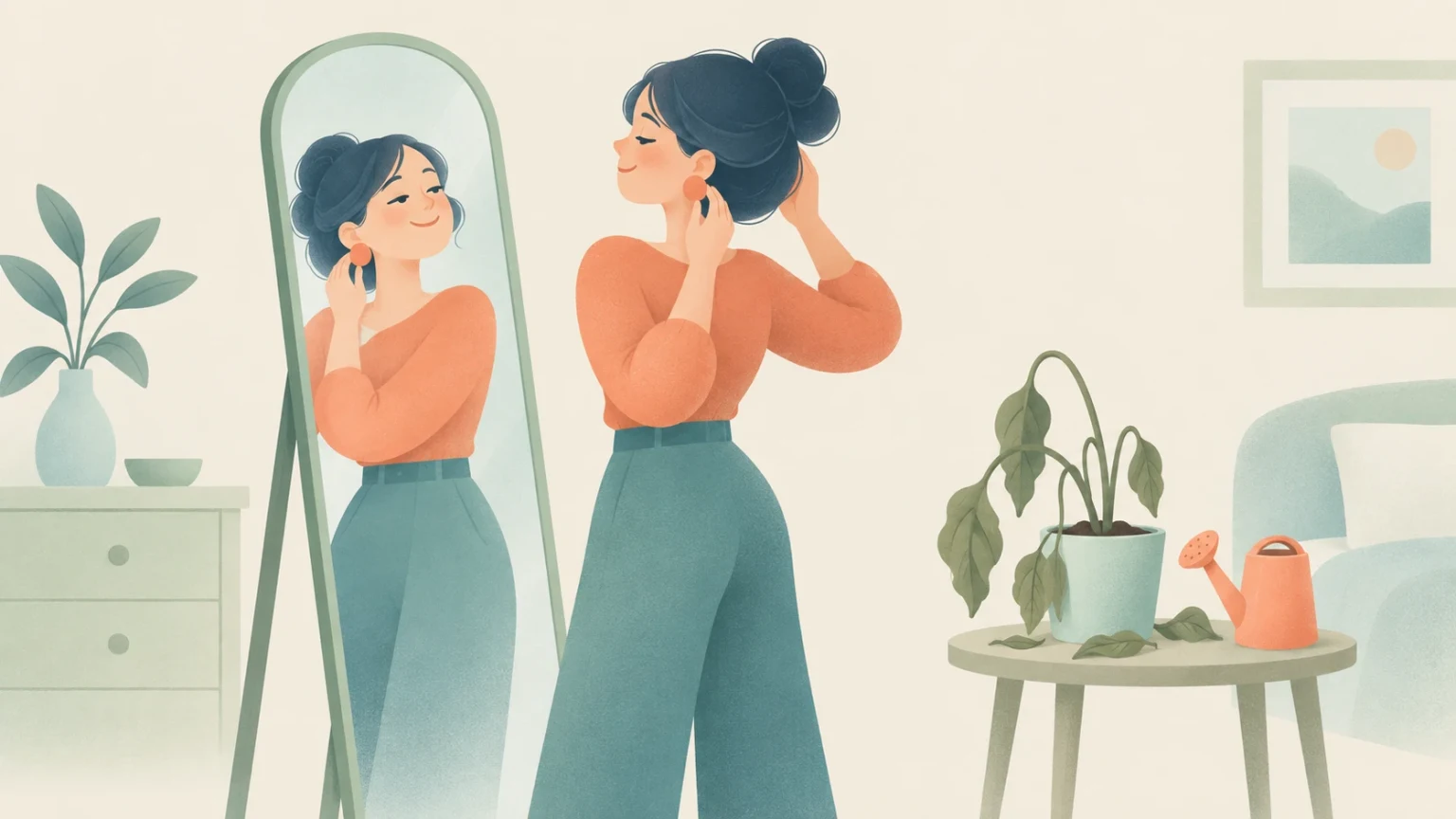
Marcus was too vain to wear reading glasses during the staff meeting.
Why it works: Vain explains why Marcus refused glasses: he cared more about his appearance than seeing the document.
2 more examples
-
The designer is vain about his awards and mentions them in every client call.
Vain about highlights an excessive focus on personal status and public recognition.
-
We knocked for twenty minutes in vain because the tenant had already moved out.
In vain shows that the repeated action produced zero result.
Read the full guide
Decide if pride has become excessive
When someone takes healthy pride in an achievement, they feel satisfied because they worked hard or helped someone. The adjective vain describes something different. A vain person cares excessively about appearance, praise, or social status. They constantly seek admiration from others and often feel upset when they do not receive attention. Use vain when self-admiration harms relationships or distracts from practical duties.
-
Liam was so vain that he checked his reflection in every shop window.
Why it works: Liam's constant checking shows excessive concern with his looks rather than normal grooming.
-
She is proud of her degree, but she is never vain about her knowledge.
Why it works: Proud marks honest satisfaction, while vain would suggest demanding constant praise.
Your turn
Which sentence shows that someone is vain rather than simply proud?
Answer: Carla refused to sit near the window because the light made her look tired.
Show the answer
Answer: Carla refused to sit near the window because the light made her look tired.
Refusing a seat out of concern for minor appearance flaws shows vanity rather than normal pride.
Name the focus with vain about
To explain exactly what someone feels overly proud of, use the pattern vain about followed by a noun or noun phrase. You can say someone is vain about their hair, vain about their clothes, or vain about their academic credentials. This structure helps your listener understand the exact reason for your criticism without sounding vague or exaggerated.
-
Thomas is vain about his voice, so he dominates every team podcast.
Why it works: Vain about links his self-admiration directly to his speaking voice.
-
The architect was vain about his awards and refused to modify the layout.
Why it works: The phrase specifies that his pride in past awards stopped him from cooperating.
You can practise this again in Esoteric meaning: explain specialized terms clearly and prudent meaning: wise future choices.
Your turn
Choose the correct phrase to complete: 'He was ________ his athletic build.'
Answer: vain about
Show the answer
Answer: vain about
English uses the preposition about after vain to identify the specific quality or possession.
Explain harmful choices with too vain to
The pattern too vain to followed by a base verb shows that someone refused to do something sensible because they feared looking weak, foolish, or unpolished. For example, a person might be too vain to wear an old coat in the rain or too vain to admit an error on a balance sheet. This construction explains the psychological motive behind a foolish choice.
-
Brenda was too vain to ask for directions when she got lost downtown.
Why it works: Brenda preferred staying lost over admitting that she did not know the way.
-
The manager was too vain to accept that his sales plan had failed.
Why it works: Pride prevented the manager from recognizing a clear business mistake.
Your turn
What does 'He was too vain to wear hearing aids' mean?
Answer: His desire to look young and capable prevented him from wearing them.
Show the answer
Answer: His desire to look young and capable prevented him from wearing them.
The pattern too vain to indicates that personal vanity stopped him from using helpful equipment.
Report wasted effort with in vain
The phrase in vain does not describe a proud person at all. It is a set adverbial expression that means without success or with no useful result. You will usually see it after action verbs like search, wait, try, plead, or labor. When you hear in vain, focus on the outcome of the action rather than the personality of the subject.
-
The mechanics tried in vain to restart the engine on the rescue boat.
Why it works: In vain indicates that despite serious effort, the engine would not start.
-
All our preparations were in vain after the festival was canceled.
Why it works: Here the phrase explains that the preparation yielded no benefit.
Your turn
Select the sentence where in vain is used correctly.
Answer: We searched in vain for the receipt before leaving the shop.
Show the answer
Answer: We searched in vain for the receipt before leaving the shop.
In vain modifies the verb searched to show that the search produced no result.
Tell vain apart from homophones in writing
Three English words share the exact pronunciation /veɪn/: vain, vein, and vane. While vain relates to vanity or wasted efforts, a vein is a blood vessel in the body or a narrow layer of mineral in rock. A vane is a flat blade moved by wind or water, as seen on a weather vane. Confusing these words in email or reports distracts readers from your message.
-
The nurse found a vein in my arm without any discomfort.
Why it works: Vein with e-i refers strictly to the blood vessel.
-
The iron weather vane on the barn turned toward the east.
Why it works: Vane with a-n-e refers to the wind blade instrument.
Your turn
Which word correctly completes: 'The doctor located a clear ________ for the injection'?
Answer: vein
Show the answer
Answer: vein
Vein spelled with e-i refers to a blood vessel in human anatomy.
Pick confident or proud when you mean no offense
Calling someone vain carries strong criticism because it suggests shallow values and selfish behavior. If you want to describe a person who dresses neatly, use well-groomed or sharp. If someone believes in their skills, use confident. If someone feels good about an honest accomplishment, use proud. Reserve vain for moments when you intend to criticize excessive self-regard.
-
Maya is confident in client meetings, but she listens carefully to feedback.
Why it works: Confident describes positive self-belief paired with respectful listening.
-
Marcus is vain during client meetings, checking his watch and talking over others.
Why it works: Vain describes rude behavior driven by self-importance.
Your turn
Which word is best if you want to compliment a friend who dressed well for an interview?
Answer: sharp
Show the answer
Answer: sharp
Sharp is a polite compliment for tidy clothing, whereas vain is an insult.
Catch the vowel link after vain
Vain ends with the /n/ sound. Before a vowel, the words can flow together without a pause, as in vain attempt or vain about. Listen to the words around vain to understand its meaning. Vain, vein and vane sound the same, so the linking sound cannot tell you which spelling is intended.
-
It was a vain attempt to change the committee's decision.
Why it works: In connected speech, vain attempt sounds linked like 'vay-nuh-tempt'.
-
Arthur is vain about his appearance in photographs.
Why it works: The final /n/ of vain links directly into the vowel of about.
Your turn
Why does 'vain effort' often sound like 'vay-neffort' in natural speech?
Answer: The final consonant /n/ connects smoothly to the following vowel sound.
Show the answer
Answer: The final consonant /n/ connects smoothly to the following vowel sound.
Consonant-to-vowel linking connects the final /n/ of vain directly to the vowel in effort.
Position in vain smoothly in workplace messages
In workplace messages, in vain fits naturally after the verb phrase, as in 'We waited in vain for two hours' or 'Our team tried in vain to restore the server'. Other positions can occur, especially in formal or literary writing. 'We in vain waited' is less usual in everyday messages, so the first pattern is a clearer starting point.
-
The finance office requested the invoice in vain three times.
Why it works: Placing in vain right after the object or verb keeps the sentence rhythm clear.
-
We appealed in vain against the city zoning board's ruling.
Why it works: In vain follows the verb appealed to show the appeal had no effect.
Your turn
Which sentence places in vain immediately after tried?
Answer: We tried in vain to obtain permission before the deadline.
Show the answer
Answer: We tried in vain to obtain permission before the deadline.
The first sentence uses the requested position. The second has a less usual order that can occur in formal or literary writing.
Use it naturally
How people really use “vain”
Neutral Fine almost anywhere, at work or with friends.
Words it often goes with
- vain about his appearanceMy uncle is vain about his appearance and checks every mirror he passes.
- too vain to admitShe was too vain to admit that she needed advice.
- searched in vainWe searched in vain for the missing earring.
- waited in vainThey waited in vain for an apology.
What people also say
- “He's proud of his cooking.” instead of “He's vain about his cooking.” Use proud when you mean healthy satisfaction. Vain expresses criticism.
- “We tried in vain to open the jar.” instead of “We tried to open the jar without a successful result.” In vain gives a shorter way to describe an unsuccessful effort.
Related forms
- vanity nounHis vanity made it hard for him to accept criticism.
- vainly adverbShe tried vainly to remember where she had left her keys.
Questions about "Vain meaning: pride and failed efforts"
What is the difference between vain and in vain?
Vain is an adjective. It can describe excessive pride, or it can mean unsuccessful when used with a noun such as attempt. In vain describes an action or effort that did not achieve its aim.
Elena is vain about her design awards.
The team labored in vain because the power went out.
What does too vain to do something mean?
This pattern means that a person's pride or desire to look good prevents them from taking a sensible action. For instance, someone might refuse to ask for help or wear glasses because they fear losing face.
He was too vain to admit he had lost the keys.
Can I use proud instead of vain?
Proud is usually positive or neutral, expressing healthy satisfaction with your achievement or work. Vain is negative and critical, suggesting that you care too much about shallow praise or physical appearance.
I am proud of our team's score.
He is vain about his hair.
How do I avoid confusing vain, vein, and vane?
Remember that vain with an a describes vanity or empty effort. A vein carries blood in your body, and a weather vane shows wind direction. They sound identical, so check the spelling before you send formal writing.
A doctor checked the vein in my arm.
Their vain hopes faded quickly.
Before you go
Remember this
Vain describes someone who demands admiration or focuses too much on appearance. In vain describes an attempt that produced no useful outcome. Keep the two structures separate in speech and writing.
Stage 2 of 5
Listen
Hear it in real sentences, from short to long, and write what you hear.
0 of 4 done
Listening 1 of 4
Listening 2 of 4
Try a longer clip. Listen once, then replay the part you missed.
Listening 3 of 4
This clip is longer. Follow the instruction above the answer field.
Listening 4 of 4
Listen, then type the missing words. The rest of the text is already there.
0:00
Practice complete
You listened closely.
Your result is saved in this browser.
Keep your progress. Your practice is saved on this device only. Create a free account to keep it everywhere.
Create a free accountThat was today's free lesson. Tomorrow you get another one. Want more today? See membership.
Create a free SubLearn account to keep this progress across devices.
Save my progressStage 3 of 5
Speak
Say it with the speaker, then use it in your own answer.
Shadow
Say it along with the speaker
Play the line slowly, then speak at the same time as the speaker. Copy the rhythm, not just the words.
Your turn
Say it your way
Speak for 30 to 60 seconds from memory about a beach vacation with a cousin who cares too much about looking perfect in photos. Explain what your cousin refuses to do, how you try to get a good picture, and how you finally enjoy the day.
Use: vain about too vain to in vain
Take ten seconds to think, then answer out loud without looking at the lesson. Speak for the time shown in the task above. Nothing is sent unless you ask for feedback.
0:00
Hear how someone else might say it
Last summer, I went to the beach with my cousin Leo. He's vain about his hair, so he was too vain to wear the silly matching hats I'd brought for us. He wanted a perfect photo beside the water, but the wind kept blowing his hair across his face. I tried in vain to take a picture he liked. After several attempts, I put my phone away and suggested a swim. He finally laughed and joined me. We had much more fun once we stopped worrying about photos.
Try once more and answer this: What did your cousin dislike about the pictures?
Stage 4 of 5
Write
Use what you've learned to write about your day or week, then write a message.
Write
Put it in your own words
- I used “vain”.
- It is about my life, not the lesson’s example.
- I read it once aloud to check it sounds right.
Write your own response
Choose a situation and write 30–50 words of your own. In this activity, you decide what to say rather than copy the words in a recording.
Check your own writing
Read one possible response
Use these checks to revise your message. Grammar and meaning are not automatically graded. Each task keeps its own draft in this browser tab.

You finished the free part of this lesson
- Understand
- Listen
- Speak
- Write
- CheckPart of membership
Worth another look
With a free account, the lessons you finish come back for review to help you remember them.Create a free account
Stage 5 of 5 · Part of membership
Check
New clips without hints.
Listening tests are included with membership. Try the free dictation first, then decide whether to continue.
Listening 1 of 2 Part of membership
Listening 2 of 2 Part of membership
Follow MicroEnglish
Find lesson updates, short videos and quick quizzes. Pick the app you already use.
Questions & comments
Ask about this lesson, share an example, or help another learner.
Example
Memory tip
Goes with
Related forms
Not to be confused with
In this lesson
This word isn't in our dictionary. Check the spelling, or try another form of the word.
We couldn't load this word. Try again.
