일상 듣기
짧은 녹음으로 시작해서 긴 문장을 연습해요. 상황을 파악하기 위해 한 번 듣고, 단어를 듣기 위해 다시 들어요.
19–36 / 392개 수업
-

Nevertheless or never the less: One Word Contrast
Nevertheless means despite that, even so, or in spite of what was just mentioned. It acknowledges an existing difficulty, limit, or opposing circumstance without canceling it out. The listener understands that both facts are true, but the second fact occurred regardless of the first.
-

Can or may: Ability and permission
Can indicates that a person has the skill, strength, or opportunity to do an action. In everyday speech, it also asks for and grants permission. May indicates that an event has a chance of occurring in the future or that an action is permitted according to formal rules and polite requests.
-

across vs through: choose the right path
Across indicates movement over a surface or boundary from one side to the other. Through indicates movement into, within, and out of a three-dimensional container, passage, group, or barrier. Across focuses on the beginning and ending edges of a flat space, while through focuses on the path experienced within an enclosing environment.
-

Present Perfect: Connect Past to Now
The present perfect views previous actions through the lens of the present. It indicates whether an event has taken place before now, highlights a recent change whose effect continues, or counts occurrences inside an unfinished time block like today or this month.
-

English Suffixes: Spot Word Clues Fast
A suffix is an affix placed at the end of a root word that alters its grammatical class, its meaning, or both. For example, adding -ness to the adjective quiet creates the noun quietness, while adding -ly produces the adverb quietly. Recognizing these endings reveals whether a word represents an object, a person, an action, a quality, or a manner of doing something.
-
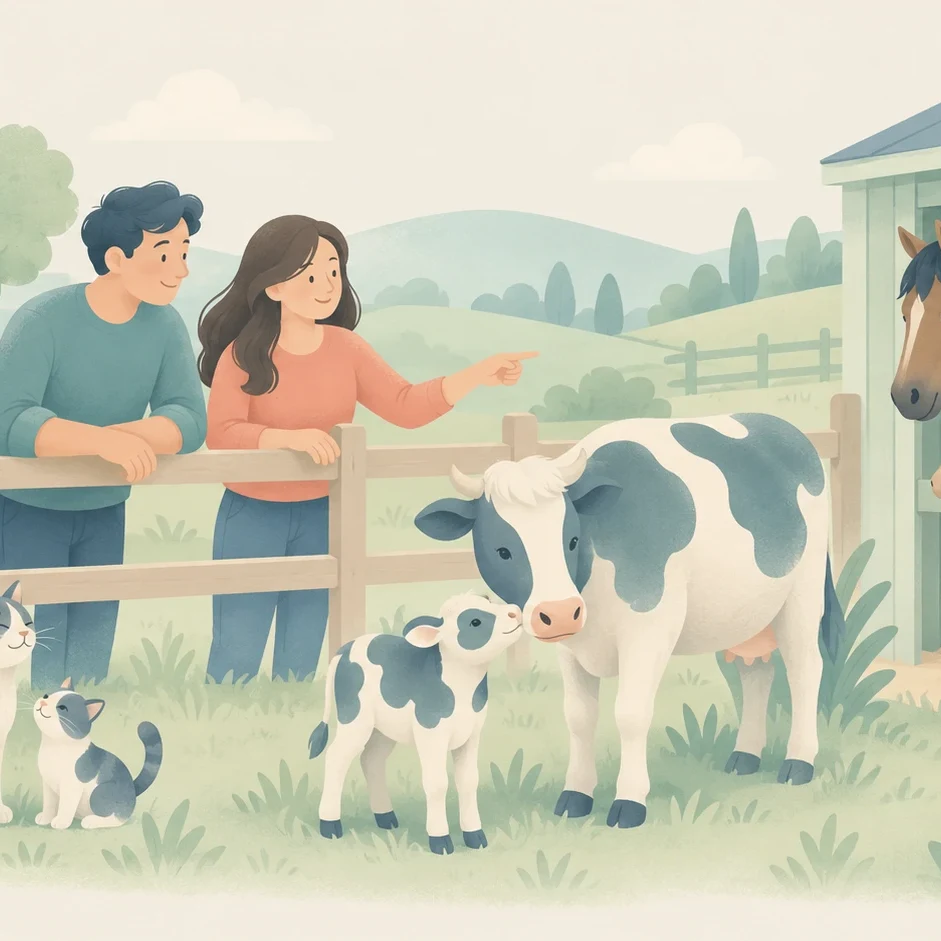
Young animal words: Naming Offspring in English
A young animal noun specifies the early developmental stage of an animal before maturity. These terms function as concrete nouns and frequently apply to either sex, though some adult animal words specify gender.
-
멤버십
모든 수업을 7일 동안 무료로 이용하세요.
- 받아쓰기와 듣기 테스트가 포함된 570개 수업
- 각 수업에 제공되는 발음 선택
- 매일 새로운 수업, 진도 자동 저장
카드 없이 이용할 수 있어요. 계속 이용하고 싶다면 월 $7.50부터.
무료 체험 시작 -

Stationery or Stationary: How to Choose
Stationery is an uncountable noun that names materials used for writing, printing, and office work. It covers paper, envelopes, pens, and notepads. Stationary is an adjective that describes something that remains fixed in one place, stopped, or motionless. A car can be stationary in traffic, whereas an office keeps a closet filled with stationery.
-

Sentence structure: build clear English sentences
In English, the subject names who or what performs an action or experiences a state. The verb expresses that action, state, or change. When an action verb directly affects someone or something, that receiver is the direct object. Together, these elements form the structural backbone of English clauses.
-

Vocabulary exercises: use words in context
A word takes its practical meaning from the surrounding situation. A verb like arrange can indicate organizing a meeting with a colleague, reserving transportation, or setting up equipment. By noticing who is speaking and what outcome they need, you can select the right word without relying on direct translation.
-

Commas in English: Separate Ideas Clearly
Commas serve as visual dividers between grammatical units. They separate list items, mark where opening background ends, and keep two independent clauses distinct before a coordinating conjunction. They do not indicate every physical breath in spoken English.
-

Adjective clauses: rules and daily examples
An adjective clause is a group of words with a subject and a verb that describes a noun in your sentence. It acts like a multiword adjective. For example, instead of saying a blue binder, you can say the binder that sits on my desk. The clause tells the listener exactly which item you mean or gives helpful background about it.
-

See or watch: Choose the right verb
See describes the physical ability of your eyes to register an image. It happens automatically whenever light enters your eyes, requiring no sustained effort. It is also used for visiting professionals and meeting friends. Watch describes deliberate, concentrated viewing over time, especially when tracking objects or people that move, change, or perform.
-

Adverbs of time: choose natural sentence positions
An adverb of time adds temporal information to a verb, an adjective, or an entire sentence. It answers questions such as when something happened, how long it lasted, or how often it occurs. Words such as yesterday, later, and already give listeners an immediate reference point so they can follow a timeline without confusion.
-

Adverbs of Frequency: Word Order and Rules
Frequency adverbs describe how regularly an event takes place over time. Words like always describe events that happen on every occasion, while usually indicates what happens in most ordinary circumstances. Often marks regular recurrence, whereas sometimes refers to occasional occurrences. Words such as rarely or seldom indicate that an event happens almost never, and never specifies that an action occurs at no point in time. These words present relative patterns rather than counted calendar appointments.
-

English Verb Tenses: Forms and Examples
Verb tenses combine two core ideas: the time frame and the aspect. Time frames locate an event in the past, present, or future. Aspects indicate how the speaker views the event: as a simple complete fact, as an activity in ongoing progress, or as an earlier event connected to a reference moment. Together, time and aspect shape the exact verb form you choose.
-

Question words: ask for clear details
Question words, frequently called wh-words, specify what piece of information is missing from a statement. They request names, locations, points in time, explanations, or specific methods. By placing these words at the start of a sentence, you direct your listener toward the exact answer you require.
-

Speak English Online: Simple Daily Practice
Speaking practice is an active process of turning thoughts into spoken words and noticing where communication succeeds or falters. When you record yourself or speak with a partner, you produce data about your vocabulary recall, sentence rhythm, and grammatical choices. Evaluating one specific feature after each attempt makes improvement deliberate rather than accidental.
-

Past Tense in English: Four Useful Forms
Past tenses establish temporal perspective in English. Past simple reports completed actions that form the main timeline. Past continuous presents an activity as open and ongoing at a particular past moment, creating context or a background scene. Past perfect moves the viewpoint back to an earlier timeframe, demonstrating that one event finished before another past point occurred. Past perfect continuous highlights an ongoing activity and its duration before a past moment, often explaining why a past situation existed.
체험이 아직인가요? 매일 무료 수업을 받아 보세요.
매일 짧은 받아쓰기 수업을 7일 동안 이메일로 보내 드려요. 계정 없이 어디서든 연습할 수 있어요.
필요한 구문이나 상황을 찾을 수 없나요?
수업 요청은 멤버십에 포함됩니다.
멤버십 보기