다음 수업 찾기
문구를 검색하거나 말하고 싶은 내용을 설명하세요. 새로운 수업이 매일 추가돼요.
127–144 / 277개 수업
필터 지우기-

Choose she and I or her and me
She and I names two people as the subject: the people doing an action or being described. Her and me names them as the object of a verb or after words such as to, with, and for. And joins the people; it does not decide which pronouns you need.
-

Present perfect progressive: how to use have been working
The present perfect progressive emphasizes the continuous nature, duration, or recent completion of an action that affects the present moment. Unlike simple forms that focus on finished products or counted quantities, this form focuses on the work itself and the time spent doing it.
-

Nighttime or Night-time? Listen, Choose and Write Clearly
Nighttime and night-time refer to the hours between sunset and sunrise. Choosing between the solid compound and the hyphenated form does not change what you are saying.
-
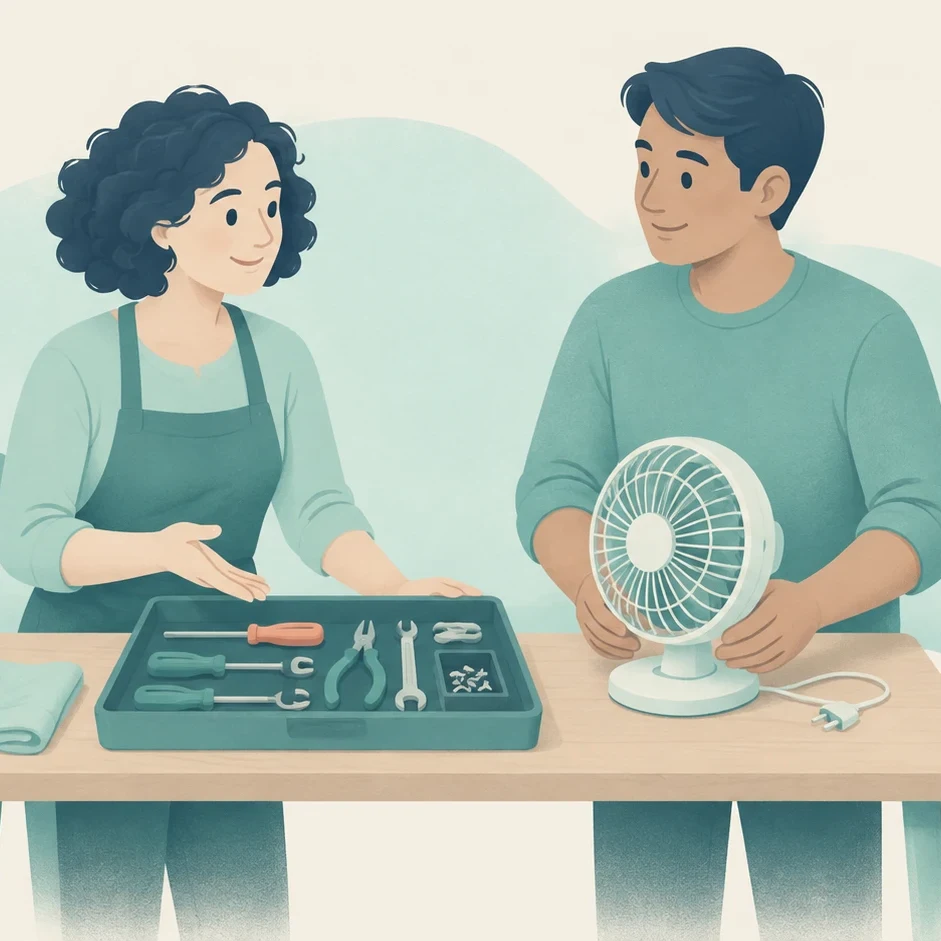
Getting the Repair Café Ready: Group Words
A collective noun names a group. Team describes people working together, while set can describe things that belong together. You can count groups: one team, two teams. When you present a single group as one unit, use a singular verb: the team is ready. When you name the members directly, use a plural verb: the volunteers are ready.
-

Using Like and As for Clear English Comparisons
A simile compares two different items to highlight a shared characteristic. When using an adjective, the quality sits between two instances of as, such as as light as a feather. When comparing how an action happens, the verb connects directly to like followed by a noun, such as slept like a log. Both patterns create a clear mental image without claiming that the two items are literally identical.
-

Choosing Between Onto and Unto
Onto functions as a preposition indicating movement toward and resting upon a physical surface. Unto is an older preposition that originally carried meanings similar to to or toward, but modern everyday English replaces it with to in virtually all contexts.
-
멤버십
모든 수업을 7일 동안 무료로 이용하세요.
- 받아쓰기 및 듣기 테스트가 포함된 452개 수업
- 영국, 미국, 호주 3가지 억양
- 매일 새로운 수업, 진도 자동 저장
카드 없이 이용할 수 있어요. 계속 이용하고 싶다면 월 $7.50부터.
무료 체험 시작 -
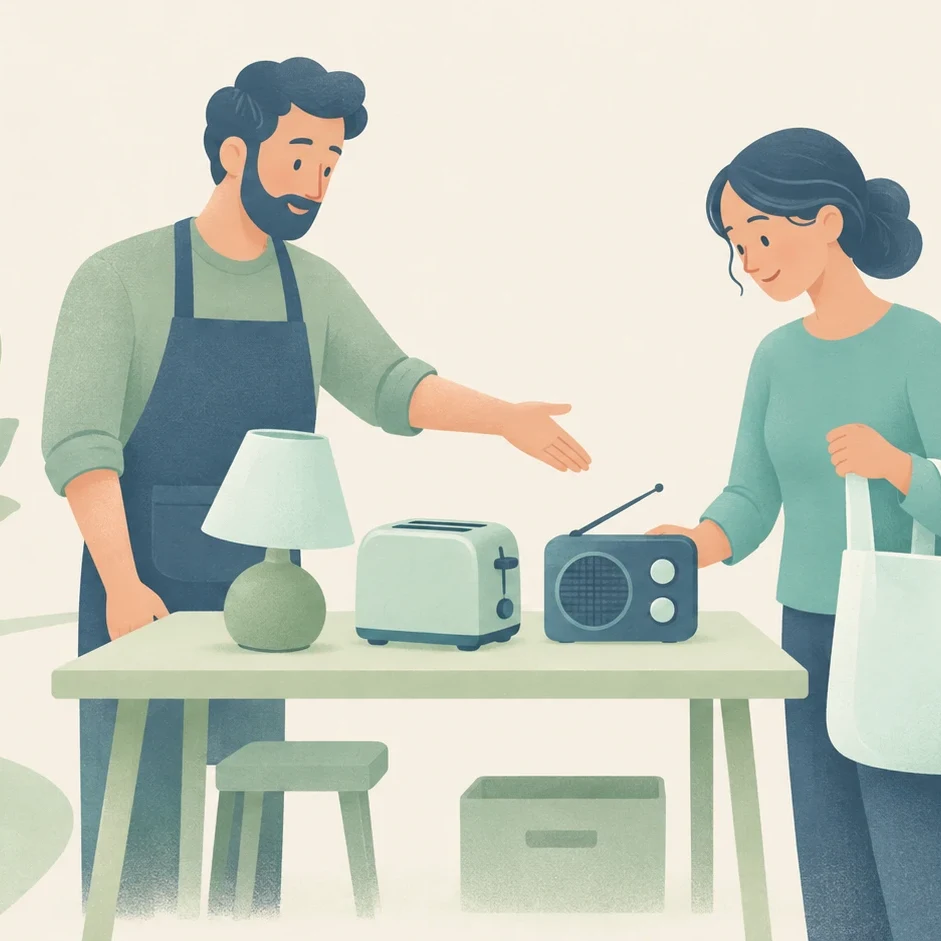
Up to or upto: Which Is Correct?
Up to serves several related communicative purposes. When followed by a number or quantity, it specifies a maximum limit: up to three items means three or fewer, never more than three. When followed by a time or event, it indicates an action continuing until that point, such as practicing up to the start of a performance. When followed by a location, it shows the physical boundary reached during travel. Finally, in the idiomatic expression it is up to someone, it indicates that a person has the responsibility or freedom to decide.
-

Who booked the room? A name and I or a name and me
I is a subject pronoun: Rosa and I booked a room. Me is an object pronoun: The receptionist helped Rosa and me. Also use me after prepositions such as with, to and for.
-
 영상 · 9분
 Choose between at night and in the night
At night names a general part of the day. In the night places something within a particular night. Compare a regular arrangement, such as keeping a door locked at night, with an event, such as hearing someone outside in the night.
-
 영상 · 10분
 Advice or advise: asking for help and suggesting a next step
Advice names guidance about what someone could or should do. Advise describes the action of giving that guidance. In 'Her advice helped,' advice names the guidance. In 'She advised me,' advised tells us what she did.
-

Choose the verb that fits the subject
Subject-verb agreement means choosing a verb form that matches its subject. With most verbs in present-tense statements, he, she, it, and a singular noun take an ending such as s: the machine works. Plural nouns use the base form: the machines work.
-

Moving Day: Hearing “A Lot” and “Allot”
A lot describes a large amount or number. It can also mean often or very much. Write it as two words. Allot is a verb: it means to give a particular amount of time, money, or space to someone or something. A company might allot an hour for loading a van. That hour is an assigned amount; it is not necessarily a large amount. Alot is not a standard spelling.
-

He and I, Him and Me: Planning a Community Lunch
He and I are subject forms: He and I carried the chairs. Him and me are object forms: The organiser thanked him and me. Both pronouns must fit their job in the sentence.
-

Nowadays: Talk About Life That Has Changed
Nowadays means these days or during the present period. It often suggests that something was different before, even when the speaker does not describe the past.
-
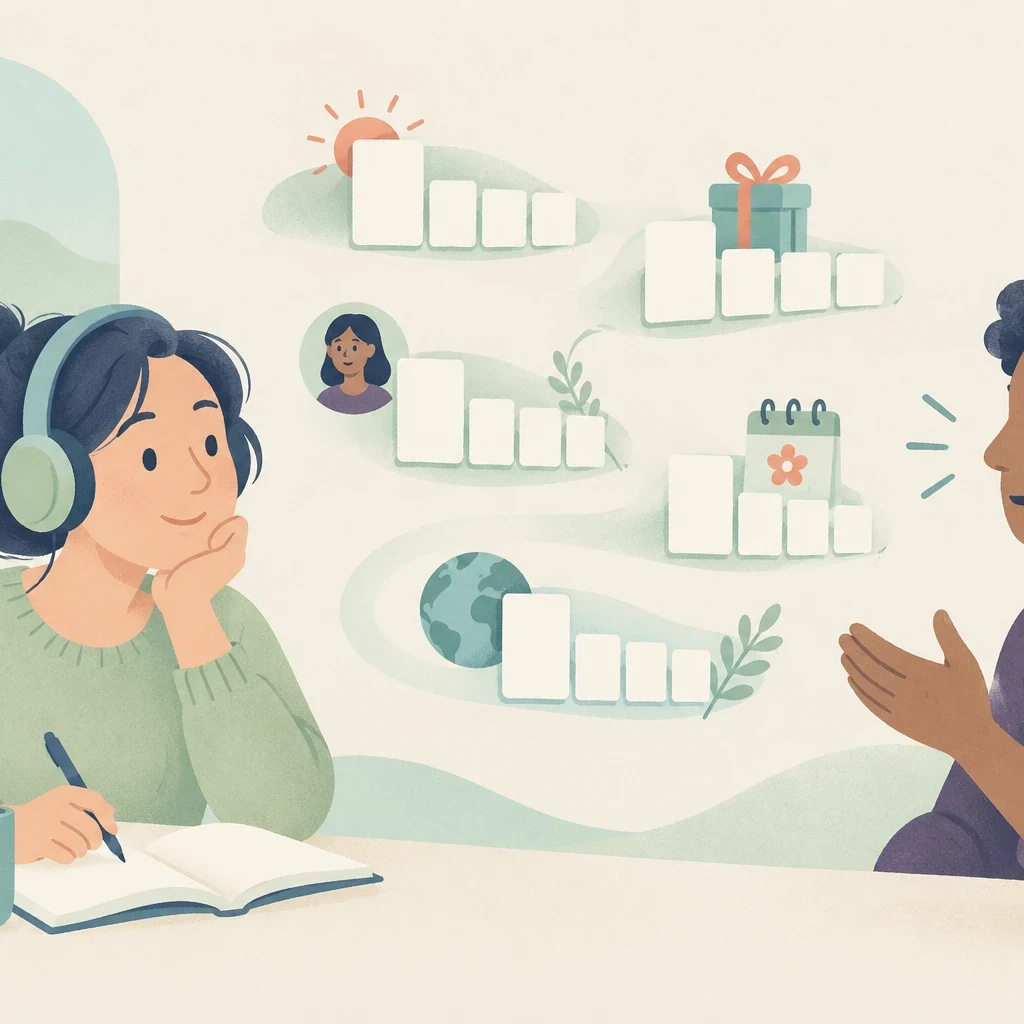
Listen, then check: capital letters in everyday messages
Capital letters mark sentence beginnings and help identify names. Compare a centre with Oak Street Centre: one describes a kind of place, while the other gives its name.
-
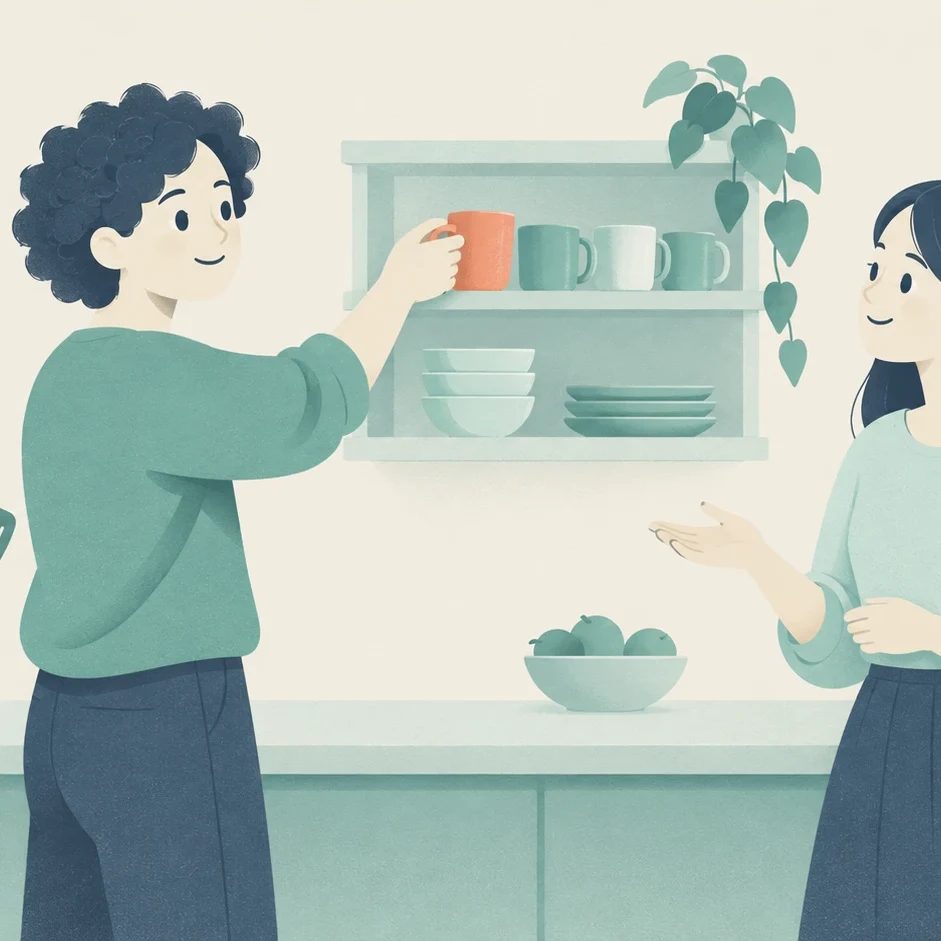
For example: planning a shared kitchen
A general suggestion names a goal or an area to improve, while an example shows one specific action that fits that goal. If someone says, 'We should keep food fresh,' that is a broad aim. Saying, 'For example, we can wrap open cheese in paper,' shows one practical way to achieve it. This phrase answers the question, 'What is one possible case?' In contrast, 'because' explains the reason and answers 'Why?' If you say, 'We wrap cheese because air dries it out,' you give a cause, not a sample action.
-
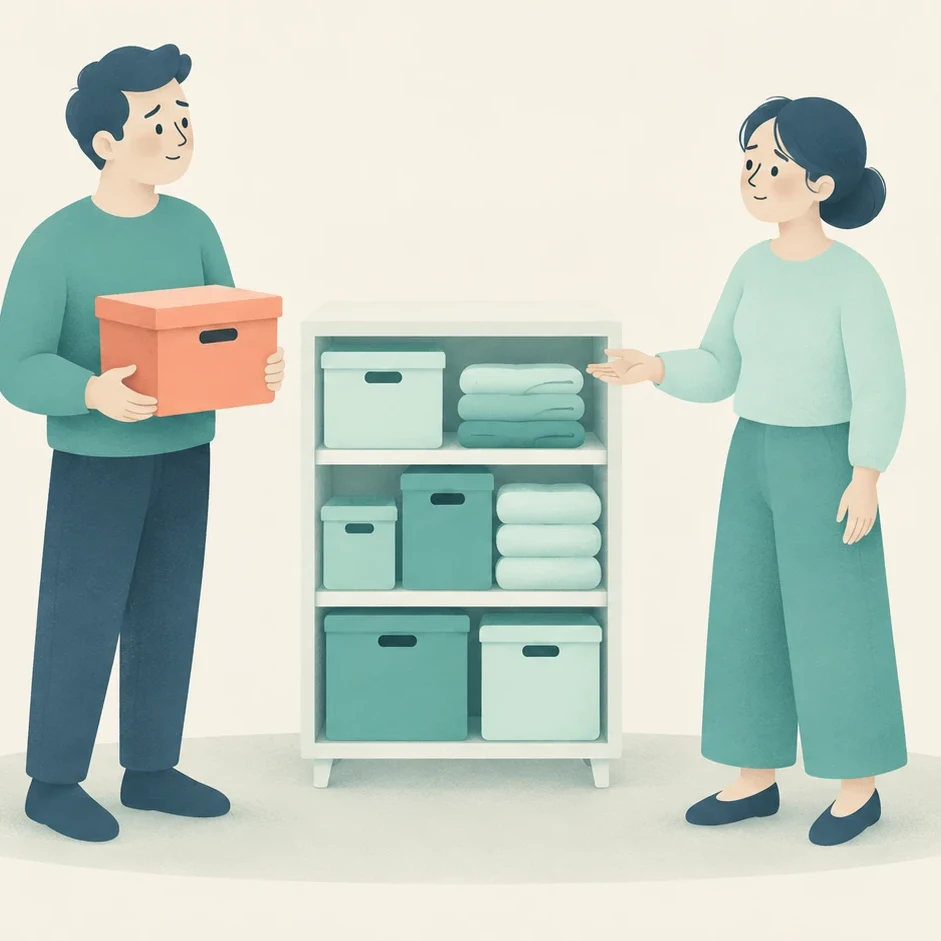
Nowhere to Put It: Explain a Space Problem
Nowhere means no place, in no place or to no place. In everyday conversation, it often means there is no suitable place for a particular action.
-

He and I at the Cooking Class
He and I names the pair as the subject: the people the sentence says do, need, or are something. Him and me names the pair as an object, as in someone helping the pair. Test the whole pair with we or us.
체험이 아직인가요? 매일 무료 수업을 받아 보세요.
매일 짧은 받아쓰기 수업을 7일 동안 이메일로 보내 드려요. 계정 없이 어디서든 연습할 수 있어요.
필요한 구문이나 상황을 찾을 수 없나요?
수업 요청은 멤버십에 포함됩니다.
멤버십 보기