找下一节课
搜索一个短语,或描述想表达什么,从当前可用课程中选择。
显示第19–36节,共47节课
清除筛选-
Everyday English grammar: build clear sentences
Grammar functions as a shared road map between speakers and listeners. When you add an -s to a verb, your listener instantly knows that one person or thing is acting. When you add a determiner like 'a' or 'the', you signal whether an item is new or already familiar. These structural markers prevent misunderstandings and help your conversation flow without hesitation.
-

Past Simple Verbs: Choose the Right Form
The past simple expresses actions, states, or events that started and finished at a definite time in the past. Regular verbs mark this past meaning by adding -ed or -d to their base form. Irregular verbs mark the past through historical vowel changes, consonant shifts, or unchanged forms rather than adding -ed.
-

Hear vs Listen: Making the Right Choice
Hear indicates the physical ability to receive sound, notice an acoustic event, or receive news about a topic. It does not require conscious effort. Listen describes an active process where someone deliberately focuses on words, sounds, or instructions to understand their meaning.
-

Common English Mistakes: Choose the Right Form
In the present simple, most verbs add -s or -es with he, she, it, or a singular name. With I and you, use the base form. In questions and negatives with do, does, or did, the main verb stays in its base form. Choose there, their, or they're by meaning. Use listen to before the sound or speaker, and explain something to someone for the recipient of an explanation.
-

Animal Sounds in English: Verbs and Nouns
Animal sound words are vocabulary items that represent the specific vocalizations produced by different creatures. Most of these words function as both verbs and countable nouns. For example, 'to quack' describes the action of a duck, while 'a quack' refers to an individual instance of that sound.
-

Comparatives and superlatives: choose the right form
A comparative adjective expresses a greater or smaller degree, as in larger or less expensive. A superlative expresses the highest or lowest degree within a group, as in the largest or the least expensive. More than one member can share that extreme.
-
会员
全部课程免费学7天
- 592节课程,包含听写和听力测试
- 三种口音:英式、美式和澳式
- 每天有新课,并保存学习进度
无需绑卡。之后如想继续使用,每月$7.50起。
开始免费试用 -

How to Spell Exercise: Avoid Common Mistakes
Exercise functions both as a noun and as a verb. As an uncountable noun, it denotes bodily exertion intended to sustain physical fitness. As a countable noun, it refers to a structured learning task or problem in a textbook. As a verb, it describes performing physical movements or applying a right, authority, or caution.
-
Too long or to long: Choose the right word
Too long describes a duration or measurement that exceeds what is practical, acceptable, or desirable. The adverb too modifies the adjective long to show an unwanted surplus. In contrast, the word to is either a preposition indicating direction or an infinitive particle that precedes a base verb. The spelling to long does not function as a standard phrase for excess in modern English.
-

English grammar: choose your lesson
English grammar describes predictable patterns words follow to express time, relationships, questions, and descriptions. Choosing a topic begins by identifying what you want to communicate.
-

Regular and irregular verbs: How past forms change
Regular past verbs use the suffix -ed or -d to express completed actions in past time. Irregular past verbs express past time through specific vowel or consonant changes, or by keeping an identical base form, rather than taking the regular suffix.
-
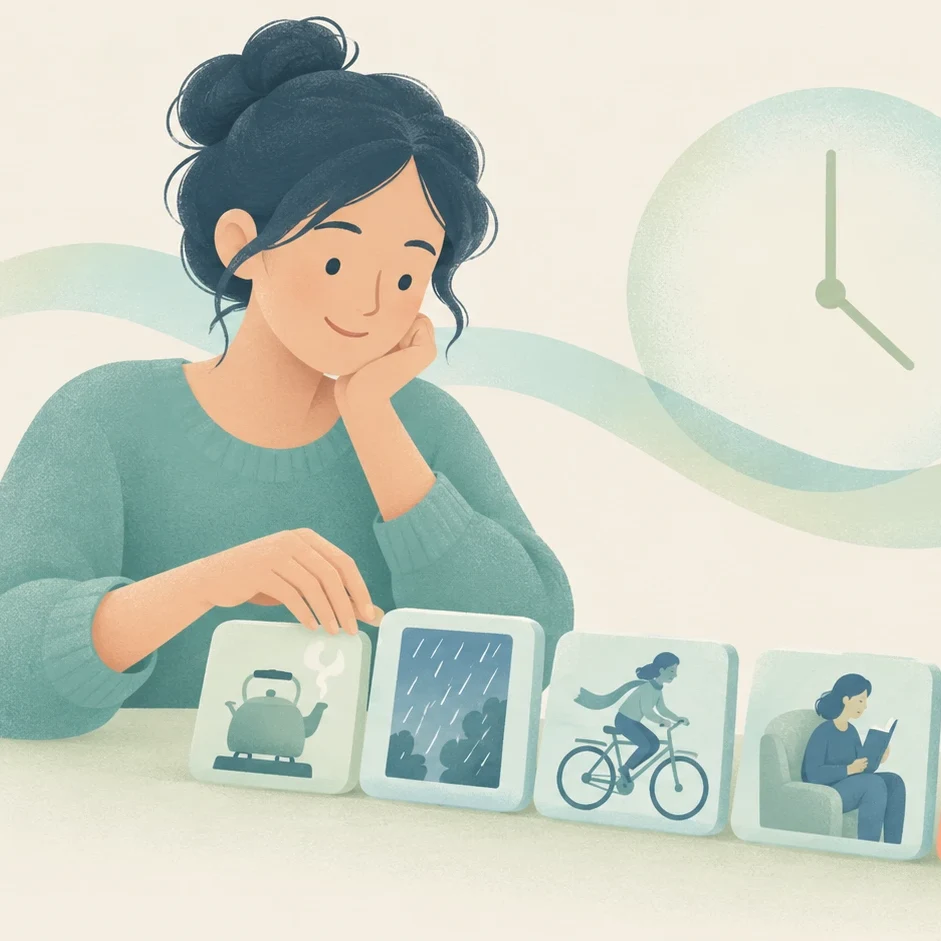
Past continuous: talking about past actions
The past continuous presents an activity as in progress at a specific past moment. It views an action from the inside as ongoing, without stating when it started or whether anyone completed it. It frequently supplies the background scene for a completed event or links two activities that were unfolding at the same time.
-

Bought or brought? Getting ready for a games night
Bought describes getting something by paying for it. It is the past form of buy. Brought describes bringing someone or something to a place. It is the past form of bring. The same object can appear with either verb: you bought a game yesterday and brought it here today.
-
Full stops: when to use them
A full stop marks the completion of an informative statement or an ordinary instruction. It tells the reader that one complete thought has finished so they can understand each action before moving to the next sentence.
-

Why English Class Matters: Practical Adult Skills
An English class is like a practical workshop. In class, you try out simple tools and see what works best. Reading exercises teach you to find facts quickly. Speaking tasks help you turn your thoughts into simple, clear sentences. Writing lessons show you how to name the person doing each action. Helpful feedback from your teacher shows you what to change next.
-

Practice speaking English: Eight simple steps
Speaking practice means producing audible English to express a thought, give instructions, or answer a question. Listening and reading build comprehension, but speaking demands that you organize words, control grammar, and produce sounds in real time.
-

Adverbs: Add Information to Actions
An adverb provides extra information about an action, an adjective, or another adverb. It answers five common questions: how, where, when, how often, or how much. While adjectives describe nouns, adverbs describe actions and qualities.
-

Simple Past Tense: Actions and Past States
The simple past places events and conditions in finished time before the present moment. You use it for single completed actions, ordered steps, or conditions that existed in the past. It shows that the action finished at a specific time, even when that time is understood from context rather than stated directly.
-

To, Too or Two: How to Choose
The word to points toward a destination or a receiver, and it connects a main verb to a base verb. The word too means also, or it shows that a quantity or quality exceeds what is suitable. The word two represents the count 2.
还没想好是否试用?每天收一节免费课
连续7天,每天发一段短听写到邮箱。在哪里都能练,不用注册账户。
找不到想学的表达或场景?
定制课程是会员功能。
查看会员方案