Micro-listening
Brake or break: Choose the Right Spelling
Do brake and break have different sounds in spoken English?
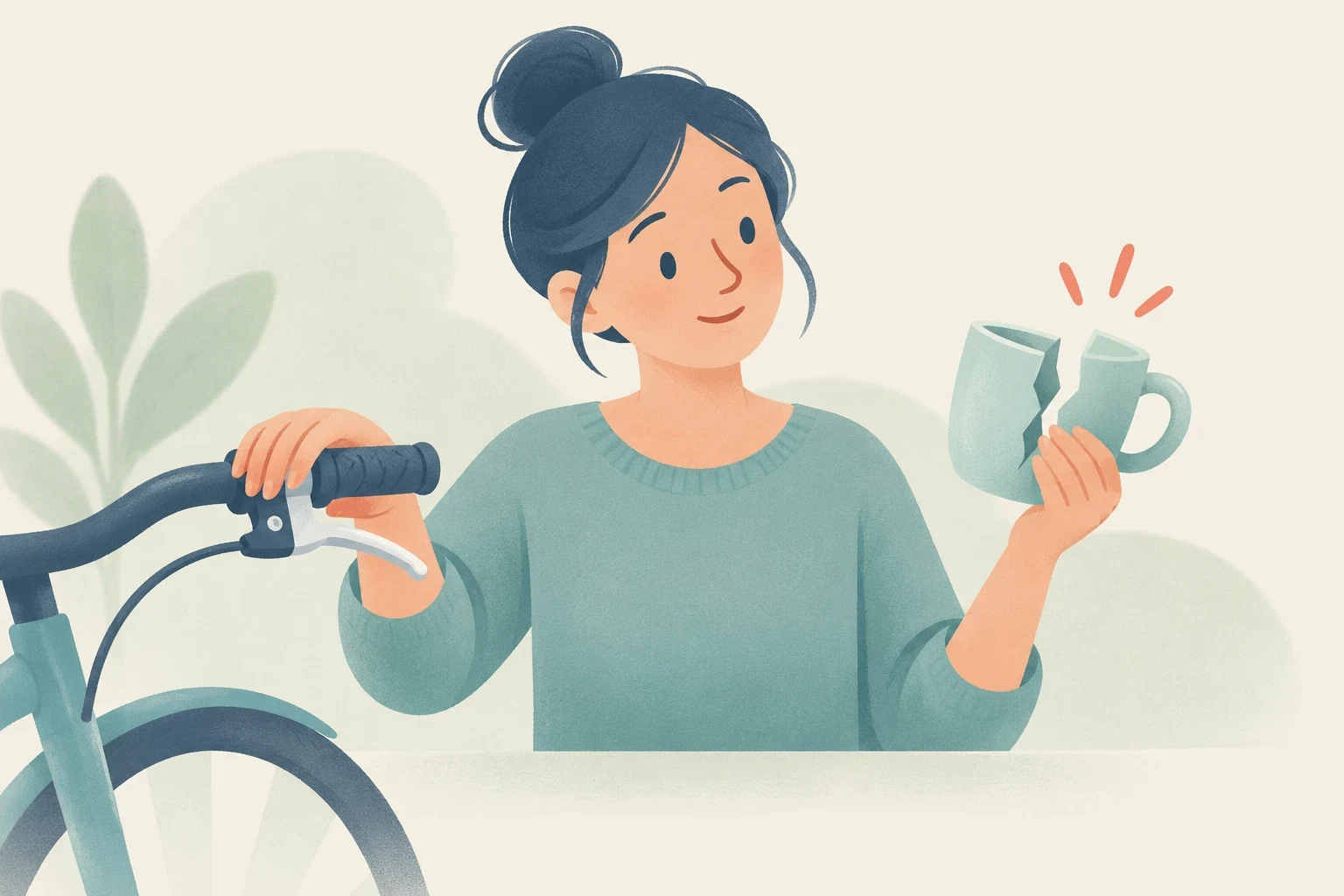
Brake operates as a verb meaning to decelerate or halt a vehicle, and as a noun for the mechanical mechanism that accomplishes this task. Break functions as a verb meaning to damage, fracture, or interrupt something, and as a noun designating a pause from activity or a gap in continuity.
Key points
- Remember that vehicles brake using mechanical brakes.
- Glasses break, workers take a break, and offenders break rules.
- When reviewing past actions, match braked to vehicles and broke to fractured items or interrupted patterns.
This lesson has 5 stages. You can stop at any time and continue later.

Stage 1 of 5
Understand
What it means, when to use it, and mistakes to avoid.
Examples
The delivery driver had to brake quickly to avoid the fallen tree branch.
Why it works: Brake is a verb meaning to reduce vehicle speed.
2 more examples
-
Be careful with that glass pitcher because thin handles break easily.
Break indicates physical damage and fracturing.
-
Our project team will take a fifteen-minute coffee break at three o'clock.
Break functions as a noun indicating a temporary rest pause.
Read the full guide
Choose brake when slowing or stopping motion
When you describe the physical action of slowing down or halting any vehicle, choose the verb brake. Drivers brake at traffic signals, cyclists brake before turning sharp corners, and train operators brake smoothly as they approach passenger platforms. Notice that this word specifically concerns controlling mechanical speed. If your sentence does not involve reducing speed in transportation, brake is almost certainly the wrong choice.
-
The courier had to brake abruptly when a dog stepped into the street.
Why it works: Brake functions as a verb meaning to decelerate the vehicle.
-
Train drivers brake early when tracks are covered in autumn leaves.
Why it works: Brake describes the deliberate reduction of train speed.
Your turn
Select the sentence that correctly describes slowing down a bicycle.
Answer: You should brake gently before entering the intersection.
Show the answer
Answer: You should brake gently before entering the intersection.
Use brake to describe reducing speed on a bicycle or motor vehicle.
Name vehicle stopping equipment with the noun brake
Brake also serves as a common noun for the mechanical apparatus that stops wheels from turning. Modern automobiles feature foot pedals, hand levers, disc pads, and emergency systems that all carry this label. When you discuss vehicle parts, repairs, or maintenance inspections, keep the spelling with 'a-k-e'. Common collocations include brake pads, brake fluid, hand brake, and emergency brake. Knowing these fixed vehicle terms helps you avoid accidental spelling mistakes in workplace emails.
-
Our mechanic replaced the rear brake pads on both delivery vans.
Why it works: Brake pads are the friction components that press against the wheel disc.
-
The mechanic pointed to the emergency brake.
Why it works: Emergency brake names a braking control; the sentence does not specify its mechanism.
You can practise this again in Daytime or day time: choose the right spelling and Synonyms in English: Choose the Right Word.
Your turn
Which phrase correctly identifies the fluid used in automobile lines?
Answer: hydraulic brake fluid
Show the answer
Answer: hydraulic brake fluid
Vehicle parts and fluids always take the noun brake.
Use break for damage, fractures, and separation
When an object splits into pieces, cracks under heavy pressure, or stops functioning because of physical damage, the correct verb is break. Porcelain plates break when dropped onto tile floors, wooden boards break under excessive weight, and machine parts break when worn out. Unlike the vehicle word, break covers hundreds of physical materials and everyday situations where structural integrity is lost.
-
Handle that fragile ceramic vase carefully so it does not break.
Why it works: Break indicates physical fracture or splitting into fragments.
-
Frost can break thin water pipes during harsh winter freezes.
Why it works: Break describes the rupture of the pipe walls from ice expansion.
Your turn
Choose the sentence describing damaged kitchenware.
Answer: Drop that glass and it will break instantly.
Show the answer
Answer: Drop that glass and it will break instantly.
Physical cracking and shattering always require break.
Write break for pauses, intervals, and rest
A pause in your daily schedule, an intermission between conference sessions, or a holiday from regular employment is called a break. This noun originates from the concept of interrupting a continuous stretch of time. Typical office phrases include coffee break, lunch break, commercial break, and winter break. Whenever you mean stepping away from labor to recover your energy, write the word with 'e-a-k'.
-
Let us pause the training session and take a ten-minute coffee break.
Why it works: Coffee break refers to a brief rest period away from work duties.
-
University students look forward to their annual spring break.
Why it works: Spring break is a scheduled vacation period between academic terms.
Your turn
Which sentence correctly requests a brief rest from physical labor?
Answer: We have carried boxes for three hours, so let us take a short break.
Show the answer
Answer: We have carried boxes for three hours, so let us take a short break.
A rest interval is spelled break, not brake.
Apply regular braked versus irregular broke in past contexts
Brake is a regular verb. Because it already ends in e, add d to form braked. Break is irregular: its simple past is broke, and its past participle is broken. Use these forms to distinguish slowing a vehicle from damaging something or interrupting an activity.
-
The delivery driver braked smoothly before entering the tunnel.
Why it works: Braked is the regular past tense indicating the vehicle slowed down.
-
The clumsy worker broke three plates while clearing the table.
Why it works: Broke is the irregular past tense indicating physical damage.
Your turn
Select the sentence with the correct past tense form for slowing a vehicle.
Answer: The trucker braked suddenly to miss the fallen tree branch.
Show the answer
Answer: The trucker braked suddenly to miss the fallen tree branch.
The past tense of the vehicle verb brake is regular: braked.
Use break for rules, records, news, and idioms
English relies on break for numerous abstract concepts, legal obligations, and idiomatic expressions. You break a law, break a promise, break a world record, or break the ice at an awkward social gathering. Reporters break important news stories, and tired people ask colleagues to give them a break. In almost every metaphorical setting involving disrupting a pattern, interrupting silence, or exceeding a limit, the spelling remains break.
-
Anyone who decides to break company safety policies faces disciplinary action.
Why it works: Break means to violate or fail to observe established regulations.
-
The athlete hoped to break the national marathon record this autumn.
Why it works: Break the record means to surpass a previous documented achievement.
Your turn
Which option correctly expresses violating an agreed contract?
Answer: If you break this non-disclosure agreement, legal penalties apply.
Show the answer
Answer: If you break this non-disclosure agreement, legal penalties apply.
Violating an agreement or rule is always expressed with break.
Rely on neighboring words when listening to fast speech
Because brake and break are exact homophones with the identical phonetic pattern /breɪk/, listening solely to the word itself cannot reveal its spelling. Competent listeners rely on grammatical structure and adjacent vocabulary. When you hear verbs like press, pump, or release, or nouns like pedal, pads, or rotor, expect brake. Conversely, when you hear take, coffee, lunch, glass, or promise, the speaker means break.
-
The mechanic checked the hand brake during the inspection.
Why it works: Hand brake names a braking control. Brake is the correct spelling in this compound noun.
-
Let us take a lunch break after reviewing these financial spreadsheets.
Why it works: The collocation take a ... break signals an interval of rest.
Your turn
In the phrase 'press the ______ pedal', which spelling is required by the context?
Answer: brake
Show the answer
Answer: brake
Pedal refers to vehicle controls, which requires the spelling brake.
Proofread written messages with a simple substitution test
Before sending emails, incident reports, or maintenance logs, apply a quick substitution test to verify your spelling. Try replacing the word with slow down or stopping device. If the sentence still makes sense, brake is correct. If you can substitute rest pause, fracture, or violate, break is required. This simple mental habit protects your professional credibility and prevents confusing homophone errors in formal correspondence.
-
I will brake (slow down) before entering the narrow parking structure.
Why it works: Substituting slow down makes sense, confirming brake is correct.
-
We need a break (rest pause) after completing this complex inventory audit.
Why it works: Substituting rest pause makes sense, confirming break is correct.
Your turn
Which sentence passes the substitution test for 'slow down'?
Answer: Cyclists must brake when approaching pedestrian crosswalks.
Show the answer
Answer: Cyclists must brake when approaching pedestrian crosswalks.
You can substitute slow down into the sentence, which confirms brake.
Use it naturally
How people really use “break”
Neutral Fine almost anywhere, at work or with friends.
Words it often goes with
- coffee breakWe chatted about our weekend during our coffee break.
- take a breakYou can take a break after you finish this page.
- break easilyThese thin plates can break easily.
- break the rulesPlayers who break the rules must leave the game.
What people also say
- “Let's take a break.” instead of “Let's make a pause.” Use take a break when suggesting a short rest.
Related forms
- broken adjectivePlease put the broken cup in the trash.
- breakable adjectivePack breakable items in a separate box.
Questions about "Brake or break: Choose the Right Spelling"
Do brake and break have different sounds in spoken English?
In standard American and British English, both words are pronounced identically as /breɪk/. Because the pronunciation provides no clue, you must determine the correct spelling from the surrounding sentence context, such as words related to driving or resting.
You must brake before turning.
Let us take a short break.
How do I choose between braked and broke when writing about the past?
Add d to brake to make braked. Break has the irregular past form broke. Use braked when describing slowing with brakes. Use broke for damage, violated rules, or promises that were not kept.
The bus driver braked at the red light.
The clumsy worker broke two ceramic plates.
Which spelling belongs in the phrasal verb meaning a machine stops working?
Always use break down with an 'e-a-k'. Even though machines like cars have brakes, the phrase describing mechanical failure or emotional collapse comes from the verb break. A vehicle can break down when its engine fails.
Our delivery truck will break down if we ignore the oil warning.
The printer broke down during our morning presentation.
What does the informal idiom give me a break mean and how is it spelled?
Spell this expression with break. It asks another person to stop criticizing you, be more lenient, or pause unfair demands. It relates to the idea of giving someone a temporary rest, so the vehicle spelling brake is incorrect.
I have worked overtime all week, so give me a break.
Give Sarah a break while she learns the new warehouse software.
Before you go
Remember this
Remember that vehicles brake using mechanical brakes. Glasses break, workers take a break, and offenders break rules. When reviewing past actions, match braked to vehicles and broke to fractured items or interrupted patterns.
Stage 2 of 5
Listen
Hear it in real sentences, from short to long, and write what you hear.
0 of 4 done
Listening 1 of 4
Listening 2 of 4
Try a longer clip. Listen once, then replay the part you missed.
Listening 3 of 4
This clip is longer. Follow the instruction above the answer field.
Listening 4 of 4
Listen, then type the missing words. The rest of the text is already there.
0:00
Practice complete
You listened closely.
Your result is saved in this browser.
Keep your progress. Your practice is saved on this device only. Create a free account to keep it everywhere.
Create a free accountThat was today's free lesson. Tomorrow you get another one. Want more today? See membership.
Create a free SubLearn account to keep this progress across devices.
Save my progressStage 3 of 5
Speak
Say it with the speaker, then use it in your own answer.
Shadow
Say it along with the speaker
Play the line slowly, then speak at the same time as the speaker. Copy the rhythm, not just the words.
Your turn
Say it your way
Explain to a new delivery driver why checking the vehicle brake and taking a scheduled rest break are equally important for safe work.
You could start with “Before you begin your morning route, remember that…”
Take ten seconds to think, then answer out loud without looking at the lesson. Speak for the time shown in the task above. Nothing is sent unless you ask for feedback.
0:00
Stage 4 of 5
Write
Write your own response
AI feedback · it can make mistakes · Part of membership See membership
Check your own writing
Read one possible response
Draft saved on this device.
Use these checks to revise your message. Grammar and meaning are not automatically graded. Each task keeps its own draft in this browser tab.

You finished the free part of this lesson
- Understand
- Listen
- Speak
- Write
- CheckPart of membership
Worth another look
With a free account, the lessons you finish come back for review to help you remember them.Create a free account
Stage 5 of 5 · Part of membership
Check
New clips without hints.
Listening tests are included with membership. Try the free dictation first, then decide whether to continue.
Listening 1 of 2 Part of membership
Listening 2 of 2 Part of membership
Follow MicroEnglish
Find lesson updates, short videos and quick quizzes. Pick the app you already use.
Questions & comments
Ask about this lesson, share an example, or help another learner.
Example
Memory tip
Goes with
Related forms
Not to be confused with
In this lesson
This word isn't in our dictionary. Check the spelling, or try another form of the word.
We couldn't load this word. Try again.
