सुनकर अलग-अलग शब्द पहचानें
पहली बार कुछ लिखे बिना सुनें। दूसरी बार ध्यान दें कि एक शब्द कहाँ खत्म होता है और अगला कहाँ शुरू होता है। पूरा वाक्यांश फिर सुनकर जाँचें।
594 पाठों में से 109 से 126 तक
-

You're Welcome vs Your Welcome: Quick Spelling Guide
You're represents the two words you are joined into a single word. The apostrophe replaces the missing letter a. In the reply you're welcome, you state that the listener is welcome to your help. In contrast, your shows possession or connection. It never contains an apostrophe and never means you are.
-

Adjective clauses: identify the noun
An adjective clause is a group of words containing a subject and a verb that functions like a descriptive adjective. It attaches to a noun to clarify which person or item you mean, or to add descriptive detail about a noun that is already specific. Who refers to people, which refers to things, that refers to things or people in defining contexts, whose indicates possession, and where or when connect physical locations or points in time.
-

Poke meaning: quick touch and push
To poke means to make quick, targeted contact against an object or person using a finger, tool, or pointed edge. As a noun, a poke refers to a single brief push or touch. The word emphasizes narrow contact rather than sustained heavy force.
-

Everyday Idioms in Context: Clues from the Situation
An idiom is a fixed phrase whose overall meaning differs from the literal definition of each separate word. In natural speech, context clues such as the speaker's tone, the problem being solved, and the surrounding events reveal the intended meaning.
-

Present Continuous: Form and Everyday Use
The present continuous indicates that an event is unfolding, incomplete, or temporary around the present period. It links the moment of speech to an activity that has already started and has not finished. In conversational settings, speakers also use this pattern to announce a confirmed future arrangement that already has a scheduled time or partner.
-

Check English sentences: Eight clear steps
Check both the sentence structure and what the writer wants to say. Structure includes verb tenses, singular and plural forms, and preposition patterns. A grammatically correct sentence can still sound too direct or leave its meaning unclear. Consider the audience and situation when suggesting a change.
-
सदस्यता
7 दिनों तक सभी पाठ मुफ़्त खोलें
- सुनकर लिखने के अभ्यास और सुनने के टेस्ट वाले 594 पाठ
- तीन लहजे: ब्रिटिश, अमेरिकी और ऑस्ट्रेलियाई
- हर दिन नए पाठ। आपकी प्रगति भी सहेजी जाती है
कार्ड की ज़रूरत नहीं। उसके बाद जारी रखना चाहें, तो $7.50 प्रति माह से प्लान उपलब्ध हैं।
मुफ़्त आज़माना शुरू करें -

English writing tips: practical editing routine
Editing means reviewing your own writing systematically to improve clarity, organization, grammar, and accuracy. Rather than trying to fix everything at once, an effective editing routine addresses meaning first, followed by sentence structure, word choice, and mechanics.
-

On Monday or at Monday: Which Preposition Is Right
The preposition on marks a calendar day or date as a surface in time. When you say on Monday, you indicate that an action occurs during that twenty-four-hour period. Adding an s to form on Mondays expresses a repeated habit or recurring appointment. In contrast, the preposition at pinpoints an exact moment on the clock or introduces a specific gathering. It never connects directly to a weekday name by itself.
-

Loose or lose: Four simple checks
Loose functions as an adjective that indicates something is unbound, not firmly attached, or not fitting tightly. A loose cable or a loose coat shows this condition. Lose operates as a verb meaning to misplace an object, suffer defeat in a competition, or become separated from a possession.
-

Pretentious meaning: How to use it
Pretentious describes something the speaker thinks is trying too hard to seem impressive, cultured, or important. It is a critical judgment about the display, not proof that the person or work has no real value.
-

Past Simple Verbs: Choose the Right Form
The past simple expresses actions, states, or events that started and finished at a definite time in the past. Regular verbs mark this past meaning by adding -ed or -d to their base form. Irregular verbs mark the past through historical vowel changes, consonant shifts, or unchanged forms rather than adding -ed.
-

English Class Activities: Plan Effective Speaking Tasks
A structured classroom activity is a purposeful communication task with an explicit language aim, defined partner roles, and a measurable outcome. Unlike unstructured conversation, an activity requires learners to exchange missing facts or solve a specific problem using targeted vocabulary and sentence patterns.
-

Hear vs Listen: Making the Right Choice
Hear indicates the physical ability to receive sound, notice an acoustic event, or receive news about a topic. It does not require conscious effort. Listen describes an active process where someone deliberately focuses on words, sounds, or instructions to understand their meaning.
-

English writing practice: four steps for clarity
Writing practice means drafting a short message for a clear communication goal. Revision means reading that draft again as the recipient would, adjusting words and order so the intended action is clear.
-
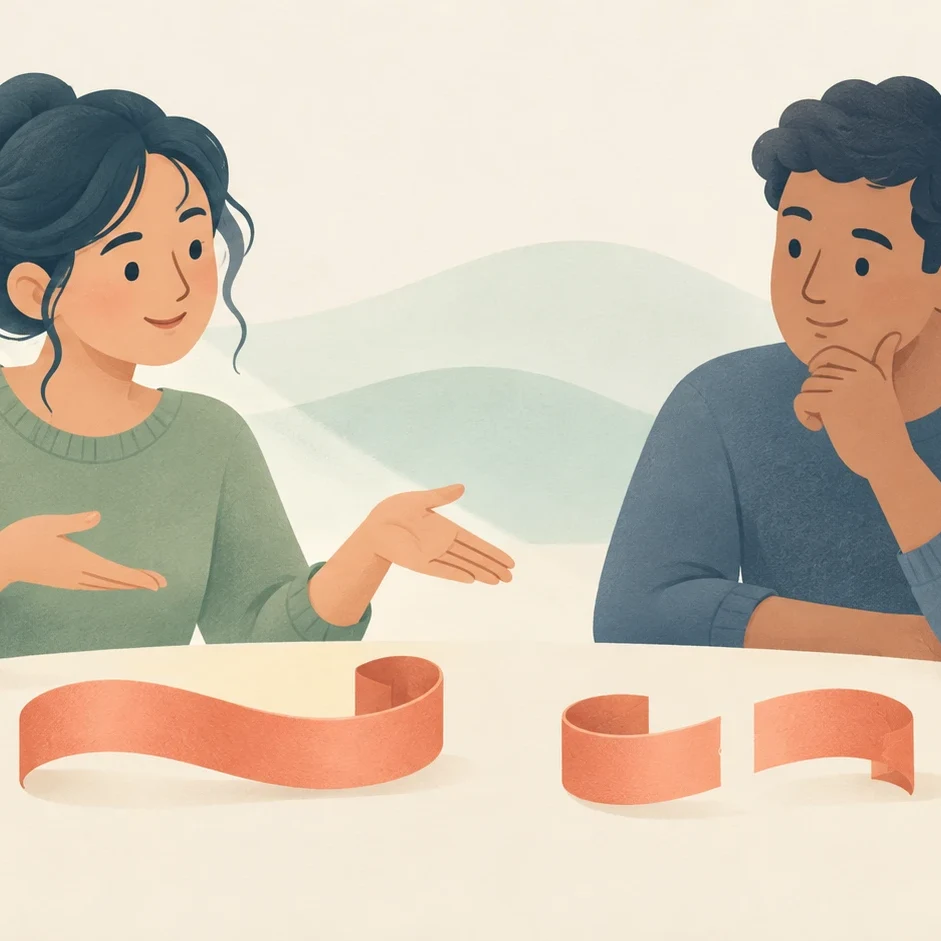
However or how ever: quick spelling guide
However can mean despite that when linking contrasting ideas. With an adjective or adverb, it can mean no matter how. In an emphatic question, however or how ever adds emphasis to how.
-

Exclamations with What and Such: Clear Rules and Examples
Speakers use what and such to highlight a notable quality or situation. Instead of asking a question, these structures emphasize your personal reaction, like surprise, pleasure, or frustration. What directly introduces the noun phrase, while such typically modifies an adjective and noun together inside a statement.
-

Correlative conjunctions: rules and examples
A correlative conjunction consists of two linked words that show how two thoughts connect. Both...and combines two things together. Either...or offers a choice between two options. Neither...nor rejects two alternatives at once. Whether...or investigates two possible conditions or outcomes.
-

Attitude Adverbs: A Practical Guide
Attitude adverbs, frequently categorized as sentence adverbs, modify a whole clause rather than a single verb, adjective, or manner of action. When you use words such as fortunately, surprisingly, or honestly, you provide an interpretive lens for the statement that follows. The listener learns your stance toward the situation before evaluating the factual details.
अभी ट्रायल नहीं लेना चाहते? रोज़ एक मुफ़्त पाठ पाएँ
7 दिन तक रोज़ ईमेल में सुनकर लिखने का एक छोटा अभ्यास मिलेगा। जहाँ हैं वहीं अभ्यास करें। खाता बनाना ज़रूरी नहीं है।
अपने शब्दों या स्थिति से जुड़ा पाठ नहीं मिल रहा?
पाठ बनवाने के अनुरोध सदस्यता में शामिल हैं।
सदस्यता देखें