کلمهها را در گفتار از هم تشخیص بده
بار اول فقط گوش بده و چیزی ننویس. بار دوم پیدا کن که هر کلمه کجا تمام میشود و کلمهٔ بعدی از کجا شروع میشود. برای بررسی، کل عبارت را دوباره بشنو.
درسهای 307 تا 324 از 573 درس
-

Present perfect: use have and has
The present perfect connects an earlier action directly to the current conversation. When you say that someone has packed the rain gear, the packing occurred in the past, but your focus is on the fact that the bag is ready now. You also use this structure to discuss lifetime experiences up to this moment and ongoing states that started in the past.
-

Simple present tense: rules and practice
The simple present expresses regular routines, general facts, and ongoing states. A routine does not need to happen every day; an action that happens once a month or on weekends uses this tense. It also describes stable conditions such as where you live, what you like, and how things work.
-

Synonyms in English: Choose the Right Word
A synonym is a word or phrase that has the same or nearly the same meaning as another word in the same language. While two words may share a central idea, their usage depends on context, grammar, and tone.
-
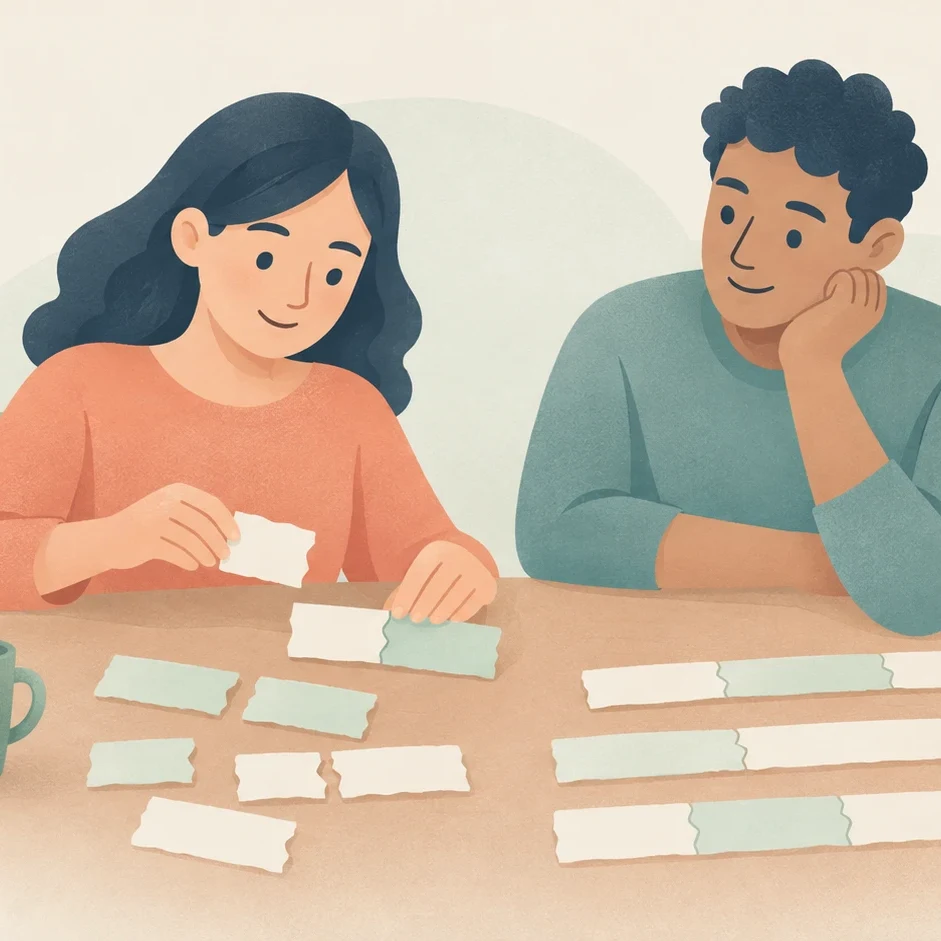
Sentence fragments: repair and practice guide
A complete sentence delivers an independent statement. In standard English writing, every sentence requires a subject and a working verb that together express a complete thought. A sentence fragment is a word group that begins with a capital letter and ends with a period, but fails to provide the grammatical elements required to stand by itself.
-

Infinitives: When to Use To
An infinitive names an action directly without changing its shape for time or person. It connects two ideas by showing what action completes a main verb, what action explains a feeling, or why an action happened.
-

Adjectives of Number: Forms and Examples
Number words perform distinct communicative functions in English sentences. Cardinal numbers such as one, two, or forty specify an exact count of items. Ordinal numbers such as first, second, or twentieth identify an item's exact position within an ordered sequence. Indefinite words such as many, several, and some indicate approximate quantities without naming a precise figure. Distributive words such as each, every, either, and neither describe how members of a group are considered individually or in pairs. Traditional grammar terms all these words adjectives of number, while modern linguistics often describes them as numerals, determiners, or quantifiers.
-
اشتراک
7 روز دسترسی رایگان به همهٔ درسها
- 573 درس با دیکته و آزمون شنیداری
- سه لهجه: بریتانیایی، آمریکایی و استرالیایی
- درسهای تازه هر روز و ذخیرهٔ پیشرفت
کارت بانکی لازم نیست. اگر خواستی ادامه بدهی، پس از دورهٔ رایگان از ماهانه $7.50.
شروع دورهٔ رایگان -

Future perfect or continuous: Choose the right form
Both the future perfect simple and the future perfect progressive look ahead to a future reference point and evaluate earlier activity. The future perfect simple places a completed action, milestone, or quantity before that checkpoint. The future perfect progressive looks back from that same checkpoint to show how long an activity has been underway. One tense focuses on the finished product; the other focuses on the elapsed time of the process.
-

Equipment or Equipments: Which Is Correct?
Equipment represents the collective collection of devices, tools, machines, or apparatus required for a particular activity, profession, or job. English conceptualizes equipment as a single collective resource or mass concept, similar to furniture, luggage, or information. Because it is an uncountable noun, English does not place a number directly before equipment or add a plural ending to it. Even when a room is filled with dozens of distinct objects, they are described collectively as equipment.
-

Adjective Order: Rules and Examples
Adjective order is the customary sequence English speakers use to organize multiple details before a noun. Placing broad personal opinions first and moving inward toward physical facts, origin, and material allows listeners to process descriptive layers smoothly without pausing.
-

English Adjectives: Describe People and Things
An adjective gives information about a noun or pronoun. It describes qualities such as size, age, color, condition, or emotion, showing which person or object you mean and what that person or object is like.
-

Hit the jackpot: Meaning and use
In literal terms, hitting the jackpot means winning the grand prize in a lottery or game of chance. Figuratively, people use the phrase to describe any exceptional outcome, bargain, or opportunity that turns out far better than expected. The expression highlights a result that brings genuine delight and feels like a stroke of rare luck.
-

Gerunds: When to Use -ing
A gerund names an activity rather than describing an action that is currently unfolding. Because it functions as a noun, a gerund can serve as the subject of a clause, follow the linking verb be, or appear directly after prepositions and certain main verbs. The form always ends in -ing, but its grammatical position determines whether it is a gerund.
-

Have or Has: Choosing the Right Verb Form
Have and has describe possession, relationships, and everyday activities. The verb form depends on who or what performs the action.
-

Myself and John: How to Choose
A subject names who or what the clause is about or who carries out the action. An object receives an action or completes a preposition like to, for, with, or between. The reflexive pronoun myself turns the action back onto the speaker as the subject of the same clause. Knowing these three sentence roles makes your choice simple and reliable.
-

Then or Than: Choose the Right Word
Use then to show sequence, a specific point in time, or a consequence following a condition. Use than to introduce the second element in a comparison of size, price, speed, quality, or amount.
-

Whenever or When Ever: One Word or Two?
Whenever acts as a conjunction connecting a time condition to a main action. It carries two related meanings in everyday English. First, it describes repeated routines, meaning every time that an event occurs. Second, it offers flexible permission for a single event, meaning at any time that suits someone. In contrast, the two-word phrase when ever splits into the question word when and the intensifier ever. In that pattern, ever adds strong emotion such as surprise, curiosity, or frustration. It never establishes a schedule condition or flexible invitation.
-

Discuss or discuss about: Which is correct?
To discuss means to consider, examine, or exchange ideas about a subject with another person. It does not require an argument or total agreement; it simply names the act of talking through a topic together. In standard English, the subject follows the verb discuss directly.
-

Where, Were, or Wear: Choosing the Right Word by Meaning
Where asks about or names a location. Were connects a plural subject or you to past facts, locations, and descriptions. Wear describes having clothing, footwear, or accessories on your body.
هنوز دورهٔ آزمایشی را شروع نمیکنی؟ هر روز یک درس رایگان بگیر
تا ۷ روز، هر روز یک دیکتهٔ کوتاه در ایمیلت دریافت کن. هر جا هستی تمرین کن؛ نیازی به حساب نداری.
عبارت یا موقعیت مورد نیازت را پیدا نکردی؟
درخواست درس با اشتراک در دسترس است.
دیدن اشتراکها