
मुहावरा
Give it a miss
What does 'give it a miss' mean?
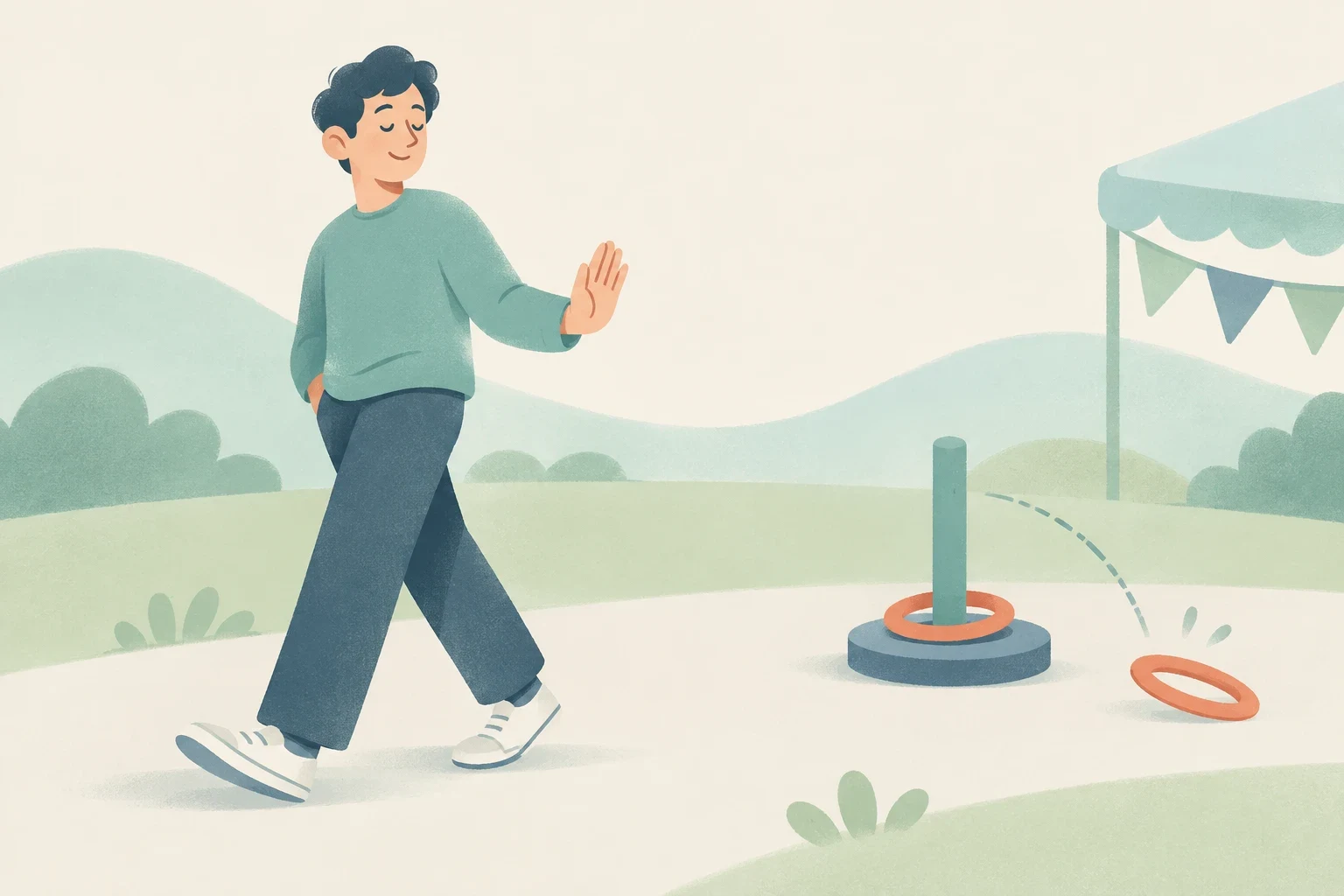
'Give it a miss' means to choose deliberately not to attend, do or have something on a particular occasion. For example: 'The café is packed, so I think I’ll give it a miss.' Use this informal British expression with friends or colleagues you know well, rather than in formal correspondence.
याद रखने वाली बातें
- The expression describes a deliberate choice, not an accidental absence.
- Put the activity or pronoun between 'give' and 'a miss'.
- Use 'gave' for past decisions; 'a miss' stays unchanged.
- The idiom is casual and conversational, especially in British English.
इस पाठ में 5 चरण हैं। आप कभी भी रुककर बाद में जारी रख सकते हैं।

5 में से चरण 1
समझें
मतलब समझें, इस्तेमाल सीखें और आम गलतियों को पहचानें।
देखें और सीखें
Give it a miss: meaning and listening practice
Learn Give it a miss with Bella, then practise with British and American conversations, speaking time and common questions. B2 English.
कुल 8 में से पंक्ति 1 · Bella (tutor)
to MicroEnglish. B2 a
इस पंक्ति को बोलकर दोहराएँ, फिर आगे बढ़ें।
वीडियो आगे नहीं चल सका। फिर कोशिश करें या नीचे दिया लिखित पाठ पढ़ें।
आपका अभ्यास
वीडियो के साथ सीखें 15 मिनट
वीडियो का छोटा हिस्सा देखें, एक सवाल का जवाब दें और सुनी हुई बात का अभ्यास करें। फिर ट्यूटर से बात करें।
पहला हिस्सा मुफ़्त है। सदस्य हिस्सा 2 तक आगे बढ़ सकते हैं और उसके बाद भी अभ्यास माँग सकते हैं।
इस वीडियो के मुख्य शब्द
उदाहरण
याद रखने का तरीका
इनके साथ इस्तेमाल होता है
संबंधित रूप
इससे अलग है
इस वीडियो से
इस शब्द की जानकारी लोड नहीं हो सकी। फिर कोशिश करें।
पूरी बात समझें
To give something a miss means to choose intentionally not to participate in an activity, attend an event, or consume an item on a specific occasion.
I have an early presentation tomorrow morning, so I will give the reception a miss.
यह सही क्यों है: The speaker specifies the activity between give and a miss to decline the evening event politely.
2 और उदाहरण
-
We were both exhausted after hiking, so we gave dinner in town a miss.
Gave indicates a past deliberate decision to stay home instead of dining out.
-
If you do not like spicy dishes, you should probably give that curry a miss.
The modal phrase recommends avoiding a specific food item without sounding aggressive.
पूरा पाठ पढ़ें
Decide when to skip a casual invitation
When people invite you to a social gathering, an optional meeting, or an informal sports session, you do not always need a long explanation to decline. Native speakers of British English frequently choose the idiom give it a miss to express a polite, intentional refusal. Using this phrase signals that you are declining this specific opportunity without rejecting the person who invited you. It creates a light, relaxed tone that prevents social awkwardness among peers.
-
I have an early shift tomorrow, so I will give the pub a miss tonight.
यह सही क्यों है: The speaker explains the decision to decline an evening drink because of work the next day.
-
We were quite full after lunch, so we gave afternoon tea a miss.
यह सही क्यों है: The phrase indicates an intentional choice to skip a scheduled meal.
अब आपकी बारी
What does someone communicate when they say they will give an event a miss?
जवाब: They intentionally choose not to attend on that occasion.
जवाब देखें
जवाब: They intentionally choose not to attend on that occasion.
The idiom expresses a deliberate personal choice to skip an activity, not an accident or a demand.
Arrange words correctly around the noun miss
The grammar of this idiom requires strict word order. The noun miss functions as the direct object at the end of the phrase, while the activity being avoided sits directly after the verb give. When referring back to an activity that both speakers already understand, use the pronoun it. Learners sometimes place the activity after miss or insert unnecessary words, which sounds unnatural. Keeping the noun or pronoun right between give and a miss preserves standard English rhythm.
-
That documentary sounds interesting, but I think I will give it a miss.
यह सही क्यों है: The pronoun it replaces the documentary and sits between give and a miss.
-
You should give the late train a miss because the earlier bus is much faster.
यह सही क्यों है: The noun phrase the late train sits directly between give and a miss.
इसका इस्तेमाल Give it your best shot और Might as well में भी मिलता है।
अब आपकी बारी
Which sentence places the words in standard idiomatic order?
जवाब: We will give the noisy concert a miss tonight.
जवाब देखें
जवाब: We will give the noisy concert a miss tonight.
The object the noisy concert must sit directly between the verb give and the phrase a miss.
Report past decisions using gave instead of give
When you describe an event that you chose to skip in the past, change the verb give to its irregular past form gave. Do not add regular endings to give, and do not change the noun miss into a past participle like missed. The noun miss remains unchanged with its indefinite article a. Remembering that only the main verb changes tense helps you report past social decisions accurately in conversations and daily journals.
-
The museum queue was enormous, so we gave the exhibition a miss.
यह सही क्यों है: Gave marks the past action, while the exhibition a miss remains unchanged.
-
Karen gave the team lunch a miss because she had to finish her spreadsheet.
यह सही क्यों है: The past form gave reports Karen's earlier decision to stay at her desk.
अब आपकी बारी
How should you report that you chose not to attend yesterday's workshop?
जवाब: I gave the workshop a miss yesterday.
जवाब देखें
जवाब: I gave the workshop a miss yesterday.
The verb give becomes gave in the past tense, while a miss stays in its noun form.
Choose the right social register for your refusal
Register awareness ensures that your English sounds natural without offending listeners. Give something a miss belongs to casual, friendly speech. It works well with friends, family members, classmates, and close teammates who share an informal relationship. However, using it in a formal email to an executive or an external client can sound dismissive or unprofessional. For formal situations, choose more formal alternatives like decline the invitation or am unable to attend.
-
Can I give the departmental quiz a miss, or is attendance compulsory?
यह सही क्यों है: A worker asks a colleague casually about an internal social event.
-
We decided to give the dessert buffet a miss and walk back to the hotel.
यह सही क्यों है: Informal narration among friends sharing holiday travel plans.
अब आपकी बारी
In which situation is give it a miss most appropriate?
जवाब: A quick text message telling a friend you will skip bowling.
जवाब देखें
जवाब: A quick text message telling a friend you will skip bowling.
The idiom is informal and conversational, making it ideal for casual social texts among friends.
Distinguish deliberate choices from accidental misses
Giving something a miss means deliberately choosing not to do or attend it. Miss on its own can describe an accident, a choice, or an emotional feeling. Missing a flight does not by itself tell us why you did not take it. In the examples below, the failed alarm explains the accidental absence, while the decision to walk makes the choice explicit.
-
I missed the morning bus because my alarm failed to ring.
यह सही क्यों है: An unintentional mistake where the speaker arrived after the bus departed.
-
I gave the morning bus a miss and walked through the park instead.
यह सही क्यों है: A conscious, deliberate choice to choose walking over public transport.
अब आपकी बारी
What does it mean if an employee says, 'I gave the meeting a miss'?
जवाब: The employee intentionally chose not to attend the meeting.
जवाब देखें
जवाब: The employee intentionally chose not to attend the meeting.
Giving an event a miss always marks an intentional decision rather than an external obstacle.
Remove unnecessary prepositions before the skipped item
Learners influenced by other languages often insert prepositions like to, of, or for into this expression. They might say give to the movie a miss or give a miss of the movie. English uses the verb give with two direct complements here without any linking prepositions. Treat the phrase as a single grammatical unit: give, followed by the item you choose to avoid, followed immediately by a miss.
-
Let us give the spicy curry a miss tonight and choose mild noodles.
यह सही क्यों है: The noun the spicy curry connects directly to give without the preposition to.
-
She gave the crowded street market a miss to avoid the noise.
यह सही क्यों है: No preposition appears before the skipped location.
अब आपकी बारी
Which sentence avoids incorrect preposition additions?
जवाब: I think I will give the noisy party a miss.
जवाब देखें
जवाब: I think I will give the noisy party a miss.
Do not add prepositions like to or for before the item you decide to skip.
Recognize weak forms and rhythm in fast speech
In conversational speech, British speakers link these words together smoothly. When the object is the pronoun it, the words give, it, and a form a single continuous stream of sound. The vowel in a reduces to a weak schwa, while the word miss receives the primary sentence stress. Because the pronouns and articles sound weak and rapid, untrained ears might miss them entirely. Listening for the stressed verb give and the stressed noun miss will help you identify the phrase instantly.
-
I am feeling tired, so I will give it a miss today.
यह सही क्यों है: Notice how give it a flows together as a three-syllable sequence leading to the stressed miss.
-
They told us to give it a miss until repairs finish.
यह सही क्यों है: The weak pronoun it and the weak article a link smoothly between the stressed syllables.
अब आपकी बारी
Which syllable typically carries the strongest emphasis when someone says 'give it a miss'?
जवाब: The final noun miss.
जवाब देखें
जवाब: The final noun miss.
In connected speech, miss carries the primary stress, while it and a reduce into weak forms.
Adapt your phrasing for informal workplace messages
In modern remote and hybrid workplaces, team communication often takes place in chat channels and collaborative software. You can use give it a miss when declining optional events like virtual trivia, voluntary lunch discussions, or social drink invitations. To remain polite and collegial, always pair the idiom with a brief reason or an expression of gratitude. Giving a refusal without a warm opening or a courteous closing can seem overly abrupt in written text.
-
Thanks for organizing the lunch chat, but I will give it a miss to meet my deadline.
यह सही क्यों है: Combining appreciation with the refusal keeps the workplace message constructive.
-
Great idea, but I will give the voluntary training a miss today as my inbox is full.
यह सही क्यों है: The writer gives a clear, professional reason alongside the casual idiom.
अब आपकी बारी
What should you include when using give it a miss in a workplace chat?
जवाब: A courteous note of thanks or a realistic reason to soften the decline.
जवाब देखें
जवाब: A courteous note of thanks or a realistic reason to soften the decline.
Adding gratitude or a brief reason ensures your refusal remains polite and collaborative.
“give it a miss” के इस्तेमाल में आम गलतियाँ
कौन-सी गलती हो सकती है, उसकी जगह क्या कहें और क्यों।
-
यह नहीं:
I’ll give a miss the talk.कहें: I’ll give the talk a miss.
The activity must come between 'give' and 'a miss'.
-
यह नहीं:
She gave to the party a miss.कहें: She gave the party a miss.
Do not add a preposition before the activity.
-
यह नहीं:
We gived the exhibition a miss.कहें: We gave the exhibition a miss.
'Give' has the irregular past form 'gave'.
सही जगह इस्तेमाल करें
लोग “give something a miss” का इस्तेमाल कैसे करते हैं
अनौपचारिक सहज बातचीत के लिए है। औपचारिक लेखन से ज़्यादा दोस्तों और सहकर्मियों के साथ ठीक है।
अक्सर साथ आने वाले शब्द
- give breakfast a missI sometimes give breakfast a miss when I get up late.
- give the party a missWe might give the party a miss because we have an early flight.
- give dessert a missI'll give dessert a miss because I'm already full.
यह बात और कैसे कहते हैं
- “I have decided not to participate on this occasion.” की जगह “I'll give it a miss.” This sounds relaxed when you decline a casual activity.
"Give it a miss" के बारे में सवाल
What is the difference between give it a miss and miss out?
Give it a miss focuses on an intentional decision to skip an activity, whereas miss out emphasizes losing an opportunity, benefit, or enjoyable experience. When you give an event a miss, you choose to stay away. When you miss out, you feel the regret or disadvantage of not being involved.
I decided to give the party a miss because I needed sleep.
If you do not attend the workshop, you will miss out on valuable practical advice.
Can I use give it a miss in professional emails to clients or managers?
You should avoid this idiom in formal correspondence, contracts, or messages to senior leaders. It carries a distinctly casual, conversational tone best suited for trusted colleagues, peers, and social acquaintances. In formal business writing, use neutral phrases such as decline the invitation or am unable to attend.
Casual note to a peer: I will give the optional demo a miss today.
Formal email to a client: Unfortunately, our team must decline the invitation to attend this year's expo.
Can I put the preposition to after give a miss?
No, standard English does not place the preposition to before the skipped item. The expression follows a double-object structure where the activity sits between give and a miss. Say give the dessert a miss or give it a miss rather than give a miss to the dessert.
Correct: We should give the crowded museum a miss until next week.
Incorrect: We should give a miss to the crowded museum.
Can I use this expression for food or drinks as well as events?
Yes, English speakers frequently use give it a miss when choosing not to eat or drink something, especially when recommending that a friend avoid an unappealing dish or when declining an offer while feeling full.
The milk smells sour, so you should give it a miss.
Thanks for offering cake, but I will give dessert a miss after that huge lunch.
जाने से पहले
यह याद रखें
Use give something a miss to decline an invitation or skip an activity casually. Place the noun or pronoun before a miss, remember to use gave for past events, and switch to formal language when speaking with senior executives or clients.
5 में से चरण 2
सुनें
छोटे से लंबे वाक्यों में इसका इस्तेमाल सुनें। जो सुनाई दे, उसे लिखें।
वीडियो देखकर आए हैं? सुनने, पढ़ने, बोलने और लिखने के वही चार अभ्यास यहाँ पूरे दिए गए हैं। वीडियो पर वापस जाएँ
4 में से 0 पूरे
4 में से सुनने का अभ्यास 1
सुनें, फिर सुनाई देने वाले शब्द लिखें। जितनी बार ज़रूरत हो, दोबारा सुनें।
0:00
- We were both exhausted after hiking, so we gave dinner in town a miss.
- If you do not like spicy dishes, you should probably give that curry a miss.
4 में से सुनने का अभ्यास 2
सुनें, फिर सुनाई देने वाले शब्द लिखें। जितनी बार ज़रूरत हो, दोबारा सुनें।
0:00
- We were both exhausted after hiking, so we gave dinner in town a miss.
- If you do not like spicy dishes, you should probably give that curry a miss.
थोड़ा लंबा ऑडियो आज़माएँ। एक बार सुनें, फिर जो हिस्सा छूट गया उसे दोबारा सुनें।
4 में से सुनने का अभ्यास 3
सुनें, फिर सुनाई देने वाले शब्द लिखें। जितनी बार ज़रूरत हो, दोबारा सुनें।
0:00
- We were both exhausted after hiking, so we gave dinner in town a miss.
- If you do not like spicy dishes, you should probably give that curry a miss.
यह ऑडियो लंबा है। जवाब लिखने की जगह के ऊपर दिए निर्देश का पालन करें।
4 में से सुनने का अभ्यास 4
ऑडियो सुनकर खाली जगहों में शब्द लिखें। बाकी शब्द पहले से लिखे हैं।
0:00
- We were both exhausted after hiking, so we gave dinner in town a miss.
- If you do not like spicy dishes, you should probably give that curry a miss.
अभ्यास पूरा हुआ
आपने ध्यान से सुनने का अभ्यास किया।
आपका नतीजा इस ब्राउज़र में सहेजा गया है।
अपनी प्रगति सहेजें. आपका अभ्यास अभी सिर्फ़ इस डिवाइस पर सहेजा गया है। इसे हर जगह पाने के लिए मुफ़्त खाता बनाएँ।
मुफ़्त खाता बनाएँरोज़ अभ्यास की याद दिलाएँ
एक छोटा ईमेल, सिर्फ़ उन दिनों जब आपने अभी तक अभ्यास नहीं किया हो। इसे पाने के लिए मुफ़्त खाता बनाएँ और अपने ईमेल पते की पुष्टि करें।
मुफ़्त खाता बनाएँआज का मुफ़्त पाठ पूरा हुआ। कल एक और मिलेगा। आज और अभ्यास चाहिए? सदस्यता देखें।
दूसरे उपकरणों पर भी अपनी प्रगति देखने के लिए मुफ़्त SubLearn खाता बनाएँ।
मेरी प्रगति सहेजें5 में से चरण 3
बोलें
पहले रिकॉर्डिंग के साथ बोलें, फिर अपने जवाब में इसका इस्तेमाल करें।
साथ बोलें
रिकॉर्डिंग के साथ-साथ बोलें
वाक्य धीमी गति पर सुनें। फिर रिकॉर्डिंग के साथ-साथ बोलें। सिर्फ़ शब्द नहीं, बोलने की लय भी दोहराएँ।
अब आपकी बारी
अपनी बात कहें
Speak for 30 to 60 seconds from memory. You are at a food market with a cousin. Choose one food you will pass over because of its price, ingredients, or taste. Explain your choice and say what you will try instead.
इस्तेमाल करें: give it a miss
दस सेकंड सोचें। फिर पाठ देखे बिना उतनी देर बोलें जितनी ऊपर बताई गई है। जब तक आप प्रतिक्रिया नहीं माँगेंगे, कुछ भी नहीं भेजा जाएगा।
0:00
सुनें कि कोई और यह बात कैसे कह सकता है
That chocolate cake looks amazing, but I think I'll give it a miss. Eight dollars seems like a lot for such a small slice, especially when we still have so many stalls to explore. I'd rather spend that money on something I haven't tried before. The woman near the entrance was selling fresh dumplings, and they smelled really good. We could get a small box and share them. Then, if we still feel like something sweet, we can look for a cheaper dessert. What do you think?
एक बार फिर कोशिश करें और इसका जवाब दें: What would make you change your mind?
5 में से चरण 4
लिखें
अपने शब्दों में जवाब लिखें
AI की प्रतिक्रिया · इसमें गलती हो सकती है · सदस्यता में शामिल सदस्यता देखें
अपना लिखा खुद जाँचें
जवाब का एक नमूना देखें
मसौदा इस डिवाइस पर सहेज लिया गया है।
इन बातों को देखकर अपने संदेश में सुधार करें। व्याकरण और अर्थ की अपने आप जाँच नहीं होती। हर अभ्यास का मसौदा इस ब्राउज़र टैब में अलग सहेजा जाता है।

आपने इस पाठ का मुफ़्त हिस्सा पूरा कर लिया
- समझें
- सुनें
- बोलें
- लिखें
- जाँचेंसदस्यता में शामिल
इन्हें फिर देखें
मुफ़्त खाते में पूरे किए हुए पाठ दोहराने के लिए फिर आते हैं, ताकि वे याद रहें।मुफ़्त खाता बनाएँ
5 में से चरण 5 · सदस्यता में शामिल
जाँचें
बिना संकेत नई रिकॉर्डिंग सुनें।
सुनने के टेस्ट सदस्यता में शामिल हैं। पहले मुफ़्त सुनकर लिखने का अभ्यास करें, फिर आगे बढ़ने का फैसला लें।
मुफ़्त सुनकर लिखने के अभ्यास पर जाएँ
2 में से सुनने का अभ्यास 1 सदस्यता में शामिल
2 में से सुनने का अभ्यास 2 सदस्यता में शामिल
MicroEnglish को फ़ॉलो करें
पाठों की जानकारी, छोटे वीडियो और क्विज़ के लिए MicroEnglish को अपने पसंदीदा ऐप पर फ़ॉलो करें।
सवाल और टिप्पणियाँ
इस पाठ के बारे में सवाल पूछें, कोई उदाहरण साझा करें या किसी और की मदद करें।
उदाहरण
याद रखने का तरीका
इनके साथ इस्तेमाल होता है
संबंधित रूप
इससे अलग है
इस पाठ में
यह शब्द हमारे शब्दकोश में नहीं है। वर्तनी जाँचें या शब्द का कोई दूसरा रूप आज़माएँ।
इस शब्द की जानकारी लोड नहीं हो सकी। फिर कोशिश करें।